For a cat, a litter box is not just a bathroom appliance tucked away for human convenience. It is a basic resource that must feel safe, comfortable and accessible. A box that is too small, crowded by a washing machine or guarded by another cat can become difficult to use. When a cat starts toileting elsewhere, the right first response is to investigate—not to scold.
This guide helps you make litter arrangements that work in real homes, including apartments and multi-cat households. It also explains why litter-box changes may indicate pain or illness. A cat repeatedly straining to urinate or producing little to no urine needs immediate veterinary assessment. Do not wait for a litter experiment to solve a possible blockage.
Begin with a box large enough to move naturally
Choose a tray that lets your cat step in, turn, squat and dig without pressing against every wall. Many commercial boxes are smaller than ideal for adult cats. A practical target is a box around one-and-a-half times the cat’s body length from nose to the base of the tail, with enough width to turn comfortably. Large, sturdy storage trays can sometimes work if edges are smooth and entry is safe.
Most cats do well with open boxes that provide room and visibility. Covered boxes can trap odors, restrict turning and create a single entrance that another cat may block. Some individuals tolerate or prefer a covered design; watch the cat's actual use rather than assuming privacy for humans equals comfort for cats.
Make entry easy for kittens and older cats
A kitten, short-legged cat or senior with arthritis may struggle to climb over tall sides. Choose at least one low-entry tray and a location that does not require stairs or jumping. A high-sided box with a low cutout can reduce scattering while remaining accessible. Keep a non-slip mat nearby if the floor is slippery, but avoid mats that painfully trap litter between toes.
If a previously reliable cat starts eliminating beside the tray, think about mobility or pain. Moving a box to a more accessible spot may help, but unexplained changes still deserve a veterinary check. Do not expect an uncomfortable animal to solve the problem through “better discipline.”
Choose litter for feline comfort, not fragrance
Many cats prefer a fine-textured, unscented litter that is comfortable under their paws and allows digging and covering. Strong perfume, deodorizing sprays or air fresheners placed beside the box may be unpleasant. Clumping options can simplify daily removal, but the right choice depends on the animal's age, health and preference. Follow product precautions, especially for very young kittens who might ingest litter.
When you adopt, ask what litter the cat already uses. Abruptly replacing the familiar product can cause avoidance. If a change is necessary, offer an additional box with the new litter beside the familiar option and compare use; move gradually once the cat appears comfortable. Avoid assuming a product is better simply because it is easier for people to carry or dispose of.
Provide enough boxes in truly separate places
A useful starting guideline is one litter box per cat plus one extra: two for one cat, three for two cats. It is a rule of thumb, not a rigid medical law. The important principle is that cats should have genuine alternatives, especially in households where one cat may block another from a doorway or hallway. Two trays pushed together in the same corner may function like a single toileting station.
Spread stations across different calm locations, with at least one accessible on each floor of a multi-story home. In small apartments, separate corners or rooms may matter more than a perfect mathematical count. Pay attention to each cat’s social relationships and whether a shy individual can reach a box without passing a more assertive cat.
Place the box where the cat feels safe
Choose a quiet, easy-to-reach spot with escape options and good ventilation. Avoid locations beside noisy appliances, busy entrances, food or water bowls, and narrow spaces where a cat can be ambushed. A box hidden behind furniture may be aesthetically pleasing but unpleasant for a cat if access is awkward. Keep a clear route when doors are closed or family members are away.
Bathrooms and laundry rooms can work when doors remain open, cleaners are safely stored and machines do not startle the cat. If the location changes, add a new station before removing the old one so the cat has time to learn. For older cats or cats recovering from illness, a convenient box near the resting area may be especially important.
Keep the routine simple and consistent
Scoop urine clumps and feces at least daily, more often when several cats share facilities. Refill litter as needed to maintain a comfortable digging depth; a couple of inches is a common starting point, then adjust to the cat's preferences and the product. Wash the tray regularly with mild, unscented detergent, rinse thoroughly and dry it before refilling. Frequency of full litter replacement depends on type, number of cats and manufacturer directions.
Avoid harsh fragrances or cleaning products that leave strong residues. Wash scoops and dispose of waste according to local instructions; do not automatically flush used litter, as plumbing and environmental guidance varies. Anyone who is pregnant or immunocompromised should discuss precautions for handling cat feces with their clinician, and all caregivers should wash hands afterward.
Know the difference between accidents and marking
When urine appears outside the box, observe whether the cat is squatting to pass a larger amount on a horizontal surface or standing with a raised tail to deposit a smaller amount against a vertical surface. The second pattern can be urine marking. These descriptions are clues, not diagnoses, and both can occur alongside stress or health problems. Record what happened without punishing the animal.
Notice changes in household routine, visitors, furniture, a new pet, a blocked access route or tension among resident cats. Also note any changes in urine volume, frequency, blood, vocalizing or bowel habits. A veterinarian should investigate sudden, repeated or persistent toileting changes rather than assuming the cat is being spiteful.
Troubleshoot with a calm, step-by-step plan
- Check for illness: Arrange veterinary assessment for new or ongoing problems, especially pain, blood, changes in frequency, constipation or diarrhea.
- Offer an easy option: Add a large open box with comfortable litter in a quiet accessible spot.
- Improve access: Remove bottlenecks, closed doors and possible guarding by other animals.
- Clean soiled areas: Use a pet-safe enzymatic cleaner as directed, and keep the location calm while habits are rebuilt.
- Track patterns: Note times, locations, stool and urine appearance and changes in home life; share observations with your veterinarian.
Do not rub a cat’s nose in waste, yell or physically force them into the tray. Punishment can increase fear and make the environment less predictable without addressing the cause. If the issue continues despite medical and environmental assessment, seek a veterinarian experienced with feline behavior.
Recognize the urinary emergency signs
Repeated trips to the box with little or no urine, obvious straining, crying in pain, vomiting, weakness or severe distress can indicate urinary obstruction. This is especially concerning in male cats, but any cat with suspected inability to pass urine needs emergency veterinary care now. Do not wait overnight or attempt to treat the blockage yourself. Sometimes straining is mistaken for constipation; if you cannot tell whether urine is passing, seek urgent veterinary advice.
Blood in urine, frequent small urinations or sudden inappropriate urination also warrant prompt veterinary contact even if the cat seems otherwise comfortable. House-soiling can be associated with bladder inflammation, urinary stones, kidney conditions, constipation, mobility problems or environmental stress. More than one cause may be present at the same time.
Support dignity in shared homes
In a home with several cats, provide multiple feeding, water, resting, hiding and scratching resources as well as litter boxes. Watch for subtle blocking or staring in hallways rather than waiting for a fight. A cat who uses a box only when the other cat is asleep may be telling you the route feels unsafe. Providing separate stations and escape paths can lower competition.
For foster cats or a new arrival, start with a quiet base room containing familiar supplies. Give the newcomer their own litter station before gradual introductions. Maintain sanitation appropriate to medical advice if infectious disease is suspected; do not share equipment indiscriminately between isolated animals.
A quick setup checklist
- A roomy tray with easy entry, ideally an open design to start.
- Familiar or fine-grained unscented litter, with enough depth to dig.
- At least one convenient station per cat, with additional options where possible.
- Locations separated from food, noisy machines and social bottlenecks.
- Daily scooping, regular washing and a clear plan for waste disposal.
- A veterinary contact for sudden toileting changes—and emergency help for inability to urinate.
A good litter-box arrangement is not measured by how invisible it is to humans. It succeeds when your cat can reach a clean, comfortable place without fear or pain. Small improvements in choice, placement and accessibility can make everyday life easier for everyone.
Keep Reading
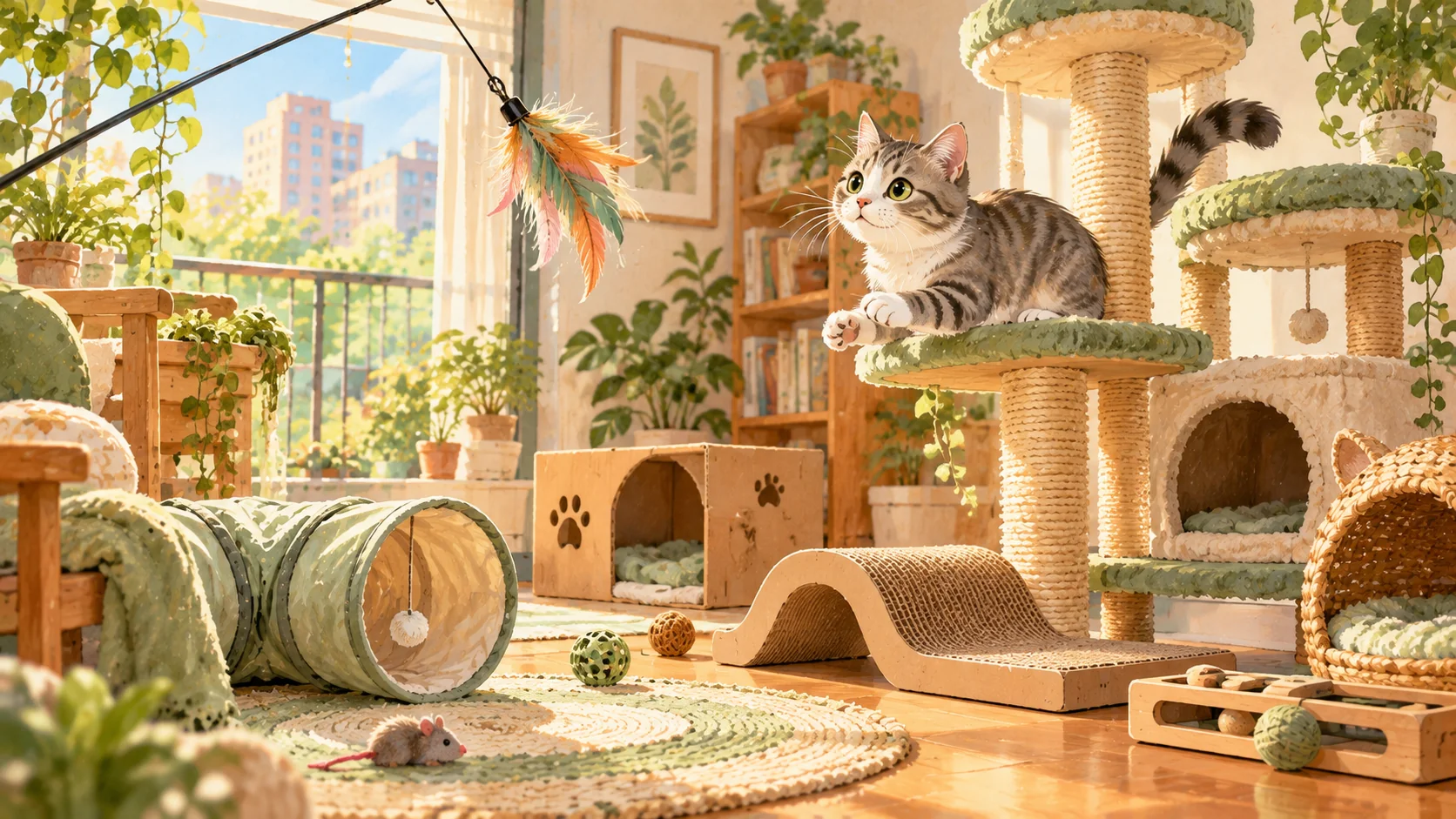
Create a more engaging indoor life with safe hiding and climbing, prey-like play, food puzzles, scratching choices and resources that respect each cat.
Read the Full Guide →
Learn humane teaching for both dogs and cats: reward timing, shaping, helpful management, training obstacles and why intimidation is not the answer.
Read the Full Guide →
Build a flexible daily rhythm for meals, toileting, rest, play, health checks and backup care without turning life into a rigid timetable.
Read the Full Guide →