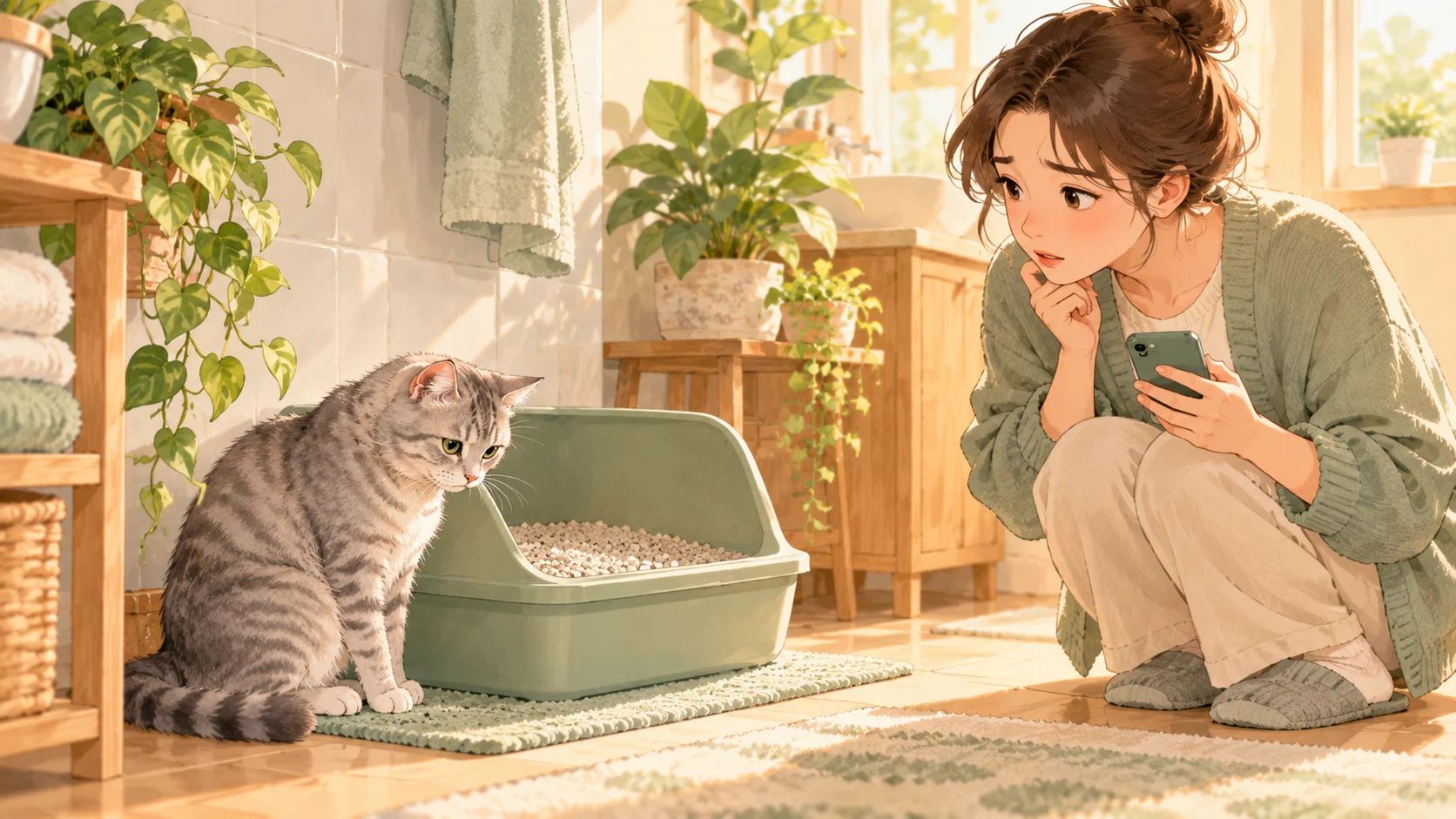
A cat repeatedly visiting the litter box may appear to have constipation, a preference problem or “just stress.” Sometimes the real issue is lower urinary tract disease, and a blocked urethra can become life-threatening rapidly. Cats cannot tell you whether the pain comes from the bladder or whether urine can pass. This guide helps you recognize patterns, understand what a veterinarian may investigate and make the critical decision to seek urgent care when there is little or no urine. It is not a recipe for home treatment of urinary blockage.
A blocked cat needs emergency care immediately
If a cat repeatedly strains in the litter box and produces no urine or only drops, treat possible obstruction as an emergency. Painful vocalization, licking the genital area, vomiting, lethargy and a tense abdomen may accompany it, but not all signs appear together. Male cats are at higher risk because the urethra is narrower; female cats can also have serious urinary disease. Do not wait until the next morning to “confirm” whether a normal clump appears. Contact an emergency clinic and transport the cat safely. Do not press the bladder, try to express urine or administer leftover medication.
What owners can observe in the litter box
Look at frequency, size and location of urine clumps, not just whether the cat enters the box. Tiny repeated spots, blood-tinged urine, unusually frequent trips, accidents outside the box or discomfort during urination deserve veterinary attention. In a multi-cat household, it may be unclear which cat produced which clump; separate observation may help, as long as you do not create new stress. Photograph unusual litter or blood if possible. Never keep a cat from using the box in order to track output. The absence of a reliable observation is not reassurance if the cat is straining.
Several diseases can cause similar signs
Lower urinary tract signs can come from inflammation, stones, crystals, infection and other conditions. Feline idiopathic cystitis is an inflammatory syndrome without one simple infectious cause, while bacterial urinary infections occur more often in some higher-risk groups. Stress may contribute to certain disorders but is not a safe self-diagnosis. Straining, frequent urination and blood can overlap across conditions. Only a veterinary assessment can determine what is most likely and which tests or treatments are warranted. Do not assume every cat with urinary signs needs antibiotics or a urinary diet purchased without guidance.
What happens during an urgent examination
The veterinary team may check hydration, heart rate, pain, bladder size and signs of systemic illness. Urinalysis, blood testing, imaging or urine culture may be recommended depending on the case. A blocked cat needs prompt stabilization and relief of the obstruction, which can involve a urinary catheter, fluid therapy, pain control and hospitalization. Treatment plans differ, and procedures carry risks that the team should explain. Bring a brief record of symptoms, prior urinary episodes, medications and diets. Asking how recurrence will be monitored is useful after the immediate crisis has been addressed.
Why a cat may urinate outside the box
Pain or urgency can create an association between the litter box and discomfort, so a cat may seek another surface. Other cats may block access to the box, or a new location or litter texture may be disliked. Investigate medical causes first, especially if accidents are new. Then consider box size, cleanliness, accessibility, scent, noise, conflict and escape routes. Punishment increases stress and does not resolve urinary inflammation. Clean accidents thoroughly with pet-safe products and keep the route to a comfortable box open. Cats with reduced mobility may need a low-entry box.
Hydration and food plans should be individualized
Accessible fresh water, multiple drinking stations and moisture-rich foods may support hydration for some cats. A veterinarian may recommend a therapeutic diet for particular stones or recurrent urinary disease, but diet choice depends on diagnosis and other conditions. Do not force water by syringe into an unwilling cat, and never restrict water. If changing foods, consider a gradual transition when medically appropriate. Monitor eating because cats that refuse a prescription diet still require adequate nutrition. Ask what outcome the proposed food is intended to achieve and when it should be reassessed.
Reduce avoidable environmental stress
Offer predictable routines, quiet hiding spots, comfortable resting areas, scratching surfaces and daily opportunities to play or explore. In multi-cat homes, spread resources out so one cat cannot guard every route. Avoid sudden litter changes and high-conflict introductions during recovery. Some cats benefit from veterinary-guided environmental management alongside medical treatment, especially when stress is one contributing factor. Do not interpret an apparent improvement in mood as proof a urinary obstruction has passed. Continue prescribed monitoring and seek urgent care if straining or inability to urinate returns.
After discharge, follow the specific plan
Before leaving, confirm each medication’s name, dose, frequency, duration and possible side effects, plus when to recheck urine or blood. Ask what urination should look like during recovery, which signs require an immediate return and whether there are restrictions on activity or food. Keep all household caregivers informed, particularly if the cat uses several litter boxes. Watch for repeated straining, vomiting, weakness or absent urine. Never restart old antibiotics or analgesics for a new episode without medical advice. Recurrent urinary disease often needs a long-term, individualized strategy rather than a one-time emergency fix.
A short observation and action checklist
When you notice urinary trouble, record the last confirmed normal urine, number of unsuccessful trips, any blood or crying, eating and drinking, and recent medications. If no urine can be confirmed while the cat is straining, treat this as emergency information, not a reason to postpone leaving for the clinic. For non-obstructed cats under veterinary care, use the same observations to see whether treatment is working. Keep a labeled carrier ready and a clinic telephone number accessible. A calm action plan serves your cat better than searching multiple home remedies during a painful episode.
Straining to defecate and straining to urinate can look similar
A cat squatting repeatedly may look as though it needs to pass stool, particularly when the caregiver did not see what happened in the box. Both constipation and urinary disease can cause discomfort. Do not assume constipation when there are no normal urine clumps. If the cat strains repeatedly with minimal or no confirmed urine, emergency veterinary assessment is the safest choice. Never give enemas, laxatives or oils without veterinary direction; some household products are dangerous for cats.
Preventing recurrence is more than buying a product
After an episode, ask what was actually diagnosed and whether stones, crystals, inflammation or infection were confirmed. Keep copies of urinalysis and imaging reports, and clarify which dietary or medication plan is specific to this cat. Track water intake opportunities, litter-box access, housemate tension and follow-up appointments. Some cats recur despite attentive care; this is not proof the owner failed. A plan that integrates medical findings and practical environmental changes is stronger than purchasing multiple supplements with unverified promises.
What everyone at home must know about a blocked cat
Post a simple warning where litter is cleaned: repeated trips, painful effort and no normal urine are emergency signs. Make sure whoever changes the litter understands that “only a few drops” is not reassuring. A blocked cat may decline even when it briefly settles down or hides quietly. Keep a carrier and emergency clinic contact ready. If the pet has a history of blockage, do not try old medication first. Immediate veterinary treatment can be lifesaving; delay while testing home remedies can be dangerous.
Keep Reading
Help older dogs and cats stay comfortable with mobility supports, individualized checkups, pain awareness, feeding adjustments and familiar routines.
Read the Full Guide →
Set up comfortable litter stations, choose practical boxes and litter, build a cleaning routine and recognize when accidents signal stress or urgent illness.
Read the Full Guide →
Know what to bring, how to make travel less stressful, what a wellness exam includes and which questions to ask about vaccines, nutrition, behavior and follow-up care.
Read the Full Guide →