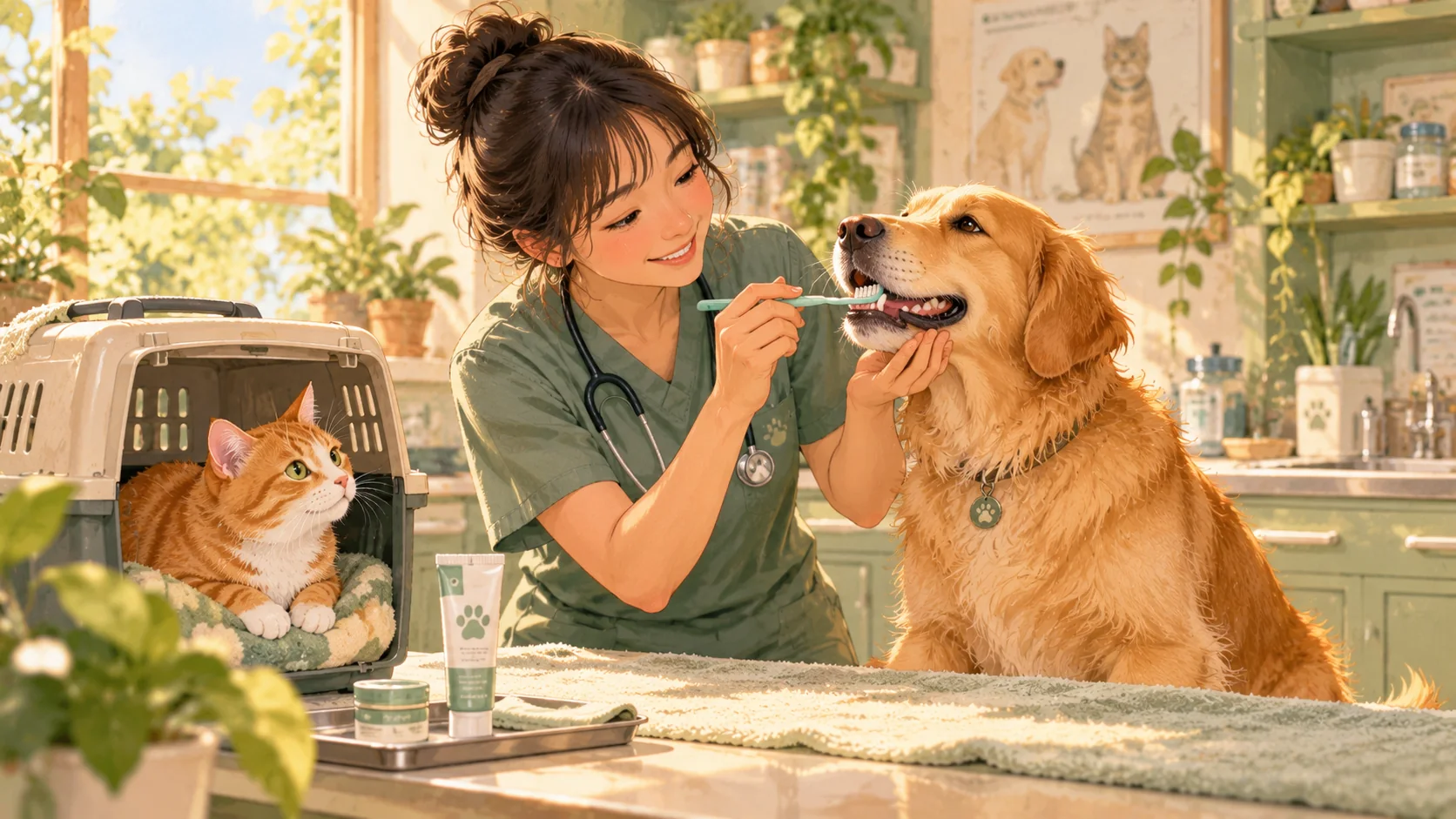
Dental health is about comfort, not white teeth
Bad breath, gum inflammation and difficulty chewing are not inevitable parts of living with a dog or cat. Plaque forms continually and can contribute to periodontal disease around the gums and tooth roots. Much of the problem may hide below the gumline where owners cannot see it. Some animals keep eating despite painful mouths, so a normal-looking appetite does not prove teeth are healthy. Veterinary dentistry is part of preventive healthcare, not a cosmetic luxury. Schedule oral examinations as advised for your pet’s age and condition. Ask what the veterinarian can and cannot tell from a brief awake examination. A plan may include home cleaning, monitoring a particular tooth or a comprehensive procedure. The goal is comfortable eating, playing and daily life.
Recognize problems without forcing the mouth open
Look for persistent foul breath, red or bleeding gums, tartar buildup, drooling, pawing at the mouth, dropping food, chewing on one side or refusing formerly favorite hard treats. Cats may become quieter, groom less or withdraw rather than display obvious dental pain. Facial swelling, a broken tooth or bleeding warrants prompt assessment. If your pet resists mouth handling, do not pin it down to photograph the gums: that can cause bites and worsen fear. Record what you notice during normal feeding or grooming and share the observations with the veterinarian. A tooth can be painful without appearing dramatic from across the room. Do not try to scrape tartar with household metal tools or apply human numbing gel; dental instruments and medications can injure animals.
Introduce toothbrushing in tiny steps
Start when your pet is relaxed. First reward the sight of a toothbrush or finger brush, then briefly touch the outside of the muzzle and reward again. Over several sessions, lift a lip for a moment, then touch an outer tooth surface before attempting any brushing. If the pet stiffens, turns away, growls or swats, reduce the step. Use a soft pet toothbrush and toothpaste formulated for dogs or cats; do not use human toothpaste, especially products with ingredients unsafe for pets. Focus first on the outer surfaces where plaque collects. A few comfortable seconds are more valuable than a stressful full-mouth scrub. Different animals progress at different speeds, and a vet team can teach cooperative handling. Never risk a bite to complete a routine.
What treats and dental products can and cannot do
Dental diets, approved chews, gels and water additives may help reduce plaque or calculus for certain pets, but benefits vary by product and how it is used. Look for products with credible evidence such as Veterinary Oral Health Council acceptance for the specific claim, and ask a veterinarian what fits your pet. Consider calories, food allergies, swallowing risks and fractured-tooth risks from very hard objects. A chew that a dog gulps whole, or a bone that can break teeth, is not a safe oral-health strategy. Do not use essential oils or homemade chemical mixtures as dental treatments. Brushing is usually the strongest practical home habit when tolerated, but even excellent brushing cannot treat an infected tooth root or advanced periodontal disease. Combine prevention with professional evaluation.
What professional dental treatment actually involves
A proper veterinary dental procedure may involve a physical examination, an individualized anesthesia plan, dental radiographs, cleaning above and below the gumline, polishing, assessment of diseased teeth and pain control. General anesthesia with airway protection and monitoring is necessary for thorough procedures, because the team must examine and treat areas a conscious pet cannot safely tolerate. “Anesthesia-free cleaning” may make visible crowns look whiter while leaving disease below the gumline untreated; it is not an equivalent substitute. Ask the clinic about pre-anesthetic testing, monitoring, radiographs, pain management, potential extractions and follow-up care. Age alone is not an automatic reason to decline needed dentistry, but medical risks must be evaluated individually. Never assume every tooth needs extraction or that every pet follows the same protocol.
Make care workable after a procedure
After cleaning or extraction, the veterinarian may prescribe medications, softer food, rest and temporary restrictions on chews or toothbrushing. Obtain written instructions before discharge and ask what bleeding, swelling, behavior or appetite changes would warrant a call. Never give human pain relievers. If your pet is sleepy after anesthesia, provide a quiet safe recovery area and follow the clinic’s feeding directions. Cats need particular attention to adequate food intake; prolonged refusal to eat is not something to ignore. Do not restart brushing over an extraction site until instructed. A follow-up check is an opportunity to ask what disease was found, what home prevention may realistically help and when the next oral assessment should occur.
A realistic week of oral care
If your pet accepts it, aim for frequent brushing, building gradually toward daily care. If daily brushing is not yet possible, use short positive handling sessions rather than giving up entirely. Keep a familiar toothbrush, pet-safe paste and rewards in one accessible place; check their condition and replace worn tools. During meals, watch chewing and appetite; during calm petting, notice whether the face seems sensitive. Set a veterinary reminder and share concerns early. For an animal with a painful mouth, training to tolerate brushing is not a substitute for diagnosis—have the pain assessed first. Discuss options with the care team if handling is unsafe, the pet has special dietary needs or the family cannot maintain the ideal schedule. A useful plan is compassionate and achievable.
Age and breed can influence the dental plan
Toy-breed dogs, animals with crowded teeth and pets with previous oral disease may need closer monitoring. Kittens and puppies are developing adult dentition and should be introduced gently to handling, not subjected to aggressive brushing. Senior pets may have painful tooth roots or medical risks that require a tailored dental and anesthesia conversation. A missing tooth, broken crown or retained baby tooth deserves veterinary assessment; do not assume it is a harmless cosmetic issue. Ask what changes to watch for between examinations. If a pet has chronic kidney disease, heart disease or another condition, the care team may coordinate the dental plan with broader medical management. Early practice supports later care, but pain should be treated before pushing training.
Ask specific questions before paying for dental work
Ask whether full-mouth dental radiographs are included, who monitors anesthesia, what signs might require extraction and how pain will be controlled. Request an estimate that explains possible additional costs if hidden disease is discovered. Check whether the facility has dental instruments, suitable monitoring and a referral pathway for complicated extractions. Discuss fasting and medication instructions that fit the individual animal. For home care after treatment, ask for a demonstration of safe brushing and the earliest date it can resume. It is reasonable to ask why a proposed procedure is necessary and what happens if treatment is delayed. If cost is a barrier, request a prioritized plan; never substitute untrained scaling for needed medical treatment.
A two-minute oral health conversation at your next visit
At the next routine examination, tell the team whether your pet tolerates lip lifting, brushing or chews, and mention any new bad breath, drooling or chewing changes. Ask them to show one safe handling step that can be practiced at home. Discuss whether a veterinary dental examination is due and what follow-up signs should prompt an earlier visit. If the animal already has a sore mouth, avoid touching it repeatedly and request pain assessment first. A realistic home plan might begin with looking at the brush, not brushing every tooth. Write down the one task you can truly repeat next week and the number to call if the pet stops eating or appears painful. Small, clear actions support long-term comfort.
Keep Reading

Understand core and exposure-based vaccines, parasite protection, product safety and the records and questions that turn a veterinary visit into a personalized plan.
Read the Full Guide →
Know what to bring, how to make travel less stressful, what a wellness exam includes and which questions to ask about vaccines, nutrition, behavior and follow-up care.
Read the Full Guide →
Build a flexible daily rhythm for meals, toileting, rest, play, health checks and backup care without turning life into a rigid timetable.
Read the Full Guide →