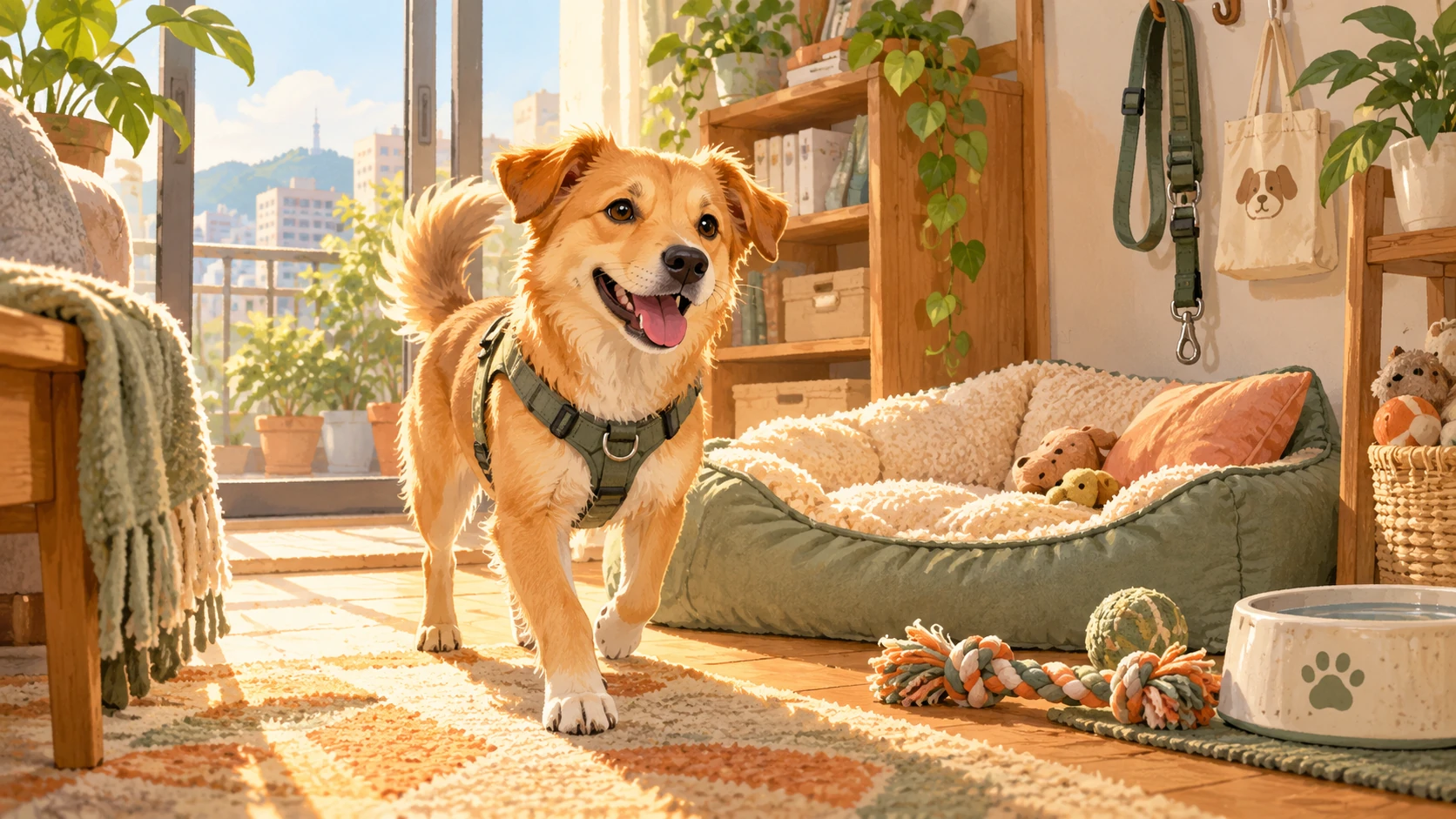
Bringing a new dog home can be joyful, messy and surprisingly quiet all at once. A puppy may investigate every corner; a shelter dog may prefer to rest; a foster dog may have routines you have not yet learned. During the first week, your job is not to create an instantly obedient companion. It is to make the environment predictable, protect everyone’s safety, notice medical concerns and allow trust to develop through everyday care.
There is no universal seven-day adjustment schedule. A popular “three days, three weeks, three months” saying is a reminder to be patient, not a clinical timeline or a promise. Follow the individual dog in front of you. A calm start often produces better information about personality and needs than a busy welcome party.
Before pickup: prepare the environment, not a performance
Choose a quiet resting area away from door traffic. Provide a comfortable bed, clean water, the dog’s familiar food if available, safe chew options and somewhere to retreat undisturbed. A crate or pen may be useful if introduced positively; it should never become a place where the dog is trapped as punishment. Check that windows, balcony doors and gates close securely. Put away medicines, household chemicals, electrical cords, loose batteries, small choking hazards and foods known to be dangerous to dogs.
Fit a comfortable harness and have a sturdy leash ready before you collect the dog. A properly fitted collar with identification can provide an additional safeguard. An unfamiliar dog can slip through a door or back out of loose equipment unexpectedly, so plan the route from transport to your home in advance. For car travel, use an appropriate restraint or secure carrier rather than letting the dog roam freely.
Ask the shelter, rescue, foster caregiver or previous household about current food, mealtimes, medications, vaccines, parasite prevention, previous injuries, house-training habits, fears, handling preferences and how the dog has responded to people and other animals. Request written records. If you are fostering, identify who approves veterinary costs, who makes medical decisions and whom to call outside office hours.
Arrival day: make the world small and understandable
Take the dog directly to a calm, suitable toileting location, then into a prepared area indoors. Keep the leash attached during the transition where safe, especially around exits. Offer fresh water and a chance to settle. Avoid a crowd of relatives, loud music, immediate trips to busy cafés or taking dozens of photos while the dog is cornered. A dog may sniff and explore; another may be motionless or sleep deeply. Neither response tells you everything about the dog’s future personality.
Use a soft voice, move slowly and invite rather than demand interaction. If the dog approaches, offer a gentle choice to interact; if they turn away, freeze, tuck their tail, lick their lips repeatedly or move behind furniture, increase distance. Do not hug, lean over or put your face near an unfamiliar dog’s face. Children should be taught to let the dog rest and leave freely; adults must supervise every interaction.
On the first day, note whether the dog eats, drinks, urinates, passes stool and appears alert. Appetite may change under stress, but persistent refusal to eat, repeated vomiting, breathing difficulty, collapse or marked lethargy deserves veterinary advice, with severe symptoms requiring emergency attention. Do not explain away medical problems as simple nerves.
Days two and three: let a routine do the reassuring
Choose reasonably consistent times for meals, toileting, quiet walks, short training and rest. The dog does not need an ambitious exercise plan immediately. Several low-key trips outside, quiet sniffing and relaxed time at home may be more useful than a long outing. Puppies, older dogs and dogs with medical limitations may need more frequent opportunities to toilet; ask your veterinarian about appropriate activity and care.
For house-training, calmly take the dog to an appropriate spot after waking, meals, play and other likely times. Praise or give a small treat immediately after successful toileting. If an accident happens indoors, clean it without scolding. Punishment may teach the dog to hide elimination rather than explain the desired location. If accidents are frequent, painful or accompanied by unusual thirst, contact the veterinary team; behavior is not the only possible cause.
Keep food changes to a minimum during the first days unless your veterinarian recommends otherwise. Use an appropriate complete diet for the dog’s life stage and individual health, and ask for advice before changing food or giving many new treats. Provide fresh water freely unless a veterinarian has instructed a specific plan. Record eating, drinking and toilet habits in simple notes so you can recognize changes instead of guessing later.
Build connection without forcing affection
Trust begins with small, repeatable experiences: you provide food, respect rest, open the door to a suitable toilet place and respond when the dog needs space. Reward behaviors you would like to see again—checking in with you, choosing a bed, following a cue—using food, play or another reward that the dog values. Keep sessions brief and end while the dog is still comfortable. Teaching a name response or a hand target can be more helpful than demanding a long list of commands.
Avoid dominance-based corrections, leash jerks, intimidation and other aversive training. Reward-based methods are supported by veterinary behavior guidance and reduce unnecessary welfare risks. If a dog growls, treat it as valuable information that something is uncomfortable. Create distance and get qualified help instead of punishing the warning. A frightened dog needs safety and gradual support, not a test of who is in charge.
Walks, visitors and other animals: go slower than you think
Early walks should prioritize safe toileting, sniffing and orientation rather than meeting everyone on the street. Do not allow unknown dogs to rush up or insist that your dog greet strangers. Choose quiet times and routes, and move away from dogs, scooters or traffic if your companion shows distress. For puppies whose vaccination series is incomplete, discuss safe social exposure with your veterinarian; socialization matters, but unnecessary disease exposure is not the goal.
If you have resident dogs or cats, begin with separation and controlled exchanges rather than an immediate face-to-face encounter in a narrow hallway. For dog-to-dog introductions, seek guidance on neutral, low-pressure meetings with adequate space; for cats, preserve elevated refuges, escape routes and inaccessible dog-free areas. Feed animals separately initially and supervise any interactions. A peaceful introduction can take time; do not leave animals together unsupervised until safety is reliably established.
Ask visitors to ignore the dog until it shows interest, and keep visits brief. Never let children disturb a sleeping or eating dog, take away chews or block its retreat. Even a friendly dog can be startled. Managing the setting is responsible care, not being overly cautious.
Days four through seven: expand freedom according to comfort
If your dog is eating, resting, toileting and exploring with increasing ease, gradually offer access to another dog-proofed room or a new quiet walking route. Keep the existing safe resting area available. If the dog is still hiding, pacing, barking at unexpected sounds or struggling to settle, narrow the experience instead of accelerating it. Observe patterns: what happens before a problem, what distance helps and what recovery looks like.
Practice very short separations only if the dog appears comfortable. Step away briefly, return calmly and avoid building up to absences that trigger panic. A camera may help identify distress when you are gone, but it does not replace intervention. Persistent vocalizing, destruction near exits, drooling or panic warrants discussion with your veterinarian and a qualified reward-based behavior professional. Do not use a crate to contain severe separation distress without professional guidance.
Medical care and practical housekeeping
Arrange a veterinary assessment soon after adoption or placement, especially if records are incomplete, the dog is young or senior, or symptoms are present. Bring documentation and ask about vaccines, parasite prevention, nutrition, dental care, identification, reproductive health and any conditions that affect exercise. Follow the veterinarian’s individualized advice rather than assuming every dog needs the same vaccine schedule or products. Check microchip contact details and applicable local registration requirements using official sources.
Know where the nearest emergency veterinary service is and how to contact your rescue or foster coordinator. Seek urgent help for breathing difficulty, collapse, seizures, severe injury, suspected poisoning, repeated unproductive attempts to vomit with a swollen abdomen, or other rapidly worsening signs. If the dog may have swallowed a toxin or object, call a veterinary professional promptly and do not induce vomiting unless specifically directed.
First-week checklist
- Prepare a quiet retreat, safe supplies, food, water and secure doors or gates.
- Gather written health records, medication instructions and emergency contacts.
- Fit walking equipment, travel safely and supervise transitions through doorways.
- Offer regular toileting opportunities and reward success without punishing accidents.
- Protect sleep, keep visitors limited and allow voluntary interaction.
- Give resident pets separate resources and make introductions gradually.
- Observe eating, drinking, stool, urination, behavior and signs of illness.
- Plan veterinary follow-up and adjust the next week to the dog you actually have.
Your new dog does not need to accomplish milestones by the seventh day. A safe home, predictable routines, kind training and a caregiver who listens are a much stronger beginning. If progress feels uneven, remember that learning to relax in a new place is work, too.
Keep Reading

Fostering offers a temporary safe home. Learn how to work with the rescue, prepare a separate space, monitor health and behavior, and help an animal move toward adoption.
Read the Full Guide →
Learn humane teaching for both dogs and cats: reward timing, shaping, helpful management, training obstacles and why intimidation is not the answer.
Read the Full Guide →
Compare in-home sitting with boarding, ask about safety and emergencies, prepare care sheets and arrange a thoughtful handoff.
Read the Full Guide →