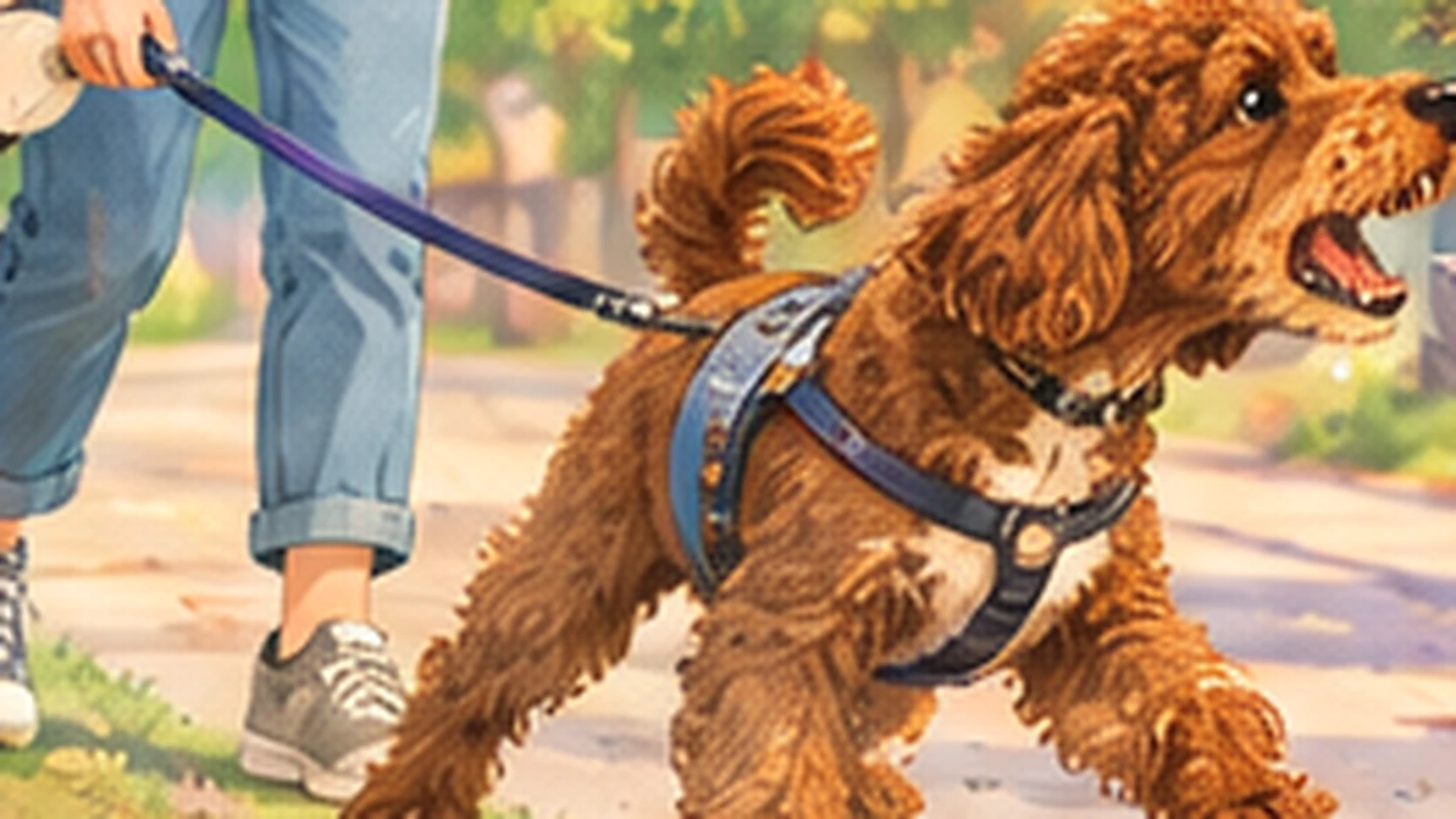
A dog who barks, lunges or spins when another dog appears on a walk may look 'aggressive,' but leash reactivity is not a diagnosis or proof of a particular motive. Fear, frustration, excitement, pain, previous experiences and the inability to move away can all contribute. The immediate goal is safer, less stressful walks; longer-term progress comes from learning what triggers a reaction and keeping the dog at distances where calm behavior remains possible.
Describe the reaction without labeling the dog
Notice what the dog sees, hears or smells just before a reaction. Some bark at other dogs, some at people or bicycles, and others only when startled in narrow spaces. Record distance, direction of approach, location, time and recovery afterward. Look for early signals: stopping, staring, becoming stiff, closing the mouth, leaning forward or refusing food. An occasional bark in surprise differs from repeated intense lunging. Avoid assuming that pulling toward a dog means friendship; a frightened dog can also move toward a threat. Careful observation is safer than guessing intent.
Rule out discomfort and safety problems
A change in reactivity can reflect pain, sensory changes or illness. Arrange veterinary assessment if the behavior is new, escalating, accompanied by limping or otherwise out of character. Check harness fit and leash attachment so walking gear does not rub, restrict breathing or allow escape. Use a comfortable, well-fitted harness and sturdy leash, avoiding retractable leashes in crowded areas where control is difficult. If biting risk exists, seek professional guidance on positive basket-muzzle training and management. Never let strangers approach to 'test' whether the dog has improved. Safety planning should precede training sessions.
Understand threshold and distance
A dog is over threshold when the trigger feels so intense that learning and disengaging become difficult. There is no universal distance measured in meters: a dog may tolerate another dog far away in an open park but react at a greater distance in a tight hallway. Find a starting point where your dog notices the trigger while still able to eat, sniff, turn and respond to you. Stay there briefly or move farther away. If the dog becomes rigid, barks or lunges, create distance without scolding. Increasing distance is a useful coping strategy, not a failure or a reward for bad behavior.
Choose walking environments for success
During retraining, avoid busy narrow paths, crowded dog parks and repeated close passes whenever possible. Try quieter routes or off-peak hours with good visibility and easy exits. Cross a street early, turn down another path, or step behind a parked car to break sightlines. Keep enough space that you can change course without a confrontation. Not every walk needs to include social contact with dogs. Sniffing, exploring a calm route and returning home relaxed can be more beneficial than finishing a fixed distance while rehearsing distress. A predictable route can help you recognize patterns and plan escapes.
Teach an easy exit cue at home
Start without triggers. Say a cheerful cue such as 'this way,' turn together and reward the dog for following. Practice in the hallway, then outside in quiet places until the turn becomes familiar. You can also reward the dog for voluntarily looking back at you. Keep sessions short and end before the dog is exhausted. In real life, use the cue before the other dog gets too close, not after a full reaction begins. If the dog cannot respond, simply make a safe retreat; repeated shouting of a cue in a stressful moment is unlikely to help. An exit skill buys space for future learning.
Pair distant triggers with good experiences
At a comfortable distance, let the dog notice the trigger and then deliver a small, valued treat or another appropriate reward. As the trigger moves away, the rewarding event ends. This form of counterconditioning aims to change the dog's emotional response, rather than merely suppress barking. Avoid luring a frightened dog closer with food. If the dog stops eating, freezes or surges forward, increase distance and reassess. Work in brief, manageable repetitions, with ample breaks and safe separation. Progress is measured by softer body language and quicker recovery, not by how close you can force the dog to stand.
Do not rely on punishment or flooding
Leash jerks, yelling, harsh corrections, forced greetings and aversive collars may increase fear, pain or frustration and can hide warning signs without changing the underlying emotional response. Flooding—holding the dog near a trigger until it appears to give up—can be distressing and unsafe. Do not punish growling or barking as communication. A dog who becomes motionless is not necessarily calm. Choose humane, reward-based methods and practical management. The plan should make triggers less overwhelming, not require the animal to endure repeated panic. Improvement often occurs in small increments over weeks or months.
Make encounters brief and optional
Many reactive dogs do not need leash greetings, and insisting on nose-to-nose meetings can create tension. If the dog can pass a trigger comfortably at a distance, reward and leave. Ask other owners for space clearly and politely. Avoid trapping your dog between fences or between a person and another dog. If a surprise encounter happens, turn away, place a visual barrier between animals if safe, or scatter a few treats on the ground only when the surroundings are secure and the dog can use them. Focus on getting everyone home safely rather than turning an unexpected encounter into a training exam.
Track progress realistically
Keep a simple log with trigger, approximate distance, reaction intensity, recovery time and what management worked. You might notice that the dog recovers faster even before barking decreases. Other signs of progress include checking in voluntarily, resuming sniffing and accepting a wider range of routes. Changes are rarely linear; weather, illness, sleep, excitement and previous encounters can alter tolerance from one day to another. Avoid escalating difficulty after one successful walk. Train at a level that repeatedly feels manageable, then gradually introduce new environments and distances with professional support if necessary.
Know when to involve an expert
Seek help from a veterinarian and a credentialed, reward-based trainer or veterinary behavior professional if reactions are intense, increasing or difficult to control; if a bite has occurred; or if your physical safety is at risk. Ask about experience with fear and reactivity, training techniques, safety planning and how progress is measured. A veterinarian may assess pain, anxiety or additional treatment options. Be wary of guarantees, dominance-based promises or professionals who insist a dog must confront triggers to 'get over it.' A good plan considers the dog's welfare and what the caregiver can safely manage.
Build a calm weekly routine
Set realistic goals: perhaps two short training outings in predictable places and several relaxed sniff walks with no deliberate exposure practice. Pack rewards, check the harness, plan a U-turn and identify quiet exits before leaving. Choose rest days after difficult encounters. Household members should use consistent cues and avoid surprise leash greetings. Where multiple caregivers walk the dog, share the trigger log and safety instructions. The first measure of success is fewer overwhelming moments, not perfect obedience. Calm routines create opportunities for the emotional response to change.
Respect the dog's pace and your own
Living with a reactive dog can be tiring, especially in crowded cities. You are allowed to change routes, schedule quieter walks, request distance and ask for support. Your dog also deserves the freedom to disengage from uncomfortable encounters. Some dogs eventually pass triggers easily; others do best with lifelong management and space. Neither outcome makes the relationship a failure. A safer, more predictable walk that ends with both of you relaxed is valuable progress. Practice patiently, keep expectations flexible and celebrate small improvements in confidence and recovery.
Keep Reading
Prepare a calm welcome for your new dog with safe spaces, toileting routines, kind training, gradual introductions and a realistic first-week checklist.
Read the Full Guide →
Learn to read a pet’s whole-body signals instead of judging by a wagging tail or a purr alone, and respond before discomfort escalates.
Read the Full Guide →
Recognize separation distress, record behavior safely and build a gradual, humane support plan without punishment or forced panic.
Read the Full Guide →