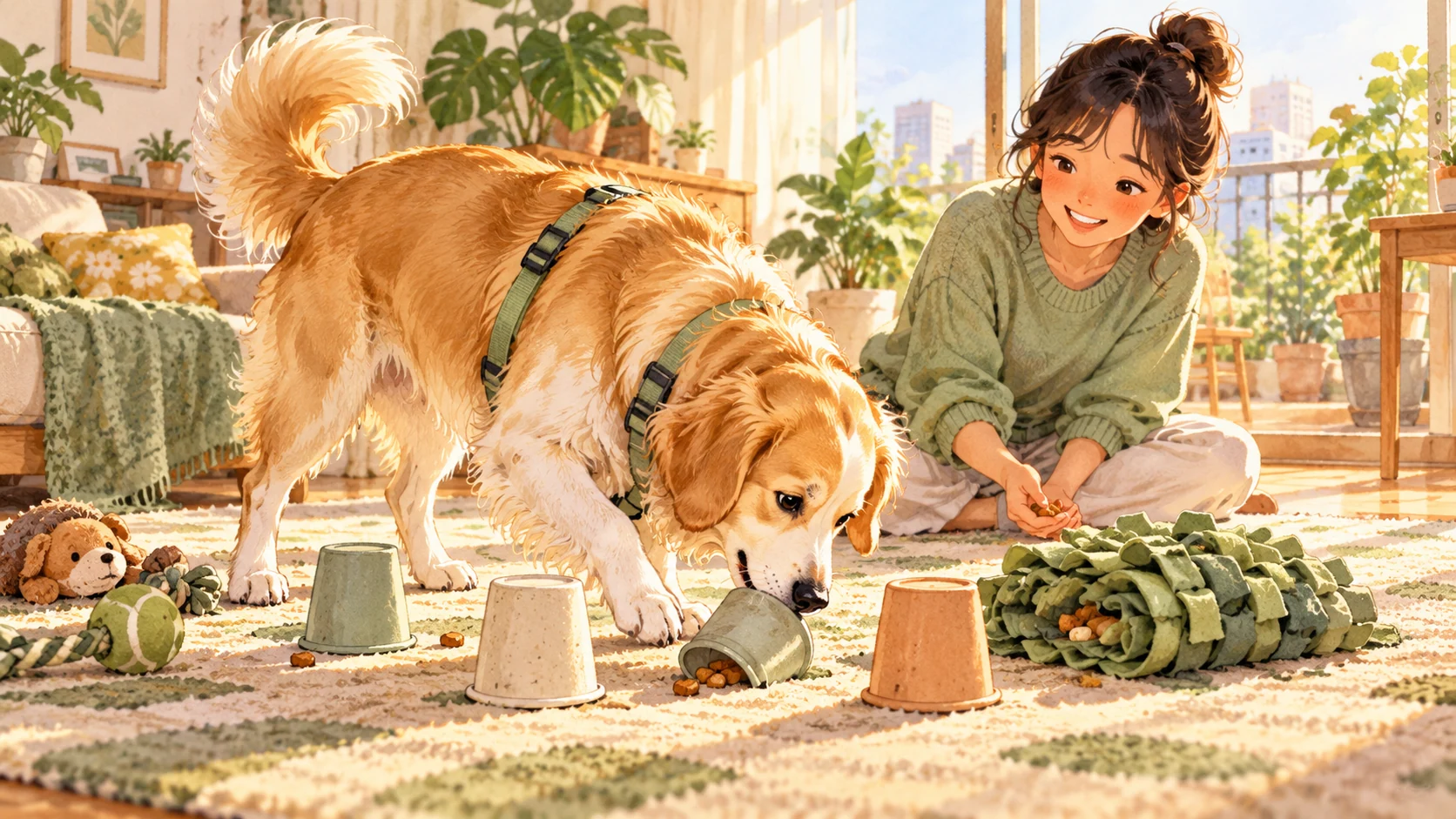
A walk is valuable, but exercise is not only about distance or speed. Dogs experience much of their world through smell, and a few minutes of choosing where to sniff or searching for a hidden treat can offer a different kind of engagement than marching along a sidewalk. Scent games need no special breed, expensive kit or competitive training. They work best when the dog can participate voluntarily, succeed at first and rest afterward. Start with food or familiar toys rather than essential oils, and adapt activities for puppies, older dogs, small apartments and rainy days.
Begin with a slow, choice-based sniff walk
Choose a safe path at a quiet time and allow your dog opportunities to investigate interesting smells on a comfortable harness and appropriate-length leash. Avoid pulling the dog onward at every pause, but also avoid letting it consume rubbish or approach unknown animals. Some dogs prefer brief sniffing stops; others enjoy lingering. Let the dog set part of the pace when safe. Watch for exhaustion, heat or rising stress, especially in short-nosed breeds or animals with medical limitations. This is not a replacement for exercise a dog needs, but an additional way to make a walk satisfying.
Teach the easiest possible “find it” game
Show your dog a small piece of its usual food, toss it onto an uncluttered clean floor where the dog can clearly see it, and say a cheerful search cue if you wish. Repeat just a few times. Next, scatter two or three pieces over a small area and let the nose take over. Your job is to supervise, not point frantically at each piece. Some dogs need larger or more aromatic rewards to get started. Avoid slippery floors, crumbs near household chemicals or places where another pet might compete for the food. Stop while the dog still seems interested.
Try the towel or snuffle-mat search
Lay a clean towel flat and place a few kibble pieces on top, then fold one edge loosely so the dog can nudge it open. Increase difficulty only when the animal solves the easy version comfortably. A purpose-made snuffle mat can serve a similar function, provided its fabric is durable and the dog does not chew or swallow pieces. Supervise closely and put the materials away afterward. Count treats within the day’s calorie allowance. Dogs with food guarding behavior should work alone in a secure space, and games should stop before frustration turns into shredding or frantic swallowing.
Make a simple cup-search puzzle
Place one safe treat under a lightweight, unbreakable cup, leaving it partly exposed at first. Encourage the dog to investigate and lift the cup for it if the dog cannot move it without frustration. Progress to two or three widely spaced cups only after the basic game is easy. Avoid glass or sharp edges and check that a cup cannot fit dangerously over the muzzle. A dog may solve a cup puzzle by memory, sight or scent, and that is fine; the goal is engagement, not a laboratory test of olfaction. Keep sessions brief and always end with a successful find.
Hide a familiar toy, not a hazardous scent
If your dog loves a particular toy, briefly show it, place it partly behind a cushion and invite a search. As confidence grows, try another easy hiding location while the dog waits safely elsewhere. Reward finding the toy with play or praise. You do not need concentrated essential oils, scented chemicals or competitive odor kits for ordinary enrichment; some substances can irritate or harm animals if misused. Check hiding places for electrical cords, unstable shelves and swallowed objects. Do not hide toys in areas the dog normally must avoid, such as behind medication cabinets or inside rubbish bins.
Use cardboard searches safely
A shallow cardboard box with a few treats placed openly among large safe objects can become an easy search area. Progress by using several boxes with one containing food, but only for a dog that does not eat cardboard, tape or packing material. Remove staples, plastic film, strings and sharp edges. Some dogs will immediately shred a box; that means choose another game rather than celebrating a risky behavior. In homes with toddlers or other pets, pick a space where pieces cannot be scattered for someone else to swallow. Always clear the floor at the end.
Watch your dog’s emotional state
A relaxed search often includes sniffing, pauses, thoughtful movement and easy recovery afterward. Signs that the task is too difficult can include frantic pawing, sharp barking, rushing between objects or abandoning the activity. Lower the difficulty or stop. Some dogs with fear or reactivity may enjoy private scent games away from triggers, while others need professional guidance to prevent frustration. Never push a dog toward a frightening area just because a treat is hidden there. A short successful session may be more useful than a long and exhausting challenge.
Adapt for puppies, seniors and limited mobility
For puppies, use easy searches on safe surfaces and avoid overstimulating long sessions. Senior dogs or those with arthritis may prefer treats at nose height without crouching, jumping or climbing. Dogs with a reduced sense of smell can still enjoy exploring using sight, touch or familiar rewards. Follow veterinary restrictions after surgery or during illness. For a dog on a special diet, use its permitted daily ration rather than inappropriate treats. Enrichment should accommodate the body the dog has today, not demand athletic performances to earn attention.
Build a varied weekly menu without overdoing it
Try a relaxed sniff walk one day, towel searches another, and a simple toy hide on a rainy afternoon. You can repeat favorites; novelty is not essential if the dog remains engaged. Track treat amounts and physical recovery so enrichment does not worsen weight or joint problems. Invite all caregivers to use the same search cue and safety rules. If your dog seems bored, first check sleep, social contact, exercise and health, rather than endlessly increasing puzzle difficulty. The best activity is one that fits the animal, your home and your available time.
A ten-minute rainy-day activity plan
Begin with a minute of calm sniffing near a few pieces of kibble, then do two easy cup finds, followed by a brief towel search. Finish by offering water and a quiet resting spot. Use the dog’s regular ration for most rewards and stop sooner if focus drops. The timing is illustrative, not a target every dog must meet. A tiny apartment is enough if the floor is clear and the dog is comfortable. Do not use scent games to avoid medical care when an animal suddenly cannot exercise as usual.
What to do when a dog refuses to search
First ask whether the dog is worried about the location, distracted by another pet or uncomfortable lowering its head. Make the reward visible, use an easier surface and offer the opportunity once without repeated pressure. If the dog walks away, respect that decision and try another time. Some dogs prefer finding toys or following a familiar person instead of food. A sudden loss of interest together with appetite or energy changes deserves veterinary assessment. Enrichment should be an invitation rather than obedience drilling.
Include household members without increasing competition
One person can hide a safe reward while another calmly waits with the dog in a separate area; then let the dog search on cue. Children should participate only with adult supervision and should not take food or toys from the dog’s mouth. In multi-dog homes, give each dog an individual turn to avoid guarding and competition. If the dog is easily startled, choose quiet verbal encouragement over shouting. Celebrate small successes, clear away equipment afterward and finish with a rest period. A predictable routine makes these activities feel safe and satisfying.
Keep Reading
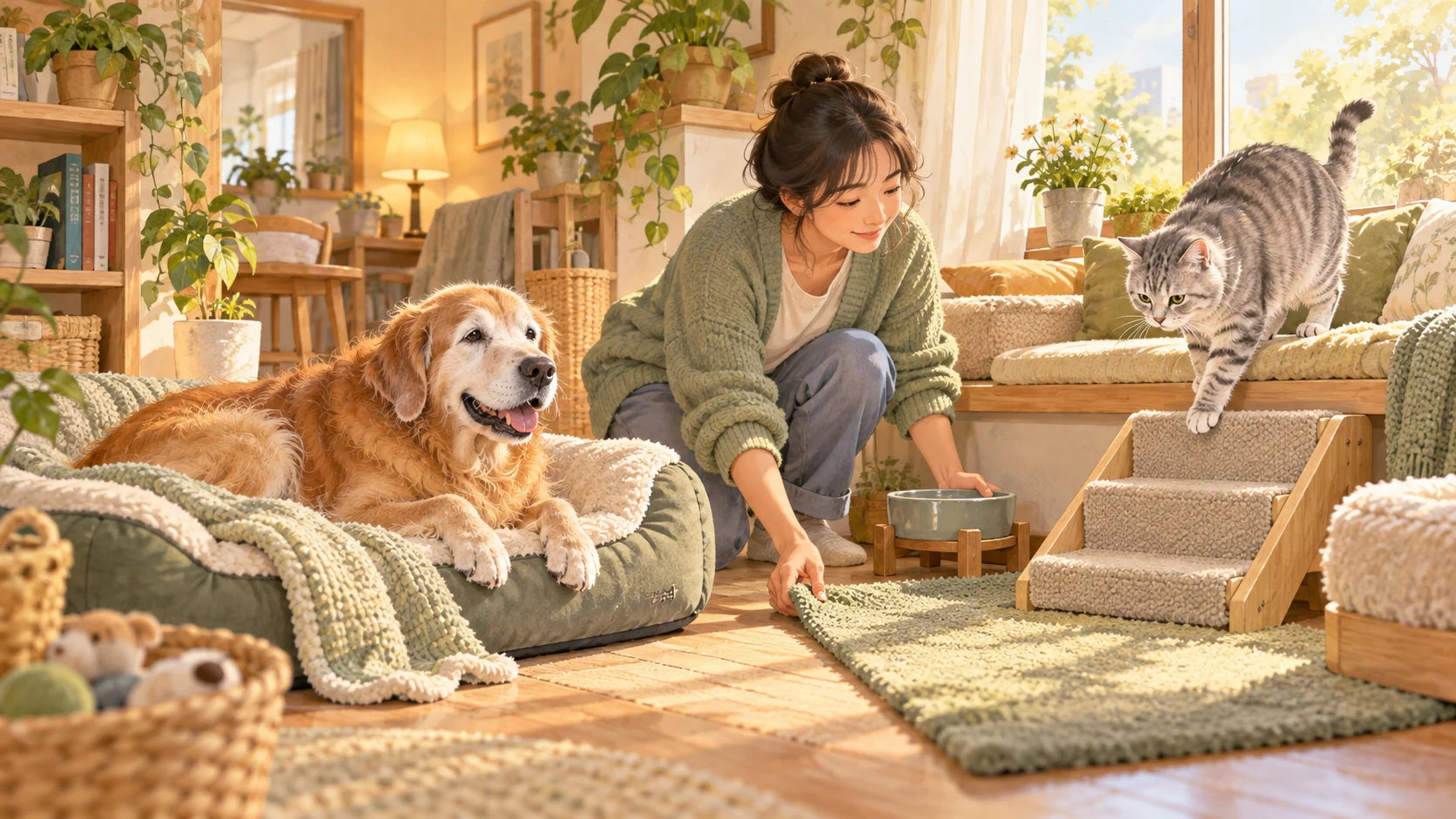
Help older dogs and cats stay comfortable with mobility supports, individualized checkups, pain awareness, feeding adjustments and familiar routines.
Read the Full Guide →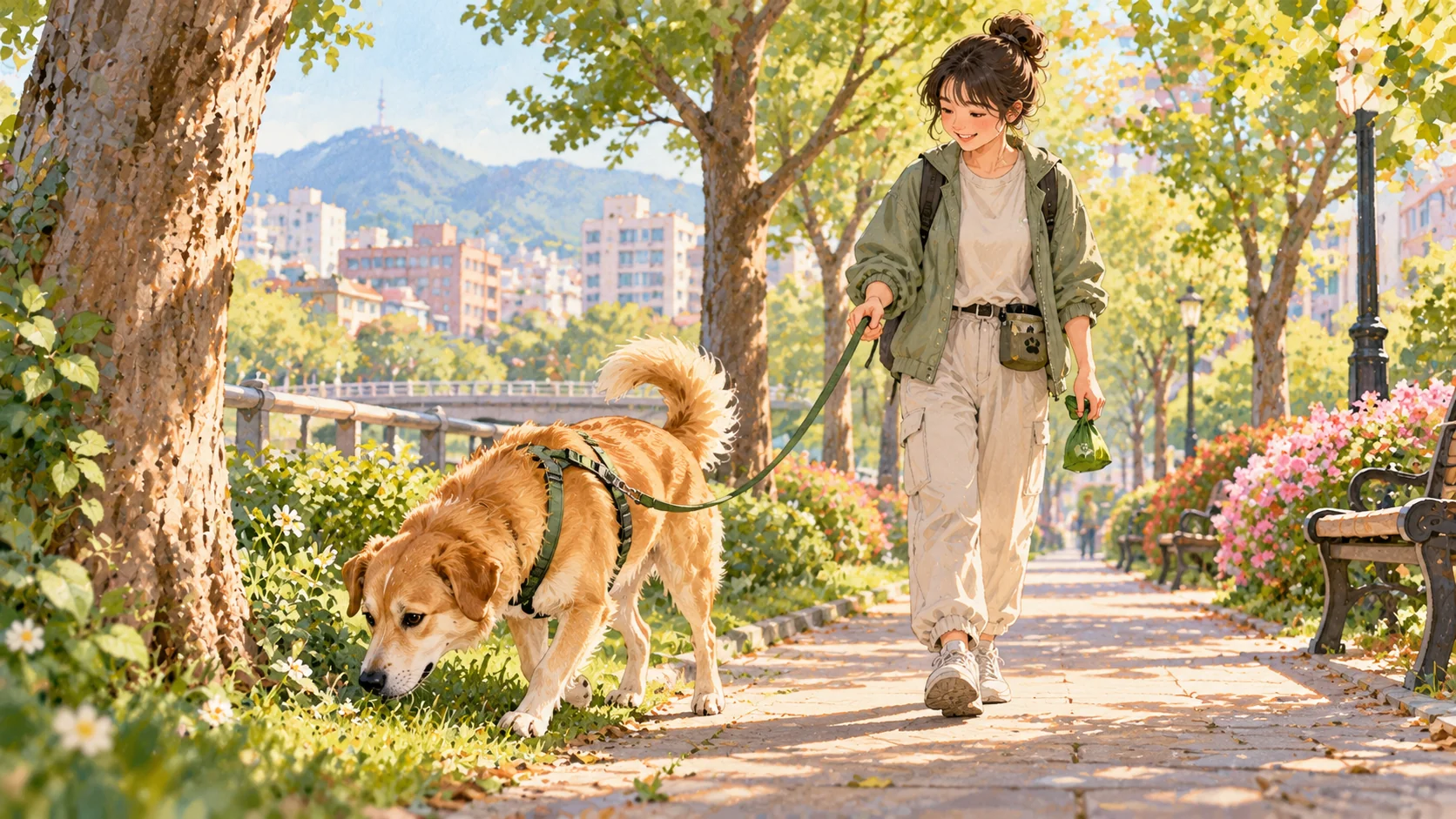
A realistic dog-walking and house-training plan covering sniffing, equipment, positive toilet rewards, urban weather, accidents and when to seek veterinary advice.
Read the Full Guide →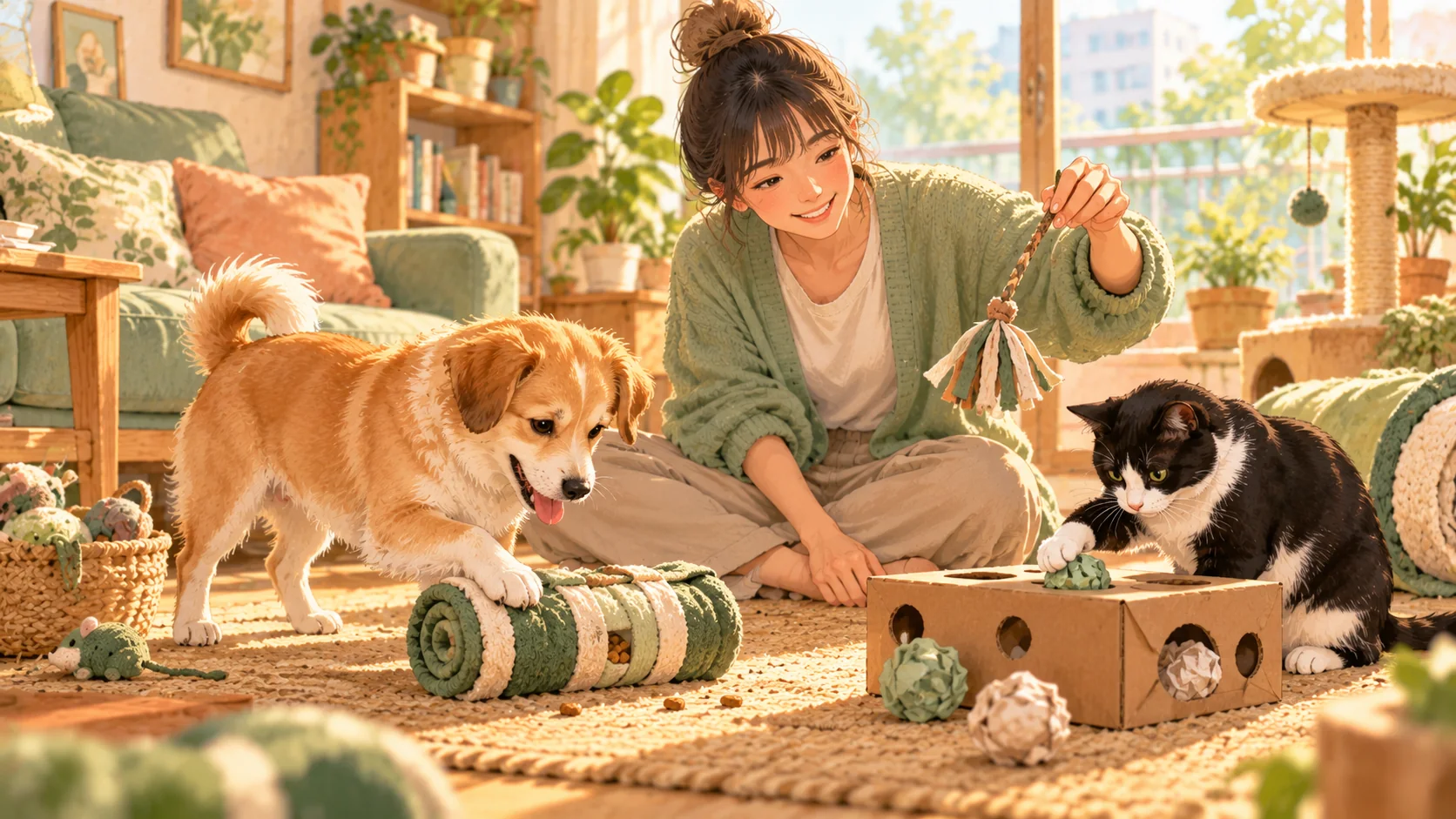
Make engaging dog and cat activities with everyday materials, using safe puzzles, scent games, choice and short sessions instead of expensive gadgets.
Read the Full Guide →