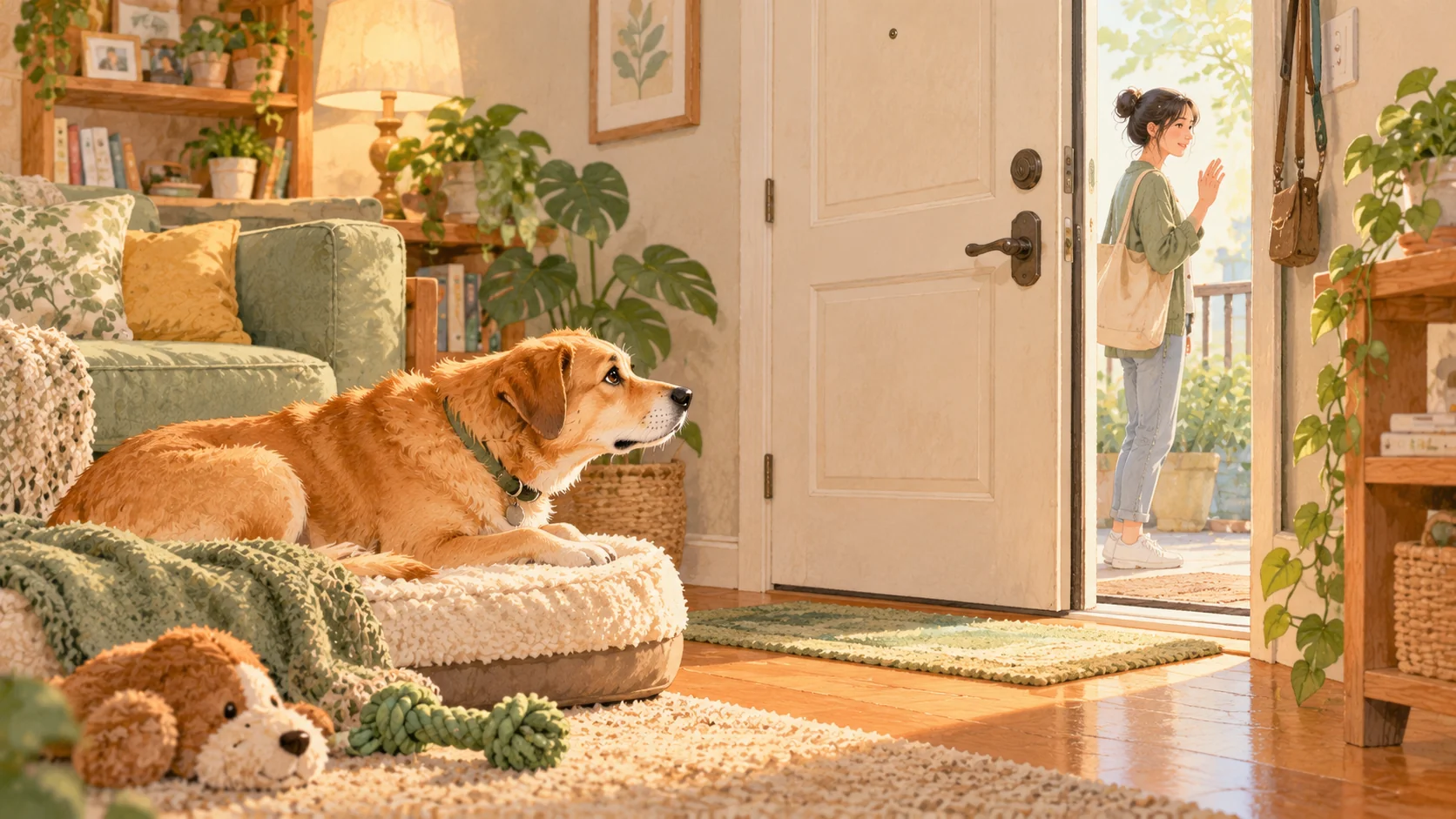
Being noisy alone is not always separation anxiety
A dog that barks, scratches doors or has accidents during an absence may be frightened of separation, but may also be reacting to outside noises, boredom, insufficient toilet opportunities, pain or an unfamiliar environment. The pattern matters. Some dogs become distressed as soon as keys appear; others stay relaxed until a particular event occurs. Do not label the dog stubborn or manipulative. Separation-related distress is a welfare problem, not a challenge of who is boss. Gather observations before trying training methods that could make fear worse. If behavior began suddenly, discuss medical causes with a veterinarian. A dog with new pain, bladder problems or cognitive changes can behave differently when alone. The appropriate plan depends on what actually triggers the distress.
Use a camera to discover the pattern
A simple camera or phone recording can show when behavior begins, how long it lasts and whether the dog settles. Record an ordinary departure while maintaining safety; do not deliberately leave a highly distressed dog for a long period to obtain dramatic footage. Look for pacing, panting, drooling, repeated vocalization, attempts to escape, refusal of usually welcome food and sustained vigilance. Also notice calm periods. Some dogs show distress only when a particular person leaves; others struggle with being completely alone. Keep a brief record of the time, preceding routine, duration and intensity of signs. Share useful clips with a veterinarian or qualified behavior professional. Video is an observation tool, not an invitation to remotely scold a dog through a speaker.
Separate mild discomfort from dangerous panic
A brief whine followed by settling is not equivalent to hours of escape attempts and frantic pacing. Distress can cause dogs to injure paws, teeth or skin around doors and crates. If a dog is at risk of self-injury, cannot recover, refuses food consistently during departures or panics when confined, consult a veterinarian promptly and seek a behavior plan. Do not force the dog into a crate simply because it keeps damage out of sight; a crate may increase fear or injury in an animal that panics. Consider safe supervision and temporary coverage with a trusted person while treatment begins. Punishment, shock collars, yelling or deliberate prolonged “cry it out” absences are inappropriate for fear-based problems and may intensify the association between being alone and danger.
Build tolerance below the panic threshold
Graduated absence training begins with durations the dog can genuinely tolerate. For one dog that may mean stepping behind an interior door for a second; another may manage several minutes. Return before panic begins, pause until the dog is relaxed, then repeat. Increase duration in tiny steps and occasionally use easier repetitions to preserve confidence. Monitor video or body language rather than following a rigid schedule. If stress appears, shorten the next repetition and review whether the environment or timing changed. The goal is to change the dog’s emotional expectation, not merely suppress barking. Severe cases benefit from guidance from a credentialed veterinary behaviorist or experienced reward-based professional. Real progress may be uneven and can require time, scheduling changes and medical support.
Make departures predictable, but not theatrical
Some dogs become anxious when they see shoes, bags or keys. Work on these cues separately: pick up keys, then sit and read; put on shoes, then prepare a meal. Pair harmless versions with calm ordinary life, without teasing the dog or overwhelming it through endless repetitions. Create a comfortable resting area with water, safe bedding and manageable background noise. A food toy may help an animal that is relaxed enough to eat, but a dog refusing even favorite food is providing useful evidence of stress. Keep arrivals and departures calm and kind; there is no need to ignore an animal desperately seeking comfort. Predictability helps, but the skill being built is safe tolerance of absence, not blind obedience at the door.
Protect progress during everyday obligations
Behavior treatment becomes difficult if the dog practices panic for hours every workday. Make a realistic care plan: can a family member stay, can a suitable sitter visit, or can the work schedule be adjusted temporarily? A daycare program is appropriate only if the dog is comfortable there and can be kept safe. Some dogs relax with any familiar person present; others need a more specific arrangement. Explain the training threshold to helpers so they do not test the dog by leaving longer than planned. Use a calendar to track tolerated durations and setbacks. If circumstances make complete prevention impossible, ask the veterinary team about humane risk reduction rather than blaming yourself or leaving the dog to cope alone. Medication may be one component of professional treatment when indicated.
When a veterinarian or behavior specialist should lead
Professional help is especially important when signs start suddenly, injuries occur, severe panic begins before the door closes, the dog shows aggression when restrained or several approaches have failed. A veterinarian can investigate pain, illness, medication needs and whether referral is appropriate. Ask trainers what qualifications they hold, how they handle fear and whether they use punishment or aversive tools. Request a written plan with manageable steps and clear signs for pausing. If a dog is older and shows confusion or altered sleep, discuss cognitive and medical changes as possible contributors. The best treatment combines careful observation, humane training, environmental support and communication with caregivers. It does not promise every dog will become comfortable with eight-hour absences on a fixed timetable.
Measure improvement in comfort, not silence
Useful signs of progress include the ability to rest, choose a toy, eat normally, move away from the door and recover promptly after a mild surprise. Fewer barks are positive only if they reflect comfort rather than freezing or exhaustion. Review recordings with kindness and avoid comparing your dog to another pet on social media. A setback after moving house, illness or a schedule change does not erase everything learned; it indicates the plan needs adjustment. Celebrate one calm second if that is the starting point. Maintain enrichment, walks and social contact that fit the animal’s needs, while remembering those activities alone do not cure a fear of separation. A humane goal is a dog that feels safer in everyday life and a household that has realistic tools to support it.
Distinguish being alone from being away from one person
Observe whether the dog settles when a trusted friend stays after you leave. Some dogs mainly struggle with isolation, while others become distressed when one particular guardian departs even if someone else remains. This difference influences temporary care and training plans. Test only in safe, short situations rather than allowing a full panic episode. Consider whether household sounds, confinement, outside traffic or the departure routine itself predicts distress. Share these findings with the veterinary team. A dog that relaxes with a sitter may have a workable bridge during treatment; a dog that panics despite company needs a different approach. Avoid simple labels until the evidence is clear, and revisit the pattern when routines change.
Design a recovery plan for setbacks
Even a careful desensitization plan can run into setbacks after illness, a move, an unusually long absence or a frightening event outside. Review the last duration at which the dog appeared comfortable, then restart at an easier level instead of pushing through distress. Check basic needs: toilet breaks, pain, sleep and predictable access to food and water. Reduce sudden tests from visitors who want to see “how long the dog can take it.” Communicate with sitters about the current safe threshold and keep a low-stress alternative for days training cannot happen. When anxiety worsens sharply, call the veterinary professional who knows the case. Progress is measured over time by improved comfort, not an uninterrupted streak of ever-longer departures.
Keep Reading
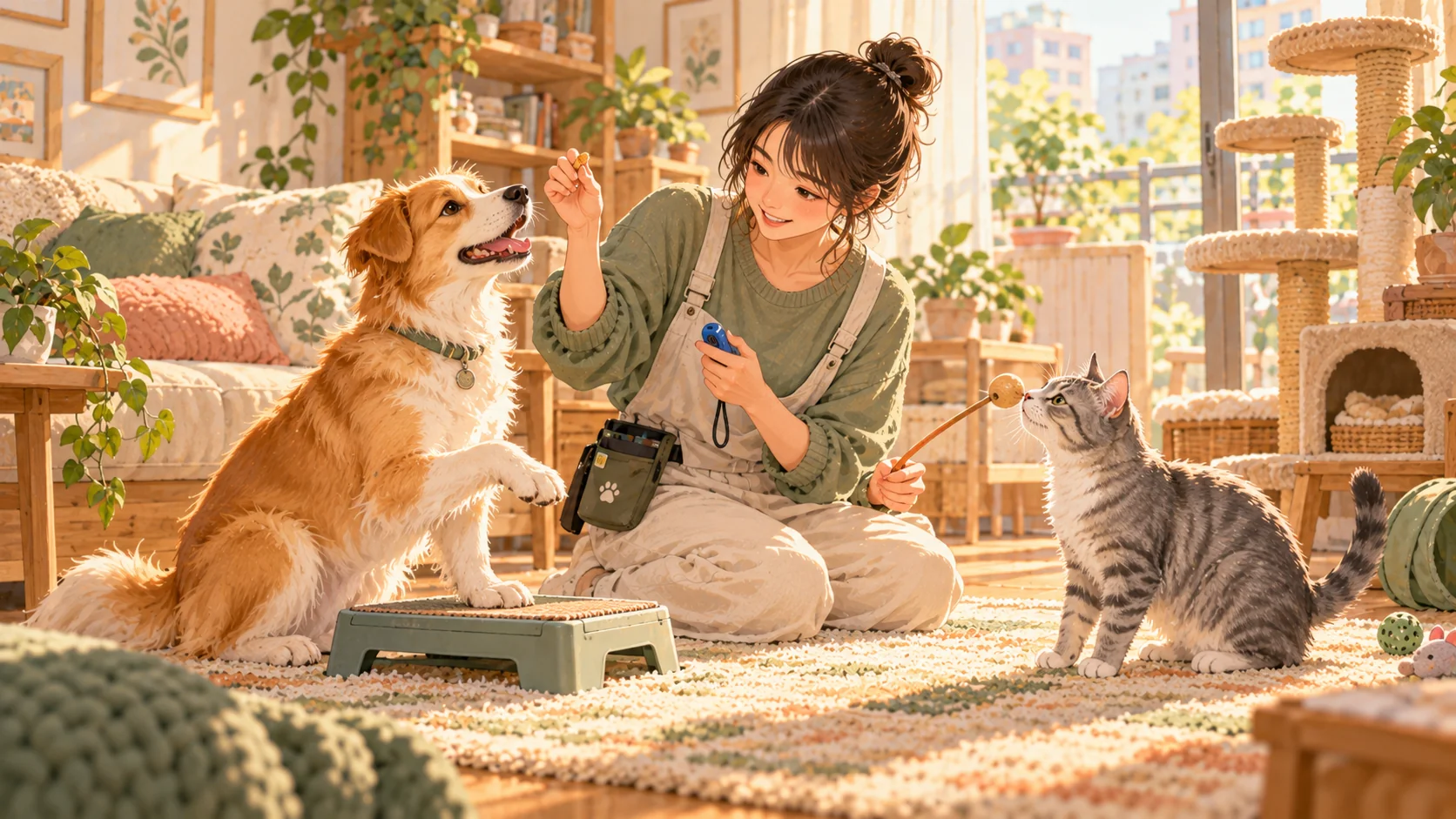
Learn humane teaching for both dogs and cats: reward timing, shaping, helpful management, training obstacles and why intimidation is not the answer.
Read the Full Guide →
Learn to read a pet’s whole-body signals instead of judging by a wagging tail or a purr alone, and respond before discomfort escalates.
Read the Full Guide →
Understand barking and lunging on leash, create distance, use reward-based counterconditioning and practice realistic safer walking plans.
Read the Full Guide →