The loss of a companion is a real loss
A dog or cat may have shared ordinary mornings, life transitions, quiet evenings and years of dependable companionship. When that relationship ends, the home can feel unfamiliar in ways outsiders do not understand. A bowl remains in the corner; a sound at the door makes you turn around; an appointment reminder arrives after the animal is gone. Grief can include sadness, anger, relief, numbness, guilt, loneliness and even unexpected laughter at a memory. These responses do not follow a reliable order or a fixed schedule. Some people cry immediately; others remain busy with practical arrangements and feel the loss later. You do not need to prove the depth of your bond or compare your reaction with someone else’s. Treat the loss as significant because it was significant to you.
When guilt takes over, revisit the full story
After a pet dies, caregivers often replay decisions: Was treatment too late? Was euthanasia too early? Did I miss a sign? It is natural to question difficult choices, particularly when illness progressed quickly or several reasonable options were available. But judging yesterday’s decisions with information learned only afterward can be unfair and painful. If questions about medical care are unresolved, request a compassionate follow-up discussion with the veterinary team. They may be able to clarify the animal’s condition, expected suffering and why certain options were discussed. You can write down what you knew at the time, what advice you received and how you tried to protect comfort. Grief and uncertainty can coexist without proving that you failed. The bond was larger than its last medical decision.
Give yourself permission to handle reminders differently
For some people, washing and storing bowls quickly makes the home feel manageable. Others need the bed to stay untouched for weeks. Neither choice measures love. Try making decisions in stages. Keep items that are meaningful in a box or a drawer, and postpone permanent disposal when emotions are overwhelming. Ask household members before moving objects they associate strongly with the pet. A few photographs in a private album may feel comforting, while a public social-media tribute may feel too exposed; choose what suits you. Digital reminders, pet-store subscriptions and veterinary appointment notifications can be changed gradually. If you need a quiet space away from constant photographs, that too is reasonable. There is no requirement to build a memorial or to pack everything away.
Different family members may grieve differently
One person may need to tell stories repeatedly while another becomes quiet. Children might ask the same concrete question many times; teenagers may appear detached and then feel upset privately. Older relatives may use cultural or spiritual traditions that are important to them. Give clear, age-appropriate explanations instead of ambiguous language that could make a child afraid of ordinary sleep. Avoid telling a child that the animal went away because it was naughty or unloved. Invite questions and say honestly when something is unknown. Families can choose a shared ritual without forcing everyone to participate. A child might draw a picture, a sibling might write a letter and a parent might prefer silence. The central kindness is making space for differences, not demanding identical reactions.
Help surviving pets with change, without assuming their feelings
A surviving dog or cat may search the house, vocalize more, sleep differently or show changes in appetite after a household companion is gone. Some animals show little observable change. Behavior alone cannot tell us exactly what they understand about death. Keep familiar feeding, rest and toilet routines where possible, allow access to comfortable places and offer quiet companionship without forcing interaction. Monitor eating, drinking, elimination and energy. A cat that stops eating or a dog that becomes ill needs veterinary advice, not an assumption that every symptom is simply grief. If social relationships were tense, the remaining pet might even seem more relaxed; that observation does not mean it lacked attachment. Give each animal individual care and time to adjust.
Memorials can be small and personal
A memorial may be as simple as a favorite photograph, a paw-print keepsake, a letter, a tree planted where permitted or an album of everyday moments. Some caregivers make a donation to an animal rescue, volunteer or support veterinary assistance in a companion’s memory. Others create a small seasonal tradition or cook a familiar meal while sharing stories. If burial or cremation arrangements are needed, ask the veterinary team or licensed local provider about available options and current regulations; do not assume practices are the same everywhere. Give yourself permission to change plans. An elaborate ceremony is not required to make the relationship meaningful. Choose acts that feel gentle and manageable, and remember that recalling ordinary daily moments can be just as valuable as commemorating the last day.
Know when support from people may help
Grief can disrupt sleep, concentration, appetite and daily motivation. Talk with someone who respects the relationship: a friend, relative, veterinary team member or pet-loss support group. You do not have to listen to comments suggesting that a pet can simply be replaced. Consider professional mental-health support when distress is persistent, overwhelming or seriously affecting ordinary functioning. If you ever feel in immediate danger or unable to keep yourself safe, seek urgent local crisis or emergency help. Support does not mean trying to eliminate every painful memory; it means having company and practical strategies while living with them. Some people find journaling or time outdoors helpful; others need structured counseling. You can ask for a particular kind of support, such as someone to listen rather than offer solutions.
There is no deadline for love or grief
Anniversaries, familiar routes, a song or the sight of another animal can bring grief back long after daily life has become easier. This does not necessarily mean you are moving backward. Many people gradually learn to carry the bond in a different form. If someday you consider adopting or fostering again, let that decision come from readiness and capacity rather than pressure to fill an empty space. A new animal will have its own personality and needs, not a duty to replace a beloved companion. It is equally valid to wait or to decide not to bring another animal home. You can remember the first pet while caring lovingly for another, or you can honor the memory without new ownership. Healing often means making room for both gratitude and sadness.
Anticipatory grief can begin before a goodbye
When a veterinarian explains that an illness cannot be cured, caregivers may grieve while still providing daily care. This anticipatory grief can include hope, exhaustion, anxiety and the painful task of making decisions. Ask about palliative care, comfort and what changes should trigger urgent reassessment. Write down the pet’s favorite activities and the moments that still feel enjoyable, but do not treat a quality-of-life score as an automatic verdict. Share responsibilities with trusted people when possible. Allow meaningful ordinary time: sitting together, a familiar meal if medically appropriate or a gentle photograph. Some families want a planned goodbye, while others cannot predict the timeline. Both situations deserve patience, compassionate professional help and respect for the animal’s comfort.
Let ordinary life gradually return without betraying memory
Eventually you may laugh with friends, travel, enjoy a quiet morning or notice that an entire afternoon passed without crying. This does not erase your relationship with your pet. You might create a gentle habit of remembering—looking at one photo when you want to, visiting a favorite walking spot or telling a story on an anniversary—without requiring grief to dominate every day. If a particular reminder is overwhelming, step away and return when ready. Ask others not to rush you toward adopting another animal. A routine of sleep, meals, movement and contact with supportive people can help you regain steadiness, even while sadness remains. There is room for renewed joy and for a lasting bond with an animal who is no longer physically present.
Keep Reading
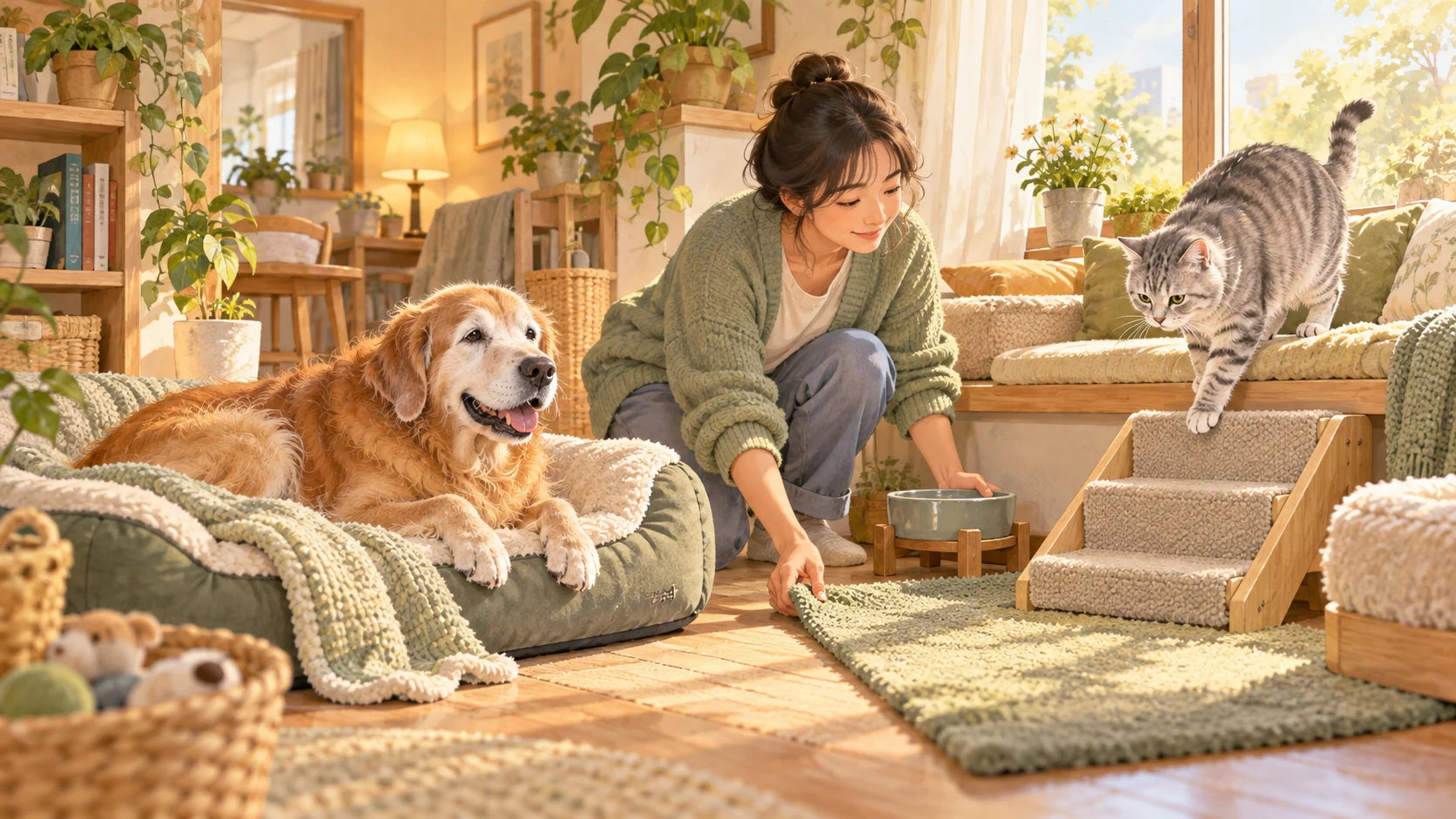
Help older dogs and cats stay comfortable with mobility supports, individualized checkups, pain awareness, feeding adjustments and familiar routines.
Read the Full Guide →
Learn to read a pet’s whole-body signals instead of judging by a wagging tail or a purr alone, and respond before discomfort escalates.
Read the Full Guide →
Compare in-home sitting with boarding, ask about safety and emergencies, prepare care sheets and arrange a thoughtful handoff.
Read the Full Guide →