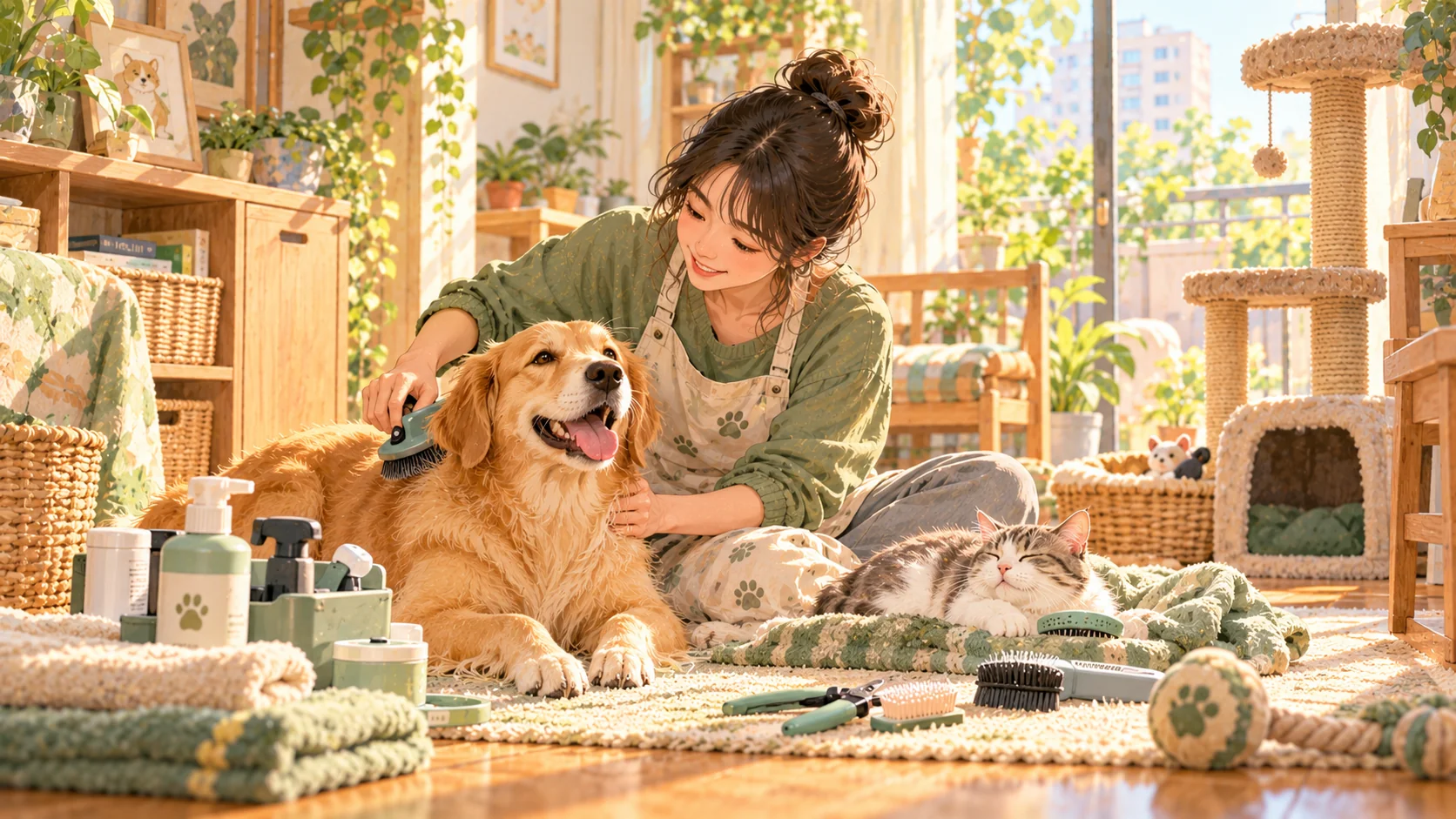
Grooming is not only about making a pet look tidy. It offers a chance to notice skin changes, tangles, sore paws, overgrown nails and the way an animal feels about being handled. Some dogs need regular professional coat maintenance, while many cats manage most of their own coat care. Neither species benefits from being forcibly held down for a perfect photograph. Home grooming works best when it is broken into small, comfortable tasks and paired with calm, reward-based handling. Know which jobs are safe to do yourself and which need a veterinarian or skilled groomer.
Begin with trust and a good setup
Choose a quiet room with a non-slip surface, familiar bedding and tools prepared in advance. Give your pet time to inspect a brush or nail clipper without immediately using it. Touch briefly, reward calm participation and stop before the animal becomes overwhelmed. A dog that turns away, stiffens or pulls a paw back is communicating something; a cat that lashes its tail, flattens ears or attempts to escape is doing the same. Do not interpret those signals as defiance. Practice two or three seconds of handling, then release. For animals with a history of painful or frightening grooming, work with a fear-aware professional on a gradual plan. Sedatives or restraint techniques should never be improvised from social media tutorials.
Match the brush to the coat
A short, smooth coat may need a soft rubber brush or grooming mitt, while longer coats may require careful combing in layers to prevent mats. Double-coated dogs often shed heavily and need tools that remove loose hair without scraping the skin. A long-haired cat may benefit from brief daily sessions in places prone to tangles, such as behind the ears or around the legs. Always follow the direction and sensitivity of the coat, checking for redness, sores or parasites. Pulling a tight mat is painful; severe mats may require professional removal. Do not cut close to the skin with household scissors, because folded skin can hide beneath the fur. Avoid routinely shaving double coats without specific medical or grooming advice.
Bathing: less drama, more preparation
Dogs may need occasional bathing depending on coat type, skin condition and what they have rolled in; many healthy cats rarely need a bath. When bathing is appropriate, use a species-suitable shampoo and lukewarm water, protect the eyes and ears from direct spray and rinse thoroughly. Human shampoo, concentrated fragrances and essential oils can irritate or harm animals. Place a slip-resistant mat in the tub and keep the session short. Dry thoroughly with a towel, especially in skin folds, and use a dryer only at a safe temperature and distance if tolerated. If your pet is severely distressed, stop and discuss alternatives. Persistent bad odor, greasiness, itching or recurrent skin lesions warrant veterinary care rather than increasingly frequent baths.
Nail trimming without a wrestling match
Long nails can snag, alter footing or cause pain, but the length and frequency of trimming vary by activity, age and anatomy. Introduce handling first: touch a paw, reward, briefly hold a toe, reward, then let go. Work up to showing the clipper and trimming the tiniest safe tip of one nail. Dark nails make the quick harder to see; if you are uncertain, a veterinary nurse or groomer can demonstrate safe technique. Have styptic powder available for minor accidental bleeding, and seek veterinary care if bleeding will not stop or the toe is injured. Do not force a whole paw at once. A scratch board may help some dogs maintain front nails, while cats also need appropriate scratching surfaces. Dewclaws require attention because they may not wear naturally.
Ears, eyes, teeth and paws deserve a look
Checking is often more valuable than aggressive cleaning. Examine ears for unusual redness, discharge, unpleasant odor or discomfort; do not insert cotton swabs deep into the canal or use unapproved solutions. Wipe visible debris only as your veterinarian recommends. Look around the eyes for changes in tearing or squinting, but avoid applying home remedies to the eyeball. Inspect paw pads for cuts, heat irritation, stuck seeds and fur mats between toes, especially after outdoor activity. Teeth and gums are also worth checking, although a proper dental-care routine deserves its own guide. Sudden bad breath, painful chewing, bleeding gums or loose teeth call for a veterinary dental examination. Grooming should help you notice issues early, not convince you to treat them all yourself.
Treat cats and dogs as individuals
Many cats dislike water but welcome gentle brushing when they can choose when to leave. Some dogs love a brush but fear the sound of clippers. Brachycephalic animals, those with arthritis and those with respiratory difficulty may find prolonged positions especially uncomfortable. Puppies and kittens benefit from short positive exposures, not a marathon session to “get them used to it.” Older animals may need softer tools, lower surfaces and more frequent pauses. If an animal has a chronic skin disorder, parasites, open wounds or a history of painful ears, ask for a customized plan. A pet that suddenly objects to an activity it previously tolerated may be signaling pain. Changes in behavior deserve attention before you intensify training or restraint.
Plan a routine your household can keep
Set a brief weekly inspection of coat, ears, paws and nails, then adjust brushing and bathing frequency to actual needs. Keep a note of what tools worked and which body areas remain difficult. In households with multiple caregivers, agree on the same cues and handling style so the pet experiences predictability. Use rewards from the pet's existing food budget and quiet breaks instead of escalating pressure. For long-haired breeds or coats that mat easily, book professional grooming before severe tangles form. Ask groomers about handling methods, drying temperature, breaks and whether they will contact you if the pet is distressed. A good professional values safety and welfare as much as appearance.
When home care should stop
Stop the session if your pet shows marked fear, persistent escape attempts, breathing trouble, collapse or obvious pain. Contact a veterinarian for skin wounds, swollen ears, nail injuries, abnormal lumps or sudden changes in coat quality. If an animal has been exposed to paint, glue, oil or a suspected toxin, ask a veterinarian or poison service what to do before attempting to wash or use solvents; certain substances are dangerous to spread or inhale. Never give human medications to calm an animal for grooming. If grooming is repeatedly impossible, the solution is not a stronger grip—it is a gentler plan, medical assessment when indicated and professional support.
A ten-minute grooming session that counts
Start with a moment of calm contact and a reward. Brush a small, comfortable section and pause. Let the pet step away if it chooses. Check one paw and perhaps a nail, rather than insisting on all four feet. Glance at the eyes and ears without probing. Record anything unusual and leave the animal with a positive ending. Ten pleasant minutes—or even two—often achieve more for future cooperation than one stressful hour. Grooming should be part of your relationship with your dog or cat, not a weekly contest of wills.
Keep Reading

Understand individualized sterilization decisions, practical questions for the veterinarian and safe recovery after a dog or cat procedure.
Read the Full Guide →
Help older dogs and cats stay comfortable with mobility supports, individualized checkups, pain awareness, feeding adjustments and familiar routines.
Read the Full Guide →
Know what to bring, how to make travel less stressful, what a wellness exam includes and which questions to ask about vaccines, nutrition, behavior and follow-up care.
Read the Full Guide →