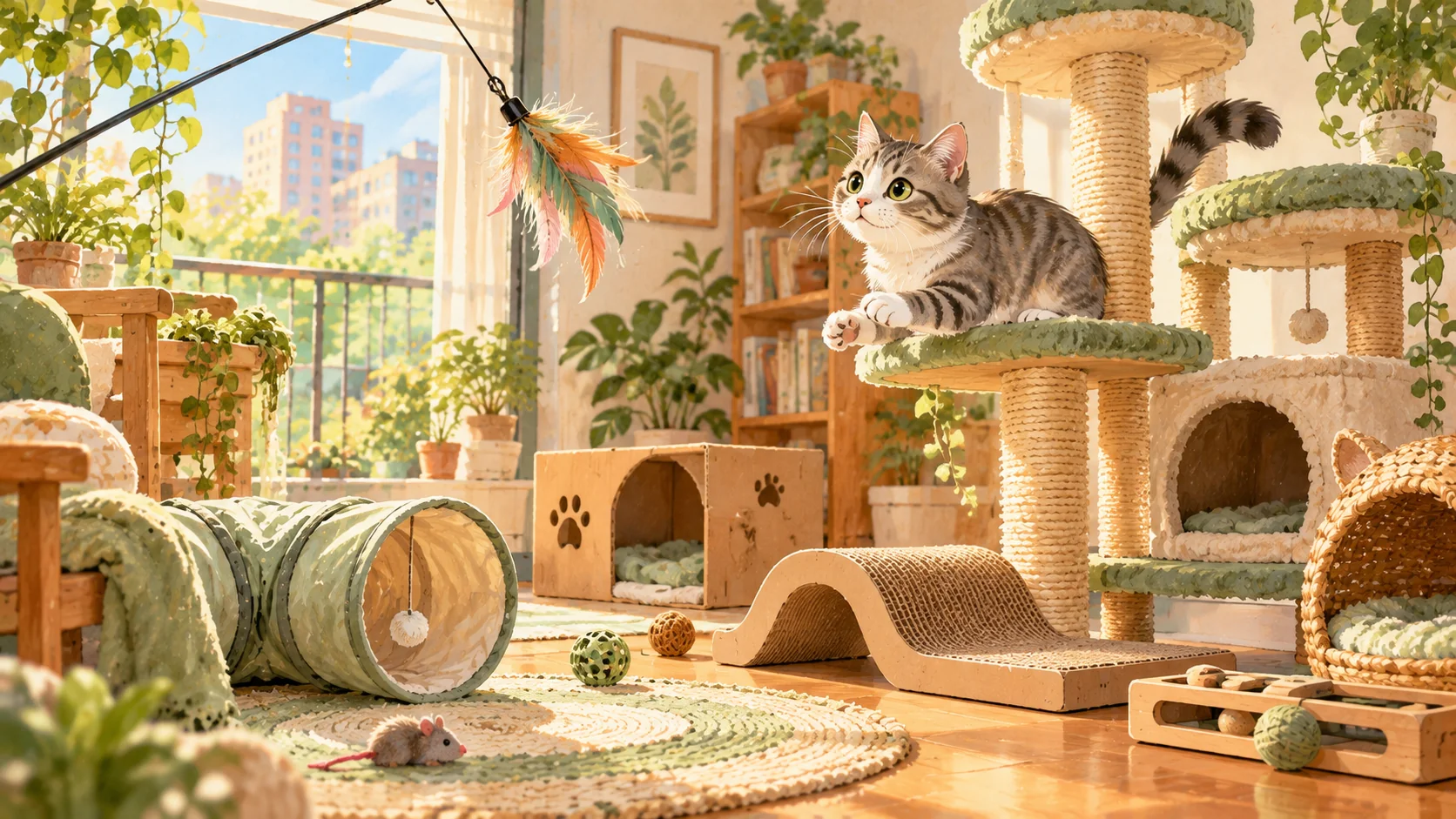
An indoor cat can live a richly engaging life, but a roof and a food bowl are not the same as an environment that meets feline needs. Cats want places to hide, rest, climb, scratch, watch, hunt through play and control how close they are to people or other animals. A small apartment can offer those choices without expensive furniture or an endless parade of new toys. Start by observing what your cat already enjoys. Then add one safe opportunity at a time and see whether it actually improves the cat's comfort and everyday behavior.
Think in needs, not products
Feline environmental guidelines describe several basic needs: a safe retreat; resources such as food, water and litter placed so they can be used comfortably; chances for play and predatory behavior; positive, predictable human contact; and respect for scent and other sensory cues. Every cat values these differently. A shy cat may use a covered hideaway more than a tall tower, while an energetic youngster may want several climbing routes. Enrichment is not forcing cats to be busy every moment. It is giving them meaningful choices, including the choice to sleep undisturbed. If your cat avoids a new item, do not make the animal interact with it just because you paid for it.
Build a safe territory with vertical options
Cats often feel more secure when they can observe from an elevated position. Sturdy shelves, window perches or a cat tree can add valuable usable space without changing the size of your floor plan. Check stability, anchoring and safe jump distances, especially for kittens, seniors and cats with mobility problems. Keep climbable furniture away from unsecured windows and balcony openings; ordinary insect screens may not prevent a fall. Every cat should also have low, quiet resting places that dogs, children and visitors cannot invade. Cardboard boxes with two exits, beds under tables and partially covered carriers can become pleasant retreats. Do not block access to litter boxes or water with a single dominant animal's preferred route.
Make play resemble a little hunt
Short, interactive sessions often work better than waving a toy endlessly until a cat becomes frustrated or tired. A wand toy can move like prey: appear, pause, dart behind a cushion and let the cat stalk, chase and occasionally catch it. Finish with a successful capture and perhaps a small portion of the normal food allowance. Rotate toys rather than leaving every option out forever. Some cats favor feathers, others soft mice, crinkly objects or rolling balls. Store string, ribbon and wand toys after supervision because swallowed strands can cause life-threatening intestinal injury. Laser pointers require care: a cat that can never grasp the moving light may become frustrated, so offer a real toy to catch if using one. Stop if your cat pants, hides or shows signs of distress.
Feed the mind as well as the body
Food puzzles and scavenger hunts can turn part of a cat's daily meal into a gentle problem-solving activity. Begin with something easy, such as a few pieces of kibble in an open egg carton or on a puzzle tray, and increase the difficulty only after success. Count that food as part of the day's ration. Some cats prefer several small feeding locations, particularly in multi-cat homes where one animal may block access. Water can be offered in several quiet places, and some cats prefer wider bowls or a clean fountain. Watch whether the cat actually uses a new fountain rather than assuming it is better. Enrichment should never make an animal work so hard that it cannot comfortably obtain enough food or water.
Offer scratching and scent choices
Scratching stretches the body, maintains claws and helps cats communicate through scent and visible marks. Provide stable vertical posts, horizontal scratch pads or both, based on your cat's preference. Put them near favorite resting spots and routes rather than hiding them in a remote corner. Reward use and protect furniture temporarily if needed; punishment can increase fear without removing the underlying need. Familiar scents are also part of comfort. Avoid routinely washing every blanket and sleeping surface on the same day. Strong perfumes, diffusers and essential oils may overwhelm feline senses or create hazards; do not assume that a product labeled natural is automatically safe. Introduce one change at a time, keeping old favorite items available until the cat accepts the new arrangement.
Design for multi-cat households without assumptions
Two cats sharing an address are not necessarily close companions. Some sleep together; others merely tolerate one another, and competition can occur silently at doorways or resources. Spread food, water, litter, resting and scratching options across multiple locations rather than clustering everything in a single attractive corner. Offer escape routes and visual barriers so a nervous cat does not have to pass the same animal to reach the litter box. Pay attention to staring, blocking, chasing, hiding and changes in appetite or toileting. Friendly play generally includes pauses and role changes; relentless pursuit is not automatically a game. If tension persists, consult your veterinarian and a qualified feline behavior professional. Additional toys alone will not resolve pain or serious social conflict.
Keep indoor adventures physically safe
Inspect small parts, dangling cords, unstable shelves, sharp edges and plants before offering access. True lilies are particularly dangerous to cats and should not be kept where cats can encounter them, including pollen and vase water. Balcony and window safety deserves special attention in high-rise homes. Supervised harness exploration may suit certain cats if the animal is gradually accustomed to equipment, but it is not a universal requirement. Never force a terrified cat outside because an article says fresh air is necessary. Screened enclosures and carefully secured windows can offer environmental variety without uncontrolled roaming. If your cat starts chewing nonfood items, repeatedly overgrooms or hides, consider a veterinary assessment instead of interpreting every problem as boredom.
A low-budget enrichment week
On Monday, add a sturdy cardboard hideaway with comfortable bedding; on Tuesday, place a scratch pad where your cat already stretches. Wednesday might involve two brief wand-play sessions, and Thursday a simple food puzzle using part of the normal ration. Friday, clear a safe elevated viewing spot. At the weekend, quietly observe which additions the cat actually uses and remove any that create clutter or stress. This is not a required seven-day program—spread changes out for a cautious cat, and skip anything inappropriate for health or mobility. Photographing the layout can help you track patterns. An enriching home is built by adjustment, not by buying every gadget at once.
Know when enrichment is not enough
Changes in play or activity may reflect discomfort, dental disease, arthritis, urinary problems or anxiety. A cat that abruptly stops jumping, hides much more than usual, stops eating or strains in the litter box needs attention beyond a new toy. Repeated attempts to urinate without producing urine are an emergency. Review litter and resource access as well as medical concerns. An older cat may need lower steps and softer surfaces; a visually impaired cat may rely on a familiar, stable furniture layout. The right environment evolves as the individual animal grows and ages. The best question is not “Does this look like a dream cat room?” but “Can my cat rest, move, explore and feel safe here?”
Keep Reading
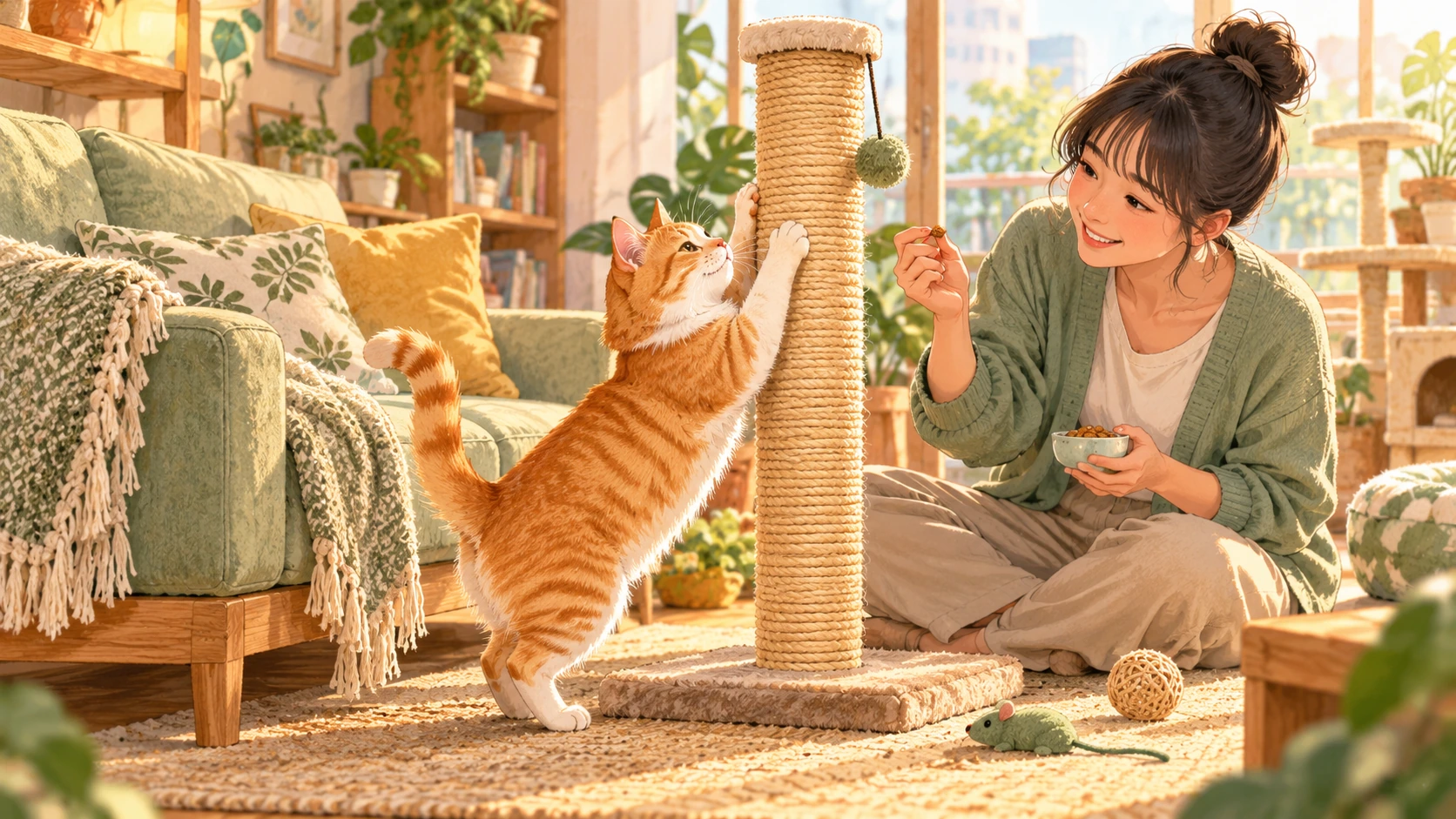
Understand why cats scratch, choose surfaces they actually like, protect furniture and encourage better habits without punishment.
Read the Full Guide →
Help a kitten grow through respectful handling, safe play, appropriate nutrition, litter habits, veterinary care and a home that welcomes climbing and hiding.
Read the Full Guide →
Recognize quiet tension between cats, spread resources, manage conflict safely and make room for different social preferences.
Read the Full Guide →