Bringing a new dog or cat into a home with resident animals is not a single introduction; it is a carefully managed change in territory, routines and relationships. Some pets become comfortable quickly, others need many weeks, and some live happily with boundaries rather than friendship. A successful plan protects every animal from frightening or unsafe encounters, gives them choices, and measures progress by relaxed behavior rather than proximity. Never put unfamiliar pets together to “work it out.” Prepare the household before arrival, and change the pace whenever you notice tension.
Assess fit before agreeing to adopt
Begin with the animals already living with you. Is your senior cat managing a chronic condition, your dog guarding food, or either pet recovering from a frightening event? Another animal could increase stress or competition. Ask the shelter or rescue what it has actually observed about the newcomer with other animals and in what setting. A claim such as “good with cats” is incomplete without context: a dog that ignored a caged cat may behave differently around a running cat at home. Plan for a safe permanent separation option if introductions fail, rather than assuming every pairing can be repaired with determination.
Create separate safe zones and duplicate resources
Set up a newcomer room with a closing door, resting place, water, food, appropriate toilet area and hiding options. Cats need escape routes and accessible height; dogs need gates and secure leads for later stages. Place food, water and sleeping places in different areas instead of lining them up where one animal can block another. Provide additional litter stations in distinct locations for multi-cat homes, and do not require pets to pass each other to reach essentials. Inspect doors, windows and barriers: a flimsy gate may not contain a motivated dog, while a kitten can squeeze through spaces an adult cat cannot.
Start with quiet routines and scent exchange
For the first days, focus on eating, sleeping and toileting comfortably behind a closed door. Exchange clean cloths or bedding carrying each animal’s scent without forcing anyone to approach them. Let pets sniff and walk away. You can also allow them to explore each other’s space at different times while the other animal is securely elsewhere. Do not place scent items beside a litter box or feeding station if that makes the resident cat reluctant to use it. Advance only when both continue normal routines. Pacing is based on behavior, not an arbitrary three-day or one-week rule.
Make first visual contact deliberately boring
Use a secure transparent barrier, plenty of distance and an easy exit route. Choose a moment when the dog is rested and can respond to its caregiver; keep the cat free to retreat onto a stable perch or back into another room. Reward calm glances, voluntary disengagement and ordinary behavior such as sniffing the floor. The aim is not a nose-to-nose greeting. A cat crouching rigidly, tail lashing or ears pinned back, or a dog freezing, hard-staring, lunging or barking persistently, means create more distance and end the session. Never punish growling or hissing: these are warnings that help prevent escalation.
Different pairings need different precautions
For dog–cat introductions, evaluate chase behavior carefully. A dog that intensely tracks, stalks or charges at a cat may require professional assessment and continued physical separation; do not test the issue by releasing the dog. Cats must have dog-free resources and routes upward. For dog–dog introductions, a quiet neutral-location walk with separate handlers may be useful when medically and behaviorally appropriate. Prevent toys and high-value chews from becoming flashpoints. For cat–cat introductions, prioritize territory, ample dispersed resources and a slow timeline. Different temperaments call for different plans, not a universal greeting ritual.
Supervise early shared space closely
When several barrier sessions have been uneventful, try a very short, supervised time in a shared room with exits protected. Use loose leads only when appropriate and never trap a cat in a carrier while an excited dog circles it. One person can watch each animal. End before exhaustion or arousal accumulates, and separate for naps, meals and unattended periods. Keep a log of triggers and recoveries rather than reporting the session as simply “good” or “bad.” A peaceful ten-minute session repeated safely is more meaningful than a dramatic hour in which animals become overwhelmed.
Respect a pet that prefers distance
A stable household does not need cuddling, shared beds or play. Some pets pass each other comfortably yet prefer separate territories. Protect that arrangement. Do not lure a reluctant animal toward another with food so that it suddenly discovers it is too close; reward voluntary choice at a safe distance instead. Provide quiet personal attention to the resident pet as well as the newcomer. Notice subtle changes such as a cat staying away from a favorite window or a dog refusing its hallway bed. Those can indicate resource pressure even when there is no dramatic fighting.
Know when to step back or call for help
Any bite or physical attack, repeated stalking, blocked access to food or litter, escalating fear, house-soiling or appetite changes warrants stepping back to separation. Seek veterinary assessment for new behavior problems, because pain and illness can alter tolerance. A qualified reward-based behavior professional can design safer desensitization and management. If there is serious predatory fixation or injuries, do not attempt more free contact while waiting for advice. Rehoming or maintaining permanent separation may sometimes be kinder than forcing incompatible animals together, and should be discussed without shame or blame.
A practical first-month review
At the end of each week, ask whether everyone can rest, eat, eliminate and engage in favorite activities without intimidation. Note what remains difficult, such as doorways, feeding times or an overly exciting visitor. Change one variable at a time: more distance, a different route, shorter exposure, a better gate or more resource stations. Make sure household members consistently follow the plan, including children who might open doors unexpectedly. The first month is only a convenient checkpoint, not a promise of readiness. Some animals need far longer. A calm, reversible process gives them the best chance to feel secure.
What to do after an accidental door opening
If a gate falls or a door is opened unexpectedly, remain as calm as possible. Avoid reaching bare hands into a fight or grabbing an aroused animal by its collar. Use a solid barrier or another safe interruption technique, secure the pets separately, and check for injuries. Even small punctures can need veterinary care. After everyone is safe, identify what failed: latch height, household communication, or a child entering a restricted space. Restore earlier separation and reassess the plan. One incident is a reason to improve management, not proof that the animals are malicious or hopeless.
Make a household introduction agreement
Write a short plan on the refrigerator: which room is the newcomer zone, when gates are locked, who checks them, and how meals and walks are handled. Visitors should not release a dog “to say hello,” and children should never manage introductions alone. Agree on a simple message before opening shared doors. If a caregiver cannot supervise, pets remain separated. This may feel strict, but consistency prevents unpredictable confrontations. Review the rules after each calm phase and revise only when the animals, not the calendar, show they are ready.
A checklist of encouraging behavior
Positive signs include choosing to look away, loose muscles, the ability to eat normally, quiet grooming or play, and walking away without being followed. A cat may choose a high perch and simply watch; a dog may lie down or sniff the rug. Those quiet moments matter. Avoid grading success by tail wagging alone, because arousal and tension can also accompany a moving tail. If either animal stops accepting treats, freezes or monitors doorways relentlessly, that is information to slow down. Photograph calm setups so every caregiver can repeat what worked.
Keep Reading

Learn to read a pet’s whole-body signals instead of judging by a wagging tail or a purr alone, and respond before discomfort escalates.
Read the Full Guide →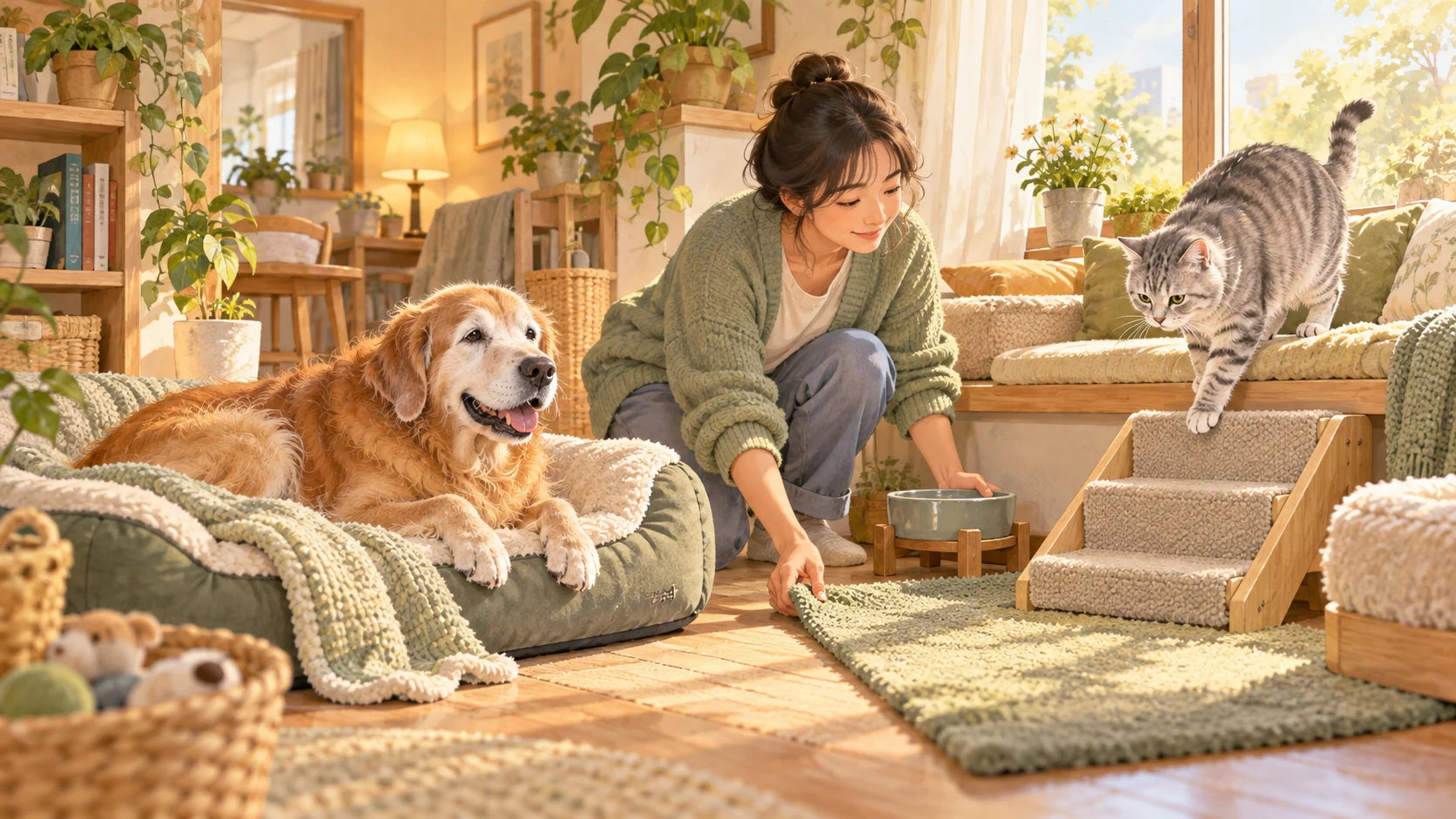
Help older dogs and cats stay comfortable with mobility supports, individualized checkups, pain awareness, feeding adjustments and familiar routines.
Read the Full Guide →
Learn humane teaching for both dogs and cats: reward timing, shaping, helpful management, training obstacles and why intimidation is not the answer.
Read the Full Guide →