Enrichment is not a shopping list
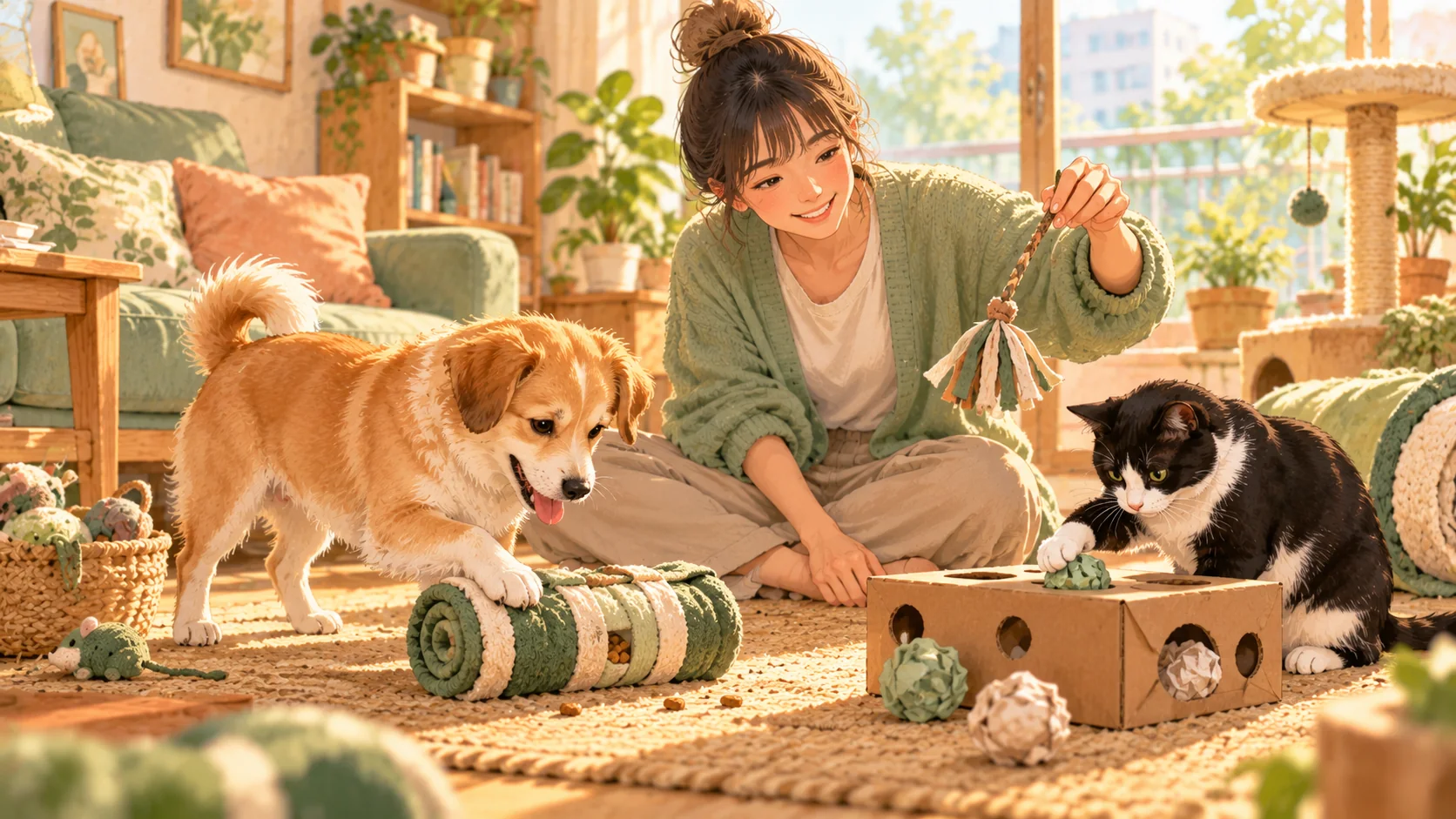
Enrichment means providing worthwhile chances to investigate, choose, solve small problems, move naturally and feel secure. It can be free. A cat watching moving shadows from a safe perch, or a dog sniffing several hidden pieces of its ordinary meal, may get more from that experience than from a basket of ignored plastic toys. Start with what your pet likes: searching with the nose, chasing a moving toy, climbing, shredding safe material or quietly watching. Rotate activities rather than offering everything at once. Let the animal opt out without pressure. A worried pet often needs predictability and safe hiding spots before a clever puzzle. Enrichment should increase wellbeing, not merely keep an animal busy so people can ignore it.
A simple food search for dogs
Place a few pieces of your dog’s regular kibble on a clean floor or low grass area and invite a calm search. Once the dog succeeds easily, spread pieces farther apart or hide them just behind a table leg in a safe room. A rolled towel with loose folds can become a beginner puzzle when treats are tucked in visible spots. Supervise: some dogs chew or swallow fabric, so a towel puzzle is inappropriate for those individuals. Begin with very easy wins and praise searching rather than rushing. Use part of the daily food allowance, not an unlimited stream of extras. If food guarding or inter-pet conflict is present, play separately behind a closed door. Stop before frustration turns into frantic scratching or destructive chewing.
Turn a cardboard box into a cat adventure
A clean, sturdy cardboard box with a broad opening can become a hiding place, a tunnel or part of a short exploration course. Set it on a stable floor with no staples, tape loops, strings, plastic bags or sharp edges. Leave an unobstructed escape path; never trap a cat inside to make a funny video. Offer a toy at the entrance or toss a small toy inside if the cat is curious. Some cats enjoy paper balls or crinkly packaging paper; remove any material the cat shreds and eats. Rotate box locations gently rather than changing a nervous cat’s entire territory overnight. If multiple cats share a home, offer several exits and separated resting options so one cat cannot guard the only shelter.
Play like prey, not like a laser marathon
Many cats respond to a wand toy moving like prey: darting behind furniture, pausing, then appearing again. Move it away from the cat rather than waving directly into the face, and allow regular catches. A short sequence of stalk, chase, catch and rest is often more satisfying than exhausting nonstop exercise. Put wand toys and strings away after supervised play; loose cords can cause dangerous swallowing and tangles. Avoid using your hands as prey, especially with kittens, because playful bites can become painful habits. A laser pointer alone may frustrate some cats by never providing something tangible to catch; if used, end with a real toy or food reward. Watch body language and finish before the cat becomes overstimulated.
Make inexpensive puzzles progressively harder
An empty muffin tray with kibble in a few cups can become a simple dog puzzle; cover some compartments with large, safe objects the dog can move without swallowing. A cat may prefer treats placed in shallow cups or on a low, stable puzzle board. Start with open food so the animal understands the game. Then cover one spot, pause and reward a successful investigation. Never leave small loose parts, elastic bands, batteries or sharp craft supplies accessible. A pet with arthritis or reduced vision may need a stationary, low-effort puzzle rather than a toy that rolls under furniture. The best difficulty is one that invites another attempt. Repeated failure, barking, pawing frantically or walking away indicates that the activity needs simplification.
Build variety into ordinary walks and rooms
Change the quality of an experience before increasing its length. For a dog, a slow sniffing route, permission to explore a safe grassy patch or practicing one easy cue in a quiet setting can enrich an ordinary outing. Avoid unfamiliar plants, sharp litter, overheating and off-leash risks. For a cat, move a chair near a securely screened window, add a stable climbing shelf or place a familiar blanket in a different safe resting location. Do not create access to an unscreened balcony or hazardous height. Some animals love novelty; others prefer familiar patterns with one gentle variation. Offer choice and monitor whether your pet returns to the activity voluntarily. Environmental richness is measured by useful opportunities, not by how crowded the room becomes.
Food safety and supervision are part of play
If food is the reward, check whether it fits the animal’s diet, allergies, medication requirements and calorie allowance. Never use foods known to be toxic to dogs or cats, and do not assume a homemade treat is safe because people eat it. Wash food puzzles after use and discard damp cardboard that can grow mold. Supervise anything that could be chewed into pieces, especially fabric, foam, string, bottle caps and plastic. Stop if the pet coughs, gags or appears distressed; suspected choking needs prompt veterinary help. Keep household pets separated when competition might provoke conflict. For a foster animal, ask the rescue what is medically permitted. The goal is a calm, pleasant challenge, not a high-stakes competition for food or attention.
A one-week rotation that costs almost nothing
Try a simple rotation: Monday, a sniff search; Tuesday, a cardboard hideout; Wednesday, a two-minute training game; Thursday, a changed walking route or cat perch; Friday, a towel puzzle for animals that do not chew fabric; Saturday, a short toy chase; Sunday, a familiar favorite. This is a menu, not a prescription. Skip activities that worry your pet, and repeat the ones that create relaxed curiosity. Keep sessions short enough that the animal finishes interested and comfortable. Store supplies safely between uses and inspect them for damage. A quiet older dog may enjoy finding two treats rather than twenty; a shy cat may spend several days investigating the same box. Success looks like engagement, choice and confidence, not social-media performance.
Adapt games for older, disabled or shy pets
An enrichment activity is only helpful if the participant can enjoy it. Move a scent trail to nose height for a dog with limited mobility. Place a small cat puzzle on a stable low table if climbing has become painful. For a blind animal, keep the room layout consistent and use familiar textures and sounds instead of relocating furniture. Timid cats may prefer the first week simply investigating a cardboard tunnel from a distance. Offer an easy exit, reduce noise and use slower movements. Ask a veterinarian about safe levels of activity if a pet is recovering from injury or managing disease. The goal is not high-energy performance; gentle choice and comfortable curiosity still count.
Keep a simple enrichment diary, not a performance score
Take note of whether an activity attracted curiosity, triggered frustration or was ignored. Change one feature at a time: fewer hidden treats, a larger opening, a quieter room or a different time of day. Reuse successful activities instead of buying more materials whenever interest fades. A dog that sniffs happily for three minutes has not failed because another can solve a puzzle in thirty seconds. A cat that prefers observing from a shelf is communicating a preference. Retire damaged or dirty objects promptly. Over a month, patterns may emerge about how rest, weather, visitors and household noise affect play. This information can help caregivers select activities when the pet has less energy or needs a calm day.
Keep Reading
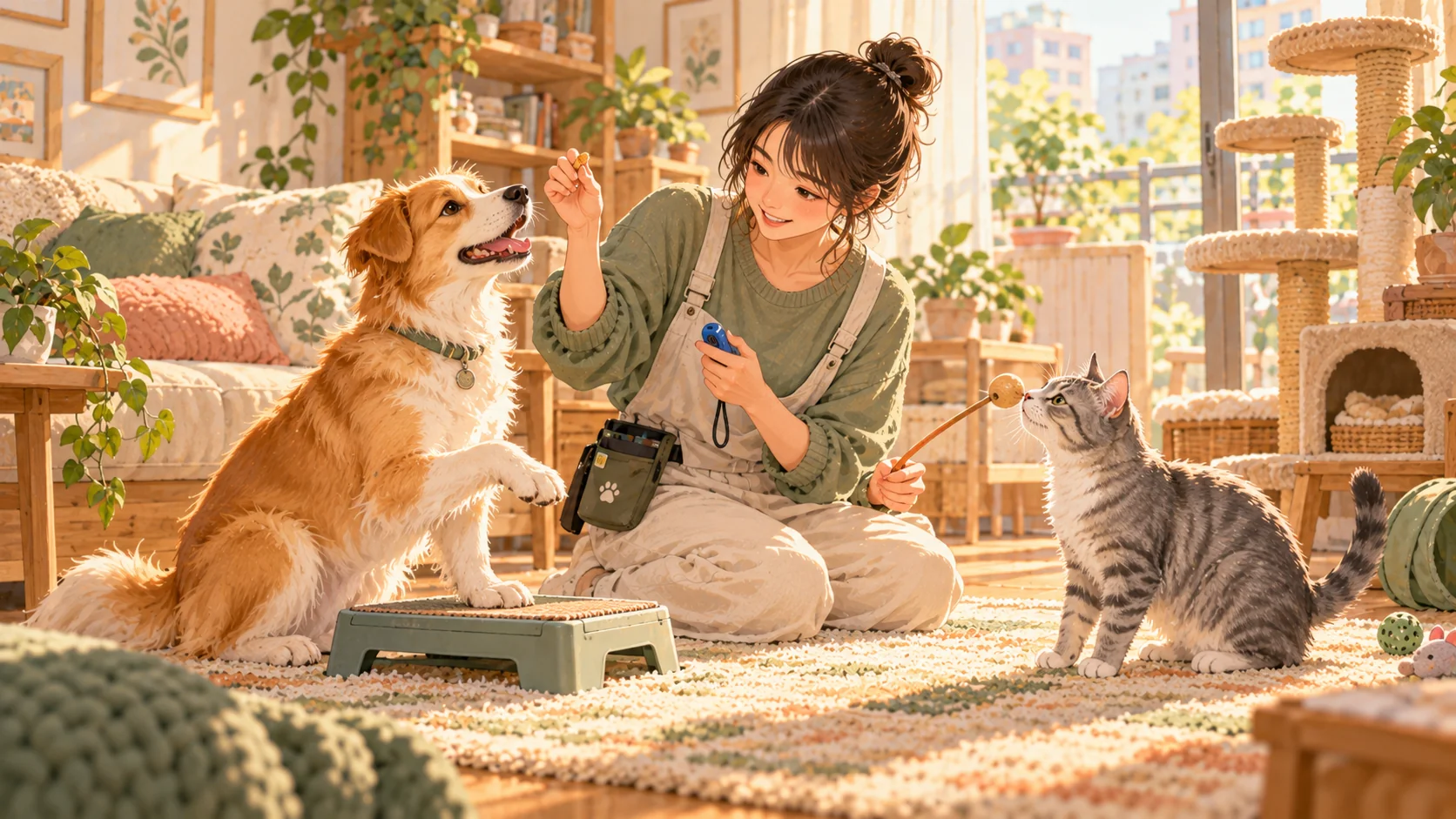
Learn humane teaching for both dogs and cats: reward timing, shaping, helpful management, training obstacles and why intimidation is not the answer.
Read the Full Guide →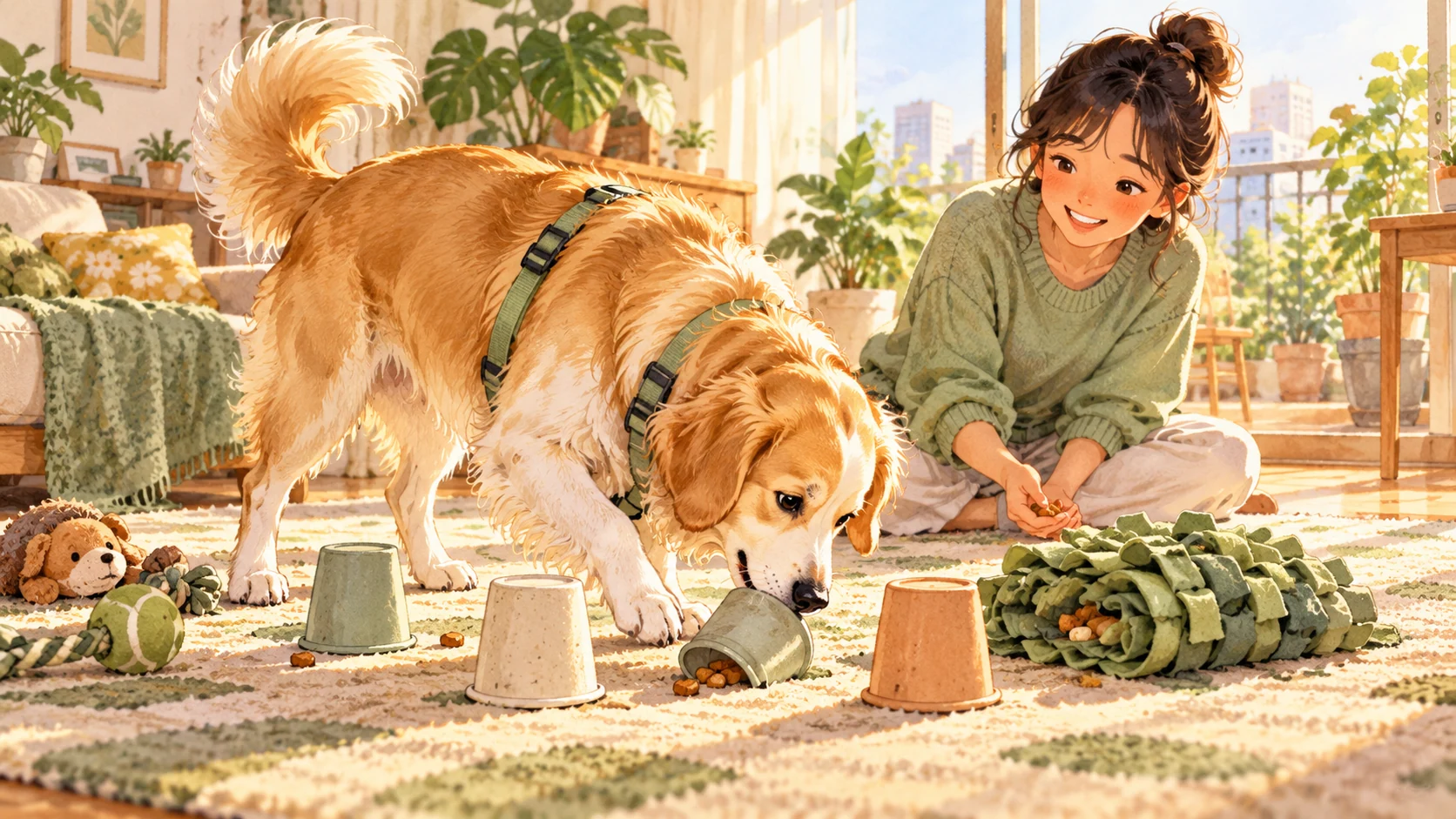
Low-cost scent games, snuffle mats, simple cup searches and relaxed sniff walks—with ways to adapt difficulty and protect safety.
Read the Full Guide →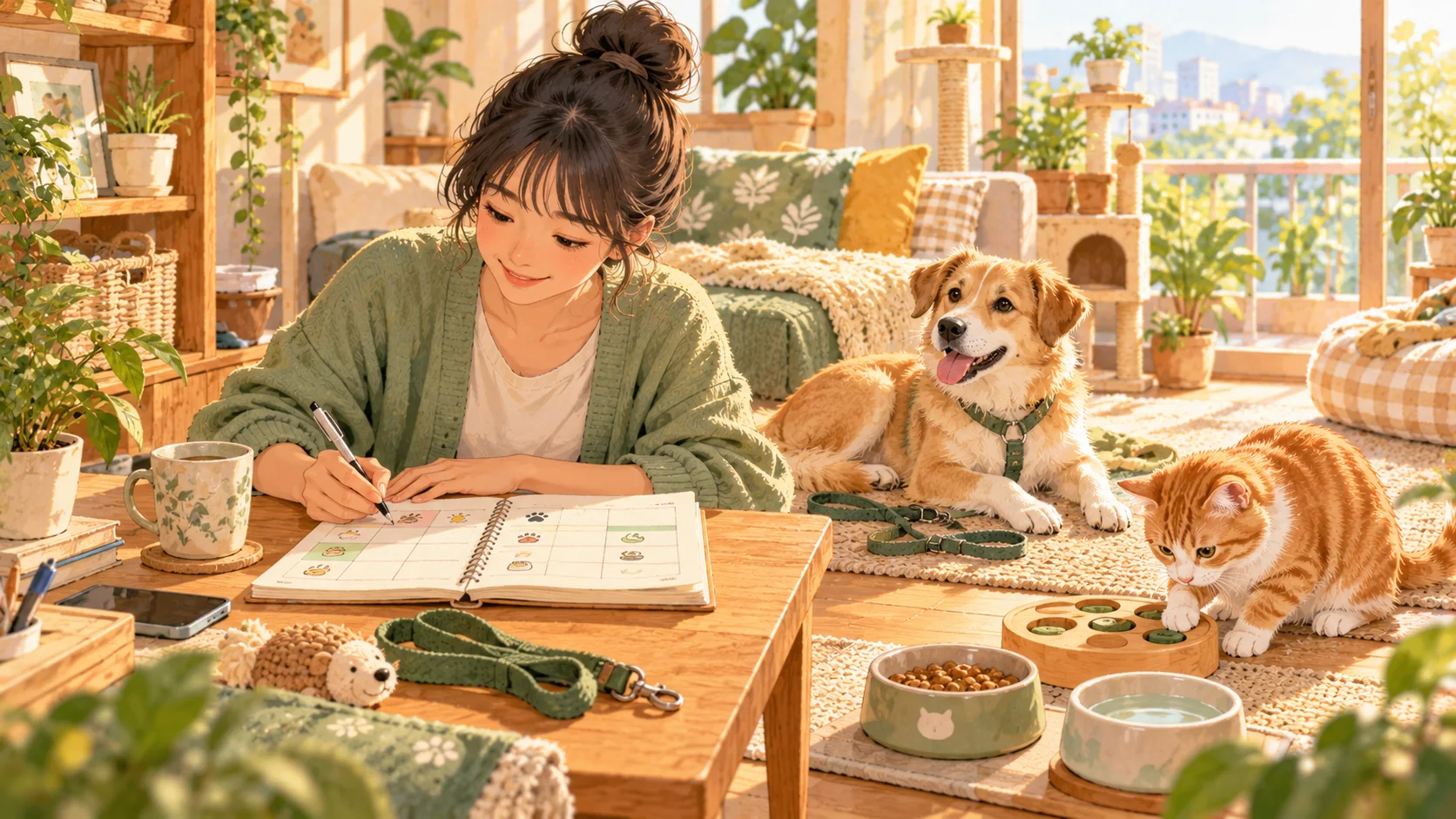
Build a flexible daily rhythm for meals, toileting, rest, play, health checks and backup care without turning life into a rigid timetable.
Read the Full Guide →