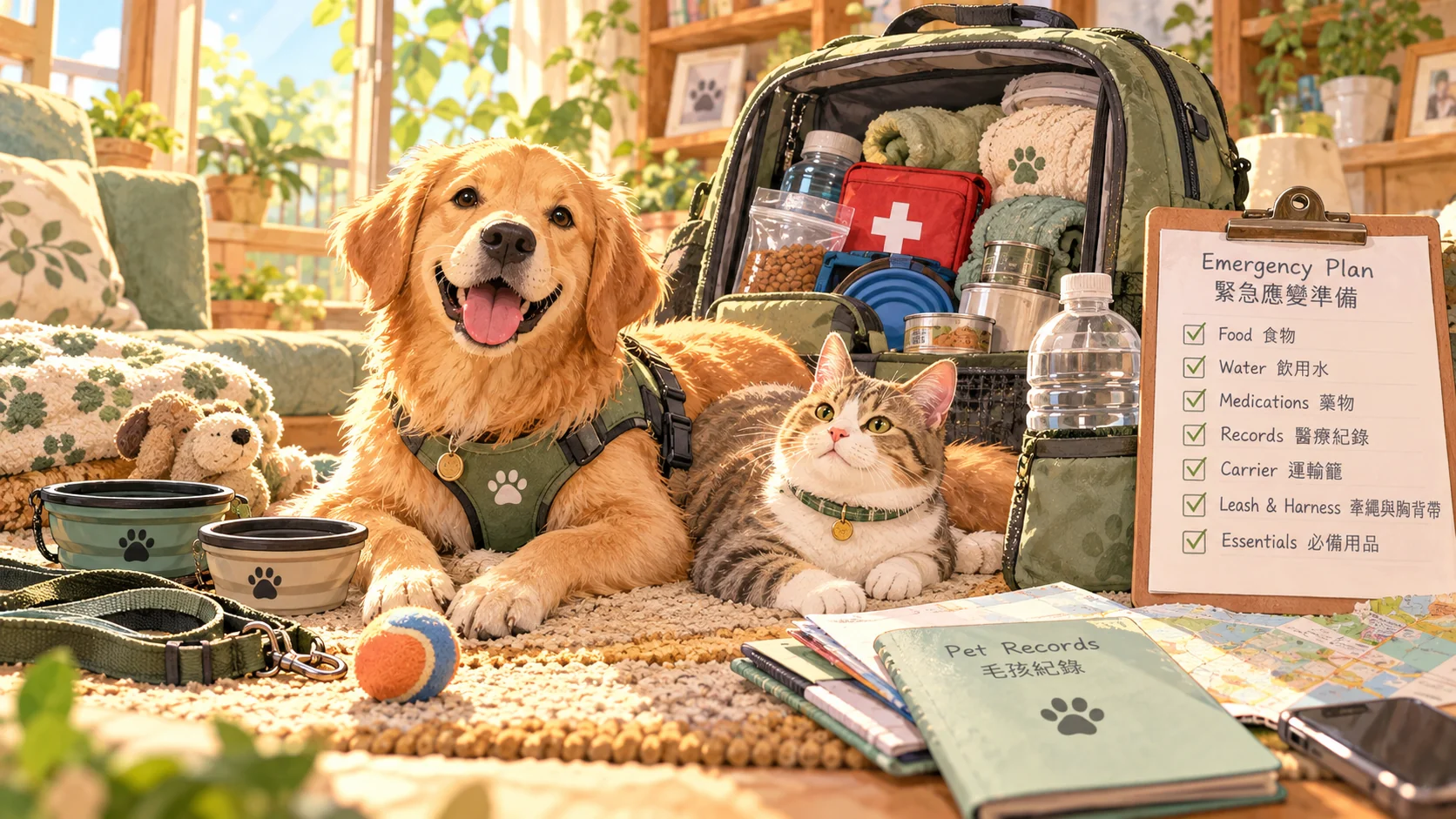
An emergency plan must include the animals who depend on you
Natural disasters and unexpected emergencies can interrupt electricity, water, transport, veterinary access and ordinary family routines. For dog and cat owners, the first useful question is not which expensive survival kit to buy; it is who will secure the animals, how they will travel and where they can safely stay. Earthquakes, typhoons and heavy rain are particularly relevant in Taiwan, but planning must follow official local warnings and the actual building and neighborhood. Decide whether your primary response is sheltering at home or evacuation when authorities advise it. Keep people safe first and never enter a dangerous structure to retrieve supplies. Make a one-page plan with animal names, carriers, emergency contacts, destinations and medications. Share it with every person likely to help.
Assemble a kit you can actually carry
Prepare food, water, collapsible bowls, prescription medicines, a leash or harness, an appropriately sized secure carrier, litter and a simple litter tray for cats, waste bags, bedding, cleaning supplies and a basic pet first-aid kit. The CDC suggests substantial reserves such as up to two weeks of food, water and medicine when feasible; local storage constraints and evacuation transport may require dividing supplies into a portable go-bag and a larger home reserve. Replace expiring items and rotate food periodically. Store supplies near an accessible exit that will not be blocked by normal clutter. Keep a flashlight and charging options for communication, but do not depend on a phone alone. For animals with special diets or medications, discuss backup quantities and refrigeration requirements with the veterinarian in advance.
Keep records and identification ready offline
Put copies of vaccination records, medical summaries, current medications, feeding instructions, recent photos, proof of ownership or rescue authorization, microchip information and contact numbers into a waterproof sleeve. Store a digital copy on your phone and an offline backup so a dead battery does not remove your only access. Each carrier should have the animal’s name and a reachable contact method. Update microchip registrations and visible IDs when numbers change. A pet with chronic kidney disease, diabetes or seizure medication may require urgent continuity of care, so document doses clearly without guessing or changing treatment independently. If a foster animal is in your care, confirm who has authority to approve veterinary treatment or relocation. During evacuation, accurate records may help staff keep families and animals connected.
Practice safe carrier entry before a crisis
A carrier is not helpful if the pet panics at the sight of it. Leave it out as a familiar resting place when practical, line it with a safe blanket and reward voluntary exploration. Practice closing the door briefly, moving the carrier and making a short calm trip. Dogs may need help accepting a crate or vehicle restraint; cats often benefit from a carrier that opens securely from the top. During a sudden event, shut doors and windows before attempting to collect animals where safe to do so. Know common hiding locations without forcing stressed pets into dangerous corners. Practice who handles which pet if more than one animal lives in the home. Never leave a loose cat or dog in a moving vehicle or an unsecured evacuation space.
Know where pets can stay—and verify it
Not every public evacuation facility, hotel, shelter or transport service permits pets, and rules may change during specific emergencies. Confirm current arrangements through local government or the facility rather than assuming animals are welcome because someone mentioned a past exception. Build at least two alternatives: a trusted relative outside the affected area, a pet-friendly lodging option or an authorized temporary care provider. Ask how many animals are allowed, whether crates are required and whether dogs and cats will be separated. Consider mobility, medication and special diets. If transport is difficult, arrange a neighbor or relative who can assist and practice the handoff. Never leave pets tethered outdoors during a flood or storm. If authorities require evacuation, make the human safety decision promptly and communicate with responders about animals.
During an earthquake or typhoon, respond to real conditions
During shaking, protect yourself first and avoid trying to chase a frightened pet across falling objects or broken glass. Once the immediate danger subsides and conditions are safe, secure animals in carriers or enclosed rooms and inspect exits for damage. During a typhoon or flood threat, move pet supplies and carriers away from windows and rising water, and follow official instructions on when to evacuate. Never enter floodwater to retrieve an animal without professional guidance. Electricity failure can affect climate control, medical devices and stored medicines; plan alternatives ahead. Keep dogs leashed during relocation because familiar scents and routes may be changed. Cats should remain enclosed until a secure temporary room is confirmed. Do not improvise a sedative to calm an animal during a disaster.
After the disaster, protect both health and behavior
Check for broken glass, unstable furniture, exposed wires, contaminated water and unfamiliar animals before letting pets explore. Release a cat only into a closed room and keep dogs on leash during initial outdoor checks. Observe injuries, breathing, appetite, urination, stool and changes in fear or irritability. Contact a veterinarian for illness, injury or persistent distress. Return gradually to predictable meals, rest and suitable activity rather than forcing immediate social exposure. Animals may hide or startle more easily after a frightening event; give them a quiet retreat and avoid punishment. Replace used kit items promptly and update contact information if you have relocated. Talk with the household about what worked and what did not. A plan improves most when the family reviews it after a practice or real event.
A ten-minute family drill
Choose a calm day and walk through the sequence without alarming the animals: one person gathers medication and records, another places pets in carriers, and someone confirms exits and meeting points. Time the process loosely, then notice what is missing. Is the cat carrier behind heavy boxes? Is the dog’s leash in another room? Can a sitter read the medication sheet? Do emergency contacts answer and understand their role? Improve one weakness at a time. Recheck supplies before storm season and update photos and records after veterinary visits. For families living in high-rise buildings, ask building management how evacuation and stairs are handled, without presuming elevators will operate. Preparedness is an ongoing household skill, not a one-time purchase.
Plan extra support for medically vulnerable animals
Animals needing insulin, seizure control, oxygen support, specialized food or mobility assistance may be less able to tolerate a disrupted routine. Discuss a written contingency plan with the veterinarian, including safe medication storage, missed-dose instructions, temperature needs and nearby alternative clinics. Do not double a missed dose or substitute another animal’s medication. Keep a paper list of diagnoses and doses in the go-kit and arrange a caregiver who knows how to administer treatment safely. For older animals, include absorbent bedding, a non-slip mat and help with lifting. For kittens or small dogs, consider warmth, regular feeding and safe confinement. An emergency kit should match the pet in front of you, not an imaginary average dog or cat.
Reduce stress and infection risks in shared shelters
Crowded evacuation spaces can be noisy, unfamiliar and full of anxious animals. Keep carriers closed when required, provide a familiar blanket and follow facility rules about exercise, litter disposal, cleaning and separation of species. Do not allow nose-to-nose greetings with unfamiliar pets merely to “make friends.” Wash hands after waste cleanup and keep food and medication identifiable. Tell staff if the animal has a contagious diagnosis, requires medical care or may bite when frightened. Cats usually benefit from visual cover and a secure hiding option inside an appropriate enclosure. Dogs may need escorted toilet breaks on leash. If a site cannot meet essential medical or welfare needs, work with responders to identify a safer alternative rather than secretly releasing the animal.
Keep Reading

Help older dogs and cats stay comfortable with mobility supports, individualized checkups, pain awareness, feeding adjustments and familiar routines.
Read the Full Guide →
Compare in-home sitting with boarding, ask about safety and emergencies, prepare care sheets and arrange a thoughtful handoff.
Read the Full Guide →
Know what to bring, how to make travel less stressful, what a wellness exam includes and which questions to ask about vaccines, nutrition, behavior and follow-up care.
Read the Full Guide →