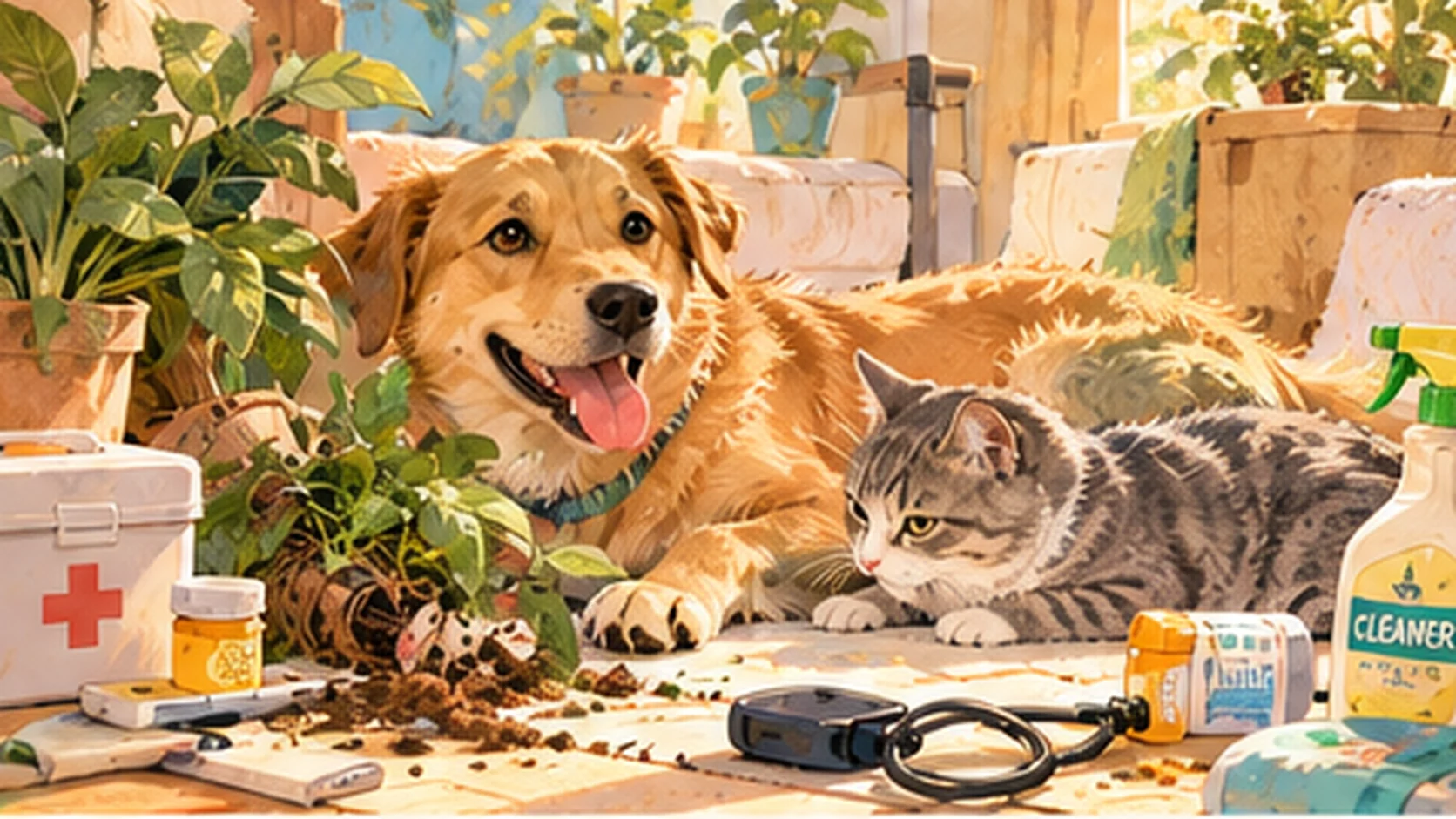
A pet-safe home is not a home without furniture, plants or interesting things. It is a place where curious animals can investigate without reaching the things that could poison, trap, burn or injure them. Cats leap onto shelves and squeeze behind appliances; dogs investigate with their mouths and may open bags or cupboards. Walk through your home from the animal's height, then imagine what could happen while nobody is watching. Prevention works better than expecting every animal to avoid a hazard after being told “no.”
Start with a room-by-room safety walk
Sit low enough to see under sofas, behind bins and along baseboards. Look for loose batteries, coins, hair ties, sewing needles, rubber bands, broken toys, string and chewable electrical cables. Some animals swallow these objects, leading to choking or intestinal obstruction. Check doors that can slam, reclining chairs that can trap a pet, gaps behind washing machines and furniture that could tip when climbed. Secure unstable shelves and heavy objects, and keep sharp tools in drawers.
Use childproof cabinet latches when needed, but verify your pet cannot defeat them. Store rubbish in a lidded container, and do not leave food packaging or used dental floss accessible. Every household is different: revisit the checklist whenever you move furniture, introduce a new pet or begin renovation work.
Treat human medicines as off limits
Painkillers, cold remedies, sleep aids, vitamins, supplements and prescription medicines can harm pets, sometimes in very small amounts. A child-resistant cap is not necessarily dog-resistant. Keep tablets in original containers inside closed cupboards, not in handbags, bedside organizers or on countertops. Pick up dropped pills immediately, and keep medicated patches and topical products away from fur and licking. Even medicine used safely by one animal may be dangerous to a different species or an animal with another health condition.
Never give an over-the-counter human drug because symptoms look familiar. Call your veterinarian about possible exposure instead of searching for a “safe pet dose.” Keep a simple list of what is stored in the home, and save clinic and emergency-hospital contact details where all household members can find them.
Learn which foods require strict separation
Chocolate, grapes and raisins, onions and garlic, alcohol, caffeine, and products containing xylitol are important hazards for dogs; several are dangerous for cats too. Bones that splinter, cooking skewers, corn cobs, string ties and rich fatty scraps may also cause choking, injury or digestive problems. Toxicity depends on the ingredient, amount and animal, so do not rely on a pet seeming normal immediately after eating something.
Keep sweeteners, baked goods and chewing gum out of reach. Check labels: xylitol may appear in products that do not look like candy, including some nut butters and oral-care items. Close trash bins and keep plates away from pets during meals. Ask visitors and children not to feed unfamiliar treats without permission; “only a bite” is not a reliable safety rule.
Check plants before bringing them indoors
Some plants are harmless; others can cause mouth irritation, digestive illness or life-threatening organ injury. True lilies and daylilies are especially dangerous to cats, including exposure to pollen or vase water. Do not assume every plant sold as pet-friendly is correctly identified or that moving a toxic plant onto a high shelf is enough for a climbing cat. Look up the exact botanical name using a veterinary poison-control resource.
Avoid home remedies such as feeding milk or trying to make a pet vomit after plant exposure. If you believe a toxic plant has been chewed, save a photograph or sample safely and call a veterinarian or animal poison service immediately. Local product names can differ; identify the actual plant rather than translating a common name and guessing.
Secure cleaning products and laundry areas
Keep disinfectants, concentrated cleaners, detergents, pesticides, antifreeze, paints and solvents in closed storage. Follow label directions, allow cleaned floors to dry when required and ventilate rooms appropriately. Do not mix cleaning chemicals. Laundry pods may look like toys and can cause serious irritation or poisoning if bitten. Fragranced oils and diffusers can also present risks depending on the oil, concentration, ventilation and route of exposure; check with your veterinarian rather than assuming “natural” means safe.
Check washing machines and dryers before starting them, especially with cats that enjoy warm enclosed spaces. Keep doors closed between loads. In garages or balconies, secure fertilizer, pest bait, vehicle fluids and sharp gardening tools. A spilled product should be cleaned before animals regain access.
Prevent falls, escapes and entrapment
A window screen is often designed to keep insects out, not support the weight of a cat. Inspect latches, mesh, gaps and balcony barriers. Don't rely on open windows or high-rise balconies being safe because an animal has never jumped before. Prevent unsupervised access to unsafe ledges and never tether a pet on a balcony. Secure entry doors when carrying deliveries, and keep identification and microchip details current.
Manage cords from blinds, charging cables and electrical appliances; chewing can cause burns or electrocution, while loops can entangle. Cover or route cables, and offer suitable alternatives for animals that chew. Supervise pets around open flames, stoves, space heaters, hot liquids and outdoor grills. Cool hot surfaces before allowing access.
Make toys and enrichment safer
Match toys to the individual animal's size and chewing style. Discard toys that shed small pieces, stuffing or sharp fragments. Cats should play with string, ribbon, yarn and wand toys only under supervision; store them after play because swallowed thread can be dangerous. Inspect food puzzles for cracks and choose washable materials. Pets need enrichment, but “indestructible” is a marketing term, not a guarantee.
Give cats climbing and scratching options anchored securely, with safe landing routes. Dogs may enjoy sniffing, food-search games and durable age-appropriate chews; still watch for splintering or pieces that can be swallowed. Provide resting spaces away from noisy devices. A home can be both stimulating and safe when activities are matched to the animal.
Have a plan for suspected poisoning
If your pet may have swallowed or touched a harmful substance, move them away from further exposure and contact your veterinarian or emergency clinic immediately. In the United States the ASPCA Animal Poison Control Center is one option; elsewhere, use an appropriate local veterinary service. Have the product label, ingredient list, animal's species and weight, estimated amount and time ready. Tell the professional about symptoms, even if none are present yet.
Do not induce vomiting, give salt, oil, activated charcoal or any household treatment unless specifically instructed by a veterinary professional. Do not wait for seizures, collapse or repeated vomiting before calling. If a chemical is on the coat or skin, ask how to prevent further licking and decontaminate safely. Save notes about advice and the clinic you contacted.
Update your home as your pet changes
A puppy may discover shoes and electrical cords; an adolescent cat may begin reaching previously inaccessible shelves; a senior pet may slip on floors or need lower entry points. Inspect the home again after injury, illness, surgery or a change in mobility. Share house rules with visitors, pet sitters and children in plain language: close this gate, keep this cupboard latched, never leave pills on the table.
Use this three-part routine: prevent access to dangerous objects, provide appealing safe alternatives, and keep emergency contacts ready. A successful pet-proofing plan does not depend on perfect training or constant supervision. It gives animals room to behave like animals without paying for normal curiosity with avoidable harm.
Keep Reading
Prepare a calm welcome for your new dog with safe spaces, toileting routines, kind training, gradual introductions and a realistic first-week checklist.
Read the Full Guide →
Help a kitten grow through respectful handling, safe play, appropriate nutrition, litter habits, veterinary care and a home that welcomes climbing and hiding.
Read the Full Guide →
Understand core and exposure-based vaccines, parasite protection, product safety and the records and questions that turn a veterinary visit into a personalized plan.
Read the Full Guide →