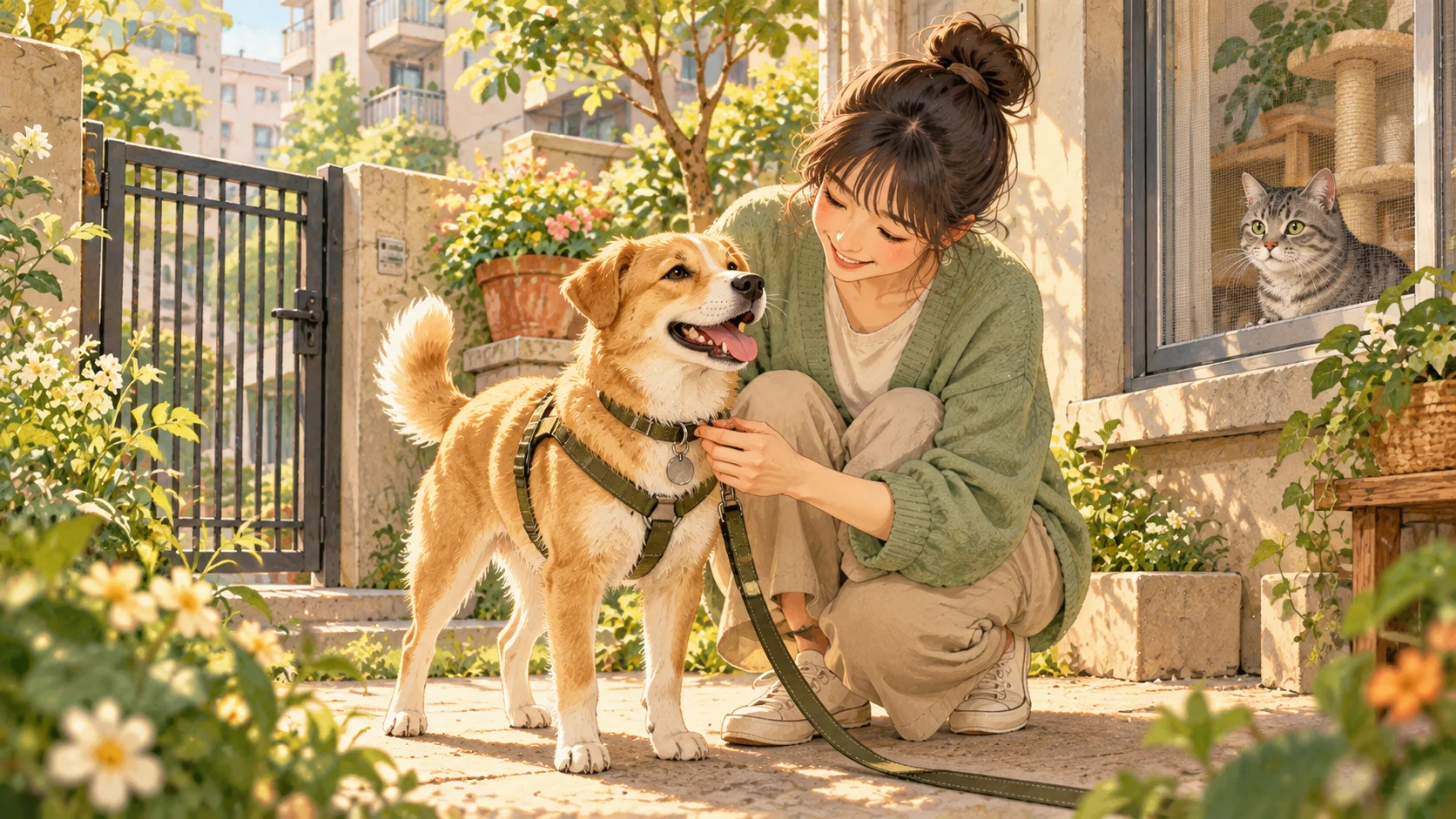
Preventing escape starts before the door opens
Lost pets are not always poorly cared for. A frightened cat can slip through a door during a delivery, a dog can back out of a loose harness, and an earthquake or loud noise can change a normally confident animal’s behavior. Prevention means adding several small layers of protection rather than trusting that “my pet never runs away.” Walk through the home as if you were a curious animal: look at doors, window screens, balconies, gates, carrier latches and places where visitors come and go. Note which family members might accidentally leave an exit open. Create one reliable protocol for deliveries and guests, such as placing the animal in a comfortable closed room first. Practice calmly so the routine itself does not frighten the pet.
Combine a microchip, registration and visible ID
A microchip identifies an animal with a unique number when a scanner reads it; it is not a GPS tracker and does not show a live location. Registration and current contact details are essential. Ask a veterinarian or registration authority which database applies locally, then check that the phone number and alternate contact still work. Taiwan and other jurisdictions may have different requirements, so verify the current rules with the appropriate authority rather than assuming a U.S. registry applies everywhere. A safe breakaway collar may suit some cats, while dogs may wear a properly fitted collar with readable contact information. Collars can fall off and chips may not be scanned immediately, so neither is perfect alone. Keep photos and the chip number in more than one accessible place.
Inspect fit, windows and transport before each outing
A properly fitted harness should be secure without restricting breathing or causing rubbing. Some dogs can slip backward out of a harness when startled; consider professional fitting and a backup connection where appropriate. Use a sturdy leash that is attached before the door opens. Cats should travel in a securely latched carrier rather than loose in a vehicle, even for a short journey. Check carrier seams, zips and doors after storage. Repair damaged window screens and block access to unprotected balconies; an indoor cat can fall or escape even if it rarely approaches a window. During moves, construction or family gatherings, plan a protected room and a sign reminding visitors not to enter. Physical systems are often more reliable than expecting perfect obedience.
Teach calm door habits and a positive recall
Teach dogs to pause behind a doorway or return when called using rewards in low-distraction settings. Practice gradually in safely enclosed spaces before trying more distracting environments. Do not punish a dog that eventually comes back; doing so can make returning feel unsafe. For cats, reward moving toward a designated spot when the doorbell rings or when a caregiver prepares to open the door. Use a barrier or closed room anyway during actual deliveries. If a pet is fearful, building confidence in a harness or carrier may take weeks, and training should stop before panic. Recall does not replace a leash where one is needed. A dog chasing traffic or an outdoor cat startled by fireworks may ignore normally familiar cues. Prevention combines training with secure equipment and sound household habits.
Make a search plan before anything happens
Keep current photos showing the face, body markings, size and any special features. Write a brief description without publishing sensitive personal information unnecessarily. Save contact details for local animal shelters, veterinary clinics, registration services and relevant public agencies. Decide who will search nearby streets, who will monitor messages and who will contact facilities. Have a carrier, familiar blanket and high-value treats ready, but do not assume every frightened animal will approach food. For an anxious dog or cat, chasing and loud calling can drive it farther away. A simple plan reduces contradictory instructions when several relatives try to help. Review it whenever you move house, change numbers or travel. Update pet profiles with practical details such as whether the cat hides under cars or the dog fears strangers.
First hour: search carefully and communicate clearly
Check the home, nearby hiding places, stairwells, garages and the route where the pet was last seen. Cats often hide surprisingly close to the escape point, especially when frightened. Use a calm voice and pause to listen; avoid driving an animal toward busy roads. Ask neighbors to check sheds or enclosed spaces and not to chase the pet. Share a clear missing-pet notice with date, area, description, contact method and an instruction to report sightings. Contact relevant shelters, clinics and the microchip registry or responsible local service. Make sure reports are based on confirmed details, not guesses. If a sighting is credible, organize a controlled response rather than sending a crowd running toward the animal. In dangerous areas, put human safety first.
Keep searching systematically and beware of scams
Lost-animal reports can move between organizations and online groups; check facilities repeatedly rather than relying on one message. Update posters when the last credible sighting changes and remove outdated directions that send volunteers to the wrong place. Be wary of people demanding money immediately or refusing to provide any verifiable description of the animal. Avoid giving payment information, one-time codes or private identification documents to unverified strangers. If safe, arrange verification through an established clinic or local authority. When your pet is recovered, confirm health, check for injuries and ask a veterinarian about exposure risks if the animal was gone for some time. Update registries and postings to stop unnecessary searches. Review where the escape occurred and repair the system instead of blaming the animal.
Build several layers that work together
Before an outing, check harness fit and leash attachment. Before opening a door, know where each animal is. Once a month, review contact information, carrier condition and window protection. At least periodically, practice calm handling and entry into the carrier. Keep photos updated as your pet ages or changes appearance. For an adopted or foster animal, clarify who is listed as the registered owner and who must be notified if an animal goes missing. Local laws around registration and reporting vary, so consult current local guidance. No single gadget, collar or command can promise that a pet will never be lost. But multiple practical safeguards make escape less likely and recovery more achievable if something unexpected happens.
Search tactics may differ for cats and dogs
Frightened indoor cats often remain hidden close to the escape point, particularly in dark, sheltered spaces. Search quietly at calmer times and ask neighbors to inspect accessible sheds, stairwells and garages. A frightened dog may travel farther, follow familiar routes or move away when chased; sightings can help narrow a search area. Do not assume an animal will respond to its name under extreme stress. For either species, avoid crowding the pet near roads or strangers. Ask local rescue or lost-animal volunteers experienced with humane recovery methods for advice if a wary animal repeatedly avoids capture. Humane traps, when appropriate, require training, permission, regular monitoring and a plan to prevent heat or injury. The best method depends on the animal and location.
Prepare household members for everyday escape risks
Write a short doorway rule and place it where deliveries or guests arrive. Use a secure temporary room or barrier when doors need to remain open for moving furniture, repairs or large gatherings. Teach children never to chase an escaping animal into traffic and to alert an adult immediately. Make sure pet sitters know how each carrier, gate and harness closes. Test window latches after cleaning or construction. Before a trip, check that ID information remains readable and current. If you share care with a rescue, keep emergency contact and ownership authority clear. Prevention requires coordination, because one forgotten screen or open gate can undo months of training. A brief family rehearsal is more useful than a warning no one has practiced.
Keep Reading

Fostering offers a temporary safe home. Learn how to work with the rescue, prepare a separate space, monitor health and behavior, and help an animal move toward adoption.
Read the Full Guide →
A room-by-room safety check for dogs and cats, from medicines and toxic plants to chewing hazards, balconies, cords and poisoning emergencies.
Read the Full Guide →
A realistic dog-walking and house-training plan covering sniffing, equipment, positive toilet rewards, urban weather, accidents and when to seek veterinary advice.
Read the Full Guide →