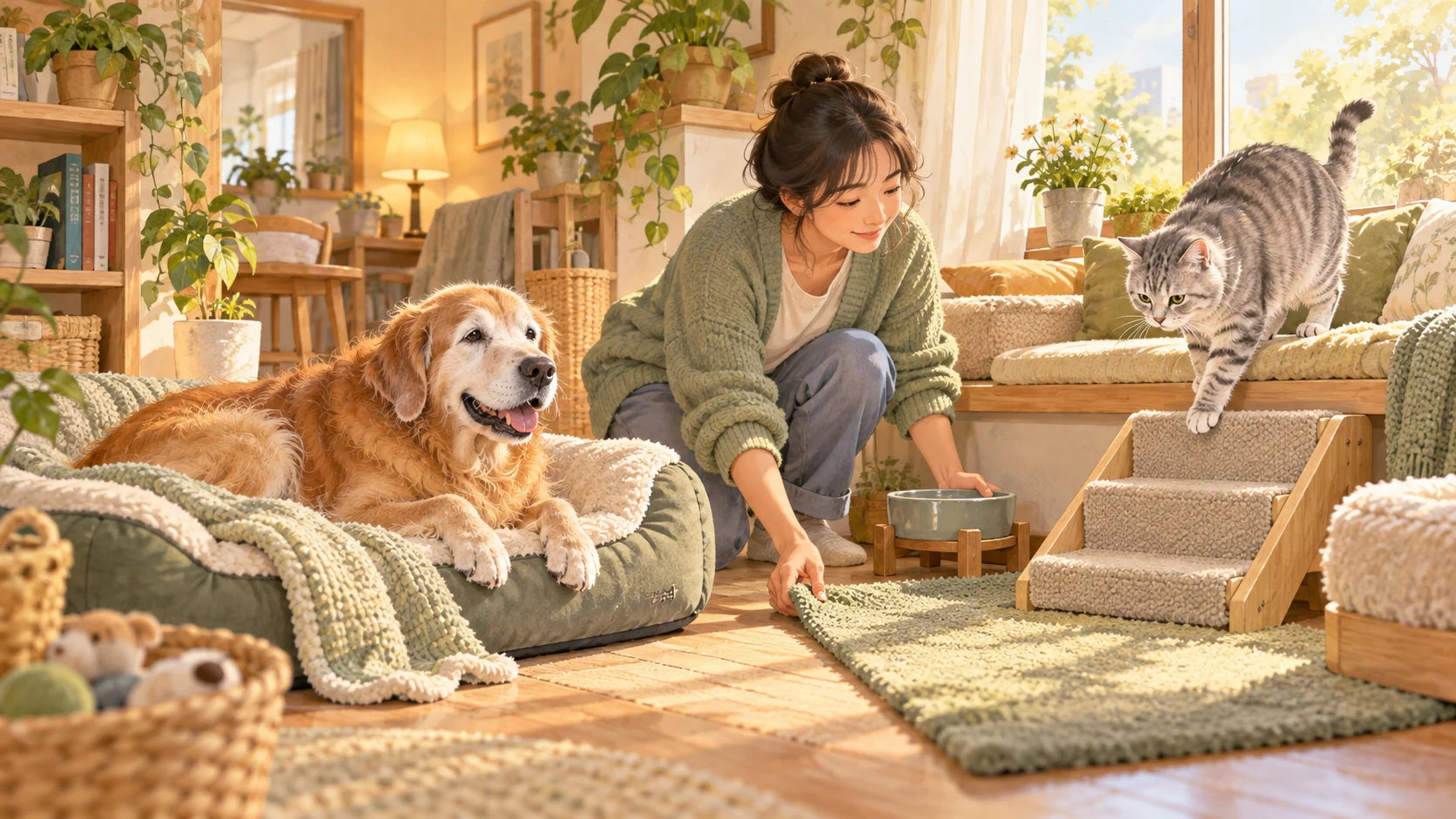
Aging is a life stage, not a diagnosis. A gray muzzle, slower stairs or a preference for longer naps does not mean a dog or cat should stop enjoying life. But changes dismissed as “just getting old” can hide pain, dental disease, kidney problems, endocrine conditions or altered senses. The best senior-care plan observes what matters to the individual animal, adapts the home, and uses veterinary care to identify treatable problems. Age thresholds vary by species, body size and health history, so replace rigid birthday rules with regular conversations about function and comfort.
Begin by recording your pet’s ordinary day
Choose a few everyday markers: willingness to climb onto a favorite resting place, how long it takes to stand, appetite, thirst, litter or toileting habits, grooming, walks and social interest. Note both good and difficult days. Short videos of movement can be more informative than descriptions such as “seems stiff.” Watch for changes across weeks rather than relying on an isolated moment. Sudden deterioration is different from gradual aging and may require urgent assessment. Share this record with your veterinarian to make discussions specific, especially when the pet behaves differently at the clinic than at home.
Discuss individualized senior wellness visits
Senior visits are not only for vaccines. They are opportunities to review weight, muscle condition, mobility, teeth, hearing, vision, medication use, behavior, pain and disease risk. Your veterinarian may recommend more frequent examinations and blood or urine testing based on health history; there is no universal panel that suits every pet. Ask which findings would change treatment and whether monitoring can be staged if finances are limited. Bring a current medication and supplement list, including products bought without a prescription. If a test is recommended, request a plain-language explanation of its purpose and what happens next.
Make movement easier without removing choice
Slippery floors, high couches and steep stairs can become obstacles for sore joints or weak muscles. Add nonslip runners, low entry beds and stable ramps or steps where appropriate. Place water, rest areas and toilets where they can be reached without a demanding climb. Cats may appreciate intermediate shelves and low-sided litter boxes; dogs may benefit from shorter, more frequent walks and a supportive harness. Do not assume reluctance to jump or climb is stubbornness. Ask about pain assessment and rehabilitation before buying gadgets. Verify that any ramp is sturdy and that the pet is comfortable using it.
Support eating, drinking and weight changes
Weigh regularly using a consistent method and track body condition plus muscle loss, not kilograms alone. Unplanned weight loss, a sharp appetite shift or drinking and urinating more than usual warrants a veterinary conversation. Senior-labeled food is not automatically right for every older pet; calorie, protein, moisture and disease-related needs vary. An older cat with kidney disease may need a different feeding approach than an otherwise healthy senior dog. Discuss any therapeutic diet or supplement before changing food abruptly. Keep bowls accessible and consider smaller meals if recommended for the individual pet.
Pain is often quieter than owners expect
A dog may stop greeting at the door, lag on walks or avoid being touched near the hips. A cat may stop grooming its lower back, miss the litter box because entry hurts or become irritable when lifted. These signs can reflect pain, illness or other distress and deserve assessment. Do not give human pain medicines: some are highly toxic to dogs or cats. A veterinarian may suggest medication, physical rehabilitation, weight management or changes to the home. Review benefits and side effects with them and schedule follow-up rather than assuming one prescription fixes everything. Pain control is measured by restored comfort and function.
Recognize sensory and cognitive changes
Cloudier eyes do not tell the whole story about vision, and a pet that ignores a cue may have reduced hearing rather than be disobedient. Sudden disorientation or dramatic behavioral changes need medical evaluation. Some older pets develop altered sleep cycles, night vocalization, accidents or anxiety; pain, blood-pressure issues, endocrine disease and other problems must be considered before a cognitive diagnosis. Keep furniture positions consistent, use gentle predictable cues, maintain night lighting if helpful and avoid startling the animal from sleep. Familiar routines and simple scent-based or food-puzzle activities may preserve engagement.
Reconsider grooming, toileting and hygiene
Long nails, mats and dental discomfort can interfere with movement and eating. Older animals may tolerate shorter grooming sessions and gentler handling, but sudden aggression during care can signal pain. Provide litter boxes with low entries, more frequent chances to toilet for dogs and washable bedding where useful. If accidents appear, schedule an examination before treating them as behavioral misbehavior; urinary infections, kidney conditions, arthritis and cognitive changes are possible contributors. Clean soiled areas without punishment and protect skin from prolonged moisture. Bathing excessively can irritate fragile skin, so ask for a practical care plan.
Protect social comfort and safe enrichment
An older pet may still enjoy sniffing walks, a familiar puzzle, brushing or watching birds, but longer sessions and rough play may be tiring. Offer predictable opportunities without insisting on participation. In multi-pet homes, a young animal may unintentionally overwhelm a senior; give the older pet protected places to rest and eat. Watch whether attention from children or visitors causes stress and allow an easy retreat. If your pet chooses quiet companionship rather than games, that is valuable engagement too. Match activity to what the animal can comfortably recover from afterward, not what it did five years ago.
Prepare for changes while life is still good
Ask your veterinary team which changes would be important to report, which treatments could improve comfort and who to call after hours. Make a written medication schedule when needed and identify a backup caregiver who knows how to help. Discuss what matters most to your pet: independent toileting, comfortable sleep, appetite or greeting family. These preferences later inform quality-of-life decisions without forcing a premature conclusion. Save copies of test results and records in an accessible location. Planning ahead can reduce crisis decisions; it is not giving up on a beloved companion.
A weekly senior-care observation sheet
Once a week, note body weight if practical, eating and drinking, urine and stool, comfortable movement, grooming and social interest. Rate changes descriptively rather than guessing a medical diagnosis. Ask whether nighttime behavior, breathing or pain has shifted. Bring photographs of unusual findings and videos of walking to follow-up visits. This routine helps reveal trends that a single good or bad day can hide. When a new emergency sign appears, however, act immediately instead of waiting for the next scheduled observation.
What matters when a senior stops using a favorite spot
If a senior cat no longer sleeps by the window, check whether getting there requires a painful jump or crossing a narrow hallway guarded by another cat. If an older dog refuses its usual bed, the surface may be too hard, hot, or difficult to rise from. Try gentle environmental adjustments while also considering a veterinary examination for pain or disease. Watch whether the animal chooses the modified space voluntarily; forcing use proves little. The goal is to restore meaningful choices and independence, not to replicate an old routine exactly.
Support the caregiver without making the pet wait
Aging often changes the household schedule: more medicine, laundry, assisted toileting or interrupted sleep. Create a written routine and teach a trusted backup caregiver how to help safely. Ask clinics whether demonstrations or home adaptations might ease physical strain. If costs are difficult, say so early; teams can often explain priorities and staged decisions. Caregiver fatigue is real, but do not postpone needed veterinary attention because managing symptoms feels overwhelming. Planning reliable help protects the pet and the people who love it.
Keep Reading

Learn the difference between litter-box concerns and urinary emergencies, including the immediate danger of suspected urethral obstruction.
Read the Full Guide →
A gradual, safe introduction plan for dog–cat, dog–dog and cat–cat households, with separate spaces, scent exchange, barriers and warning signs.
Read the Full Guide →
Compare in-home sitting with boarding, ask about safety and emergencies, prepare care sheets and arrange a thoughtful handoff.
Read the Full Guide →