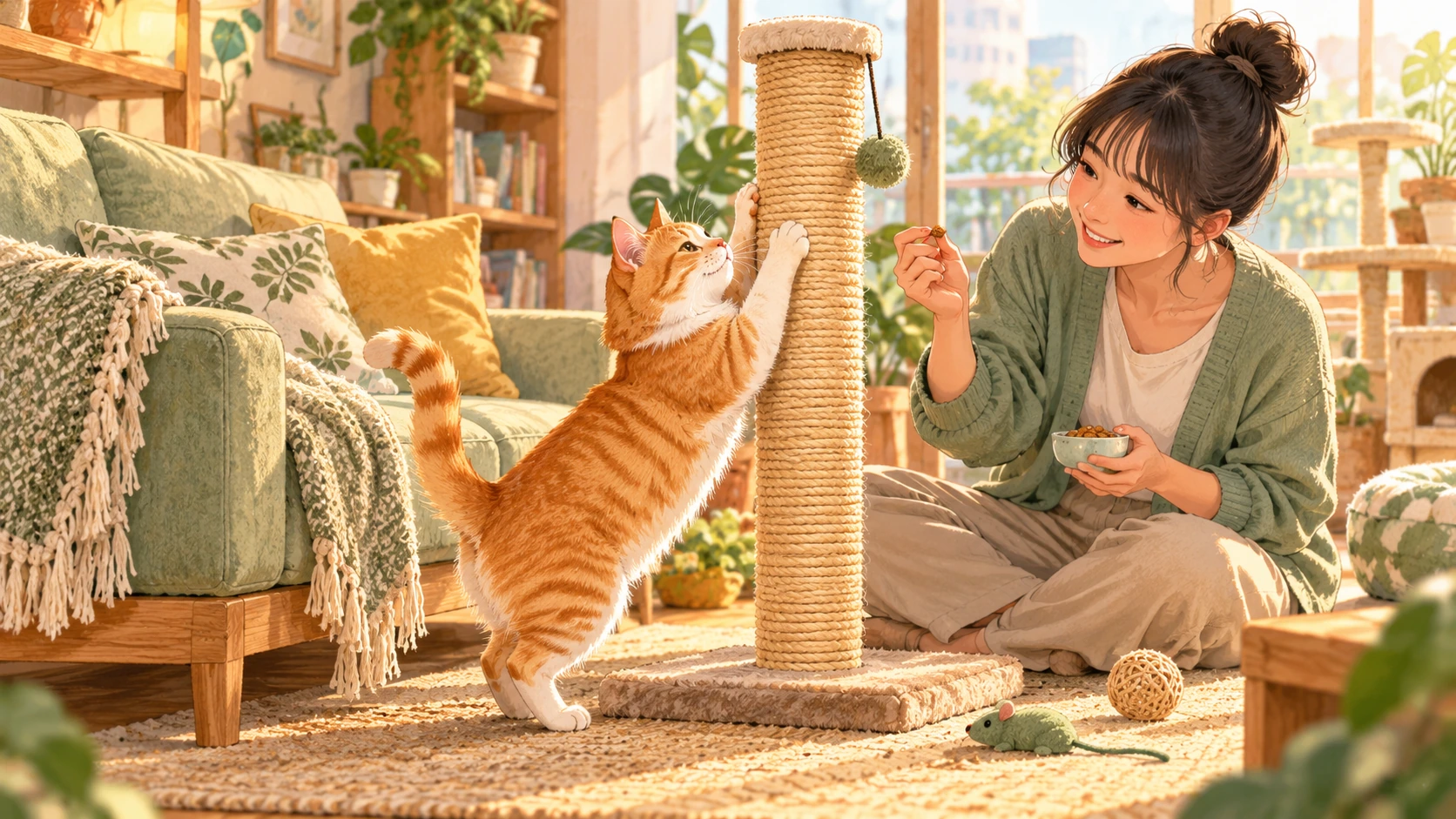
Cats scratch because they are cats, not because they are trying to ruin your sofa. Scratching helps remove loose outer claw sheaths, stretch the shoulders and back, and leave visual and scent messages. Your goal is not to stop this healthy behavior but to give it a better destination. A workable plan respects what your particular cat enjoys scratching and protects the furniture while new habits form.
Read the pattern before buying anything
Observe where and when scratching happens for several days. Does your cat stretch vertically on the sofa arm after waking, rake the carpet beside a doorway, or scratch after seeing another cat outdoors? Record the surface, height, location, time and the cat's body language. These details tell you far more than a generic product recommendation. A cat who loves the edge of a couch may reject a wobbly little post hidden behind it. A cat who scratches a flat rug may prefer a horizontal cardboard board. A sudden change in scratching can also accompany household stress.
Give the cat a surface worth choosing
A good upright scratching post is sturdy enough not to sway, tall enough for a full-body stretch, and covered in a material that allows the claws to catch. Sisal rope, sisal fabric, cardboard and untreated wood appeal to different individuals. Offer both vertical and horizontal surfaces initially, especially if your cat's preference is unclear. Some cats appreciate an angled board; others want a broad horizontal pad. Check for exposed staples, loose strings or flimsy pieces that could become hazards. Replace worn surfaces and keep at least one favorite option available as a permanent part of the home.
Place scratching options where life happens
Location matters as much as texture. Start by putting a suitable post directly beside the furniture the cat currently scratches, rather than across the room. Add another near a frequent sleeping place, because many cats stretch and scratch after naps. A passageway or room entrance may also be attractive because scratching communicates presence. If you have several cats, distribute options in their respective living areas; one shared post can become a guarded resource. Once the cat uses the new surface reliably, move it gradually if necessary, a short distance at a time.
Teach the preferred choice with rewards
When the cat approaches or uses the appropriate surface, give quiet praise, a small treat, or a brief play opportunity it enjoys. Time the reward immediately after the desired action. You can make the post interesting by moving a wand toy along its base or placing familiar scent nearby. Do not force the paws against the material or pick the cat up and rub its claws on the post. That may make the surface unpleasant. Practice during the times scratching naturally occurs, such as after sleep or a play session. Brief, consistent opportunities are more effective than a lengthy training marathon.
Protect the sofa while habits change
Temporarily cover the most attractive furniture edges with a washable throw, fitted protector or a material that is less rewarding to scratch. Pet-safe double-sided protective products may work for some surfaces; test a hidden area first and avoid anything the cat could ingest or become entangled in. Keep your chosen post immediately adjacent to the protected spot. Do not use harsh sprays, startling devices or products with essential oils that may be unsafe for cats. The protector is a bridge, not the entire solution: the cat still needs acceptable scratching locations and daily opportunities to use them.
Understand punishment and declawing
Shouting, spraying water, grabbing the cat or startling it can create fear without teaching where scratching should happen. A frightened cat may simply scratch when nobody is watching, or become less comfortable around people. Punishment is particularly unhelpful if stress contributes to scratching. Declawing is not routine nail trimming; it is an amputation procedure and should never be treated as a convenience fix for furniture. If injury, unusual claw growth or a medical issue is involved, discuss appropriate veterinary care instead of improvising restraint or using aversive methods at home.
Keep nails comfortable, not scratch-free
Some cats benefit from regular claw checks and careful trimming, particularly seniors who may no longer wear their claws normally. Learn to handle paws gently in short sessions, reward cooperation, and trim only the sharp tip while avoiding the quick. Have a veterinary team demonstrate if you're unsure; dark claws can be difficult to judge. Nail trimming can reduce accidental snags but it cannot replace a scratching surface or remove the instinct to mark and stretch. Watch for a claw curling into a paw pad, limping, swelling, or painful handling; these warrant prompt veterinary assessment.
Multi-cat households need more than one answer
Scratching locations can communicate territory, particularly near shared doors, resting spots or paths. If one cat blocks another from reaching a favorite post, add options with visual separation and escape routes. Offer hiding spots, multiple feeding and water locations, and litter facilities in different parts of the home. Tension can be subtle: one cat may pause, crouch or take a different route rather than hiss. Address that environment rather than interpreting the scratching as spite. A new family member, relocation or a visiting outdoor cat may all change the way scratching is expressed.
Try a practical two-week reset
On days one and two, note the favorite target and introduce two appropriately sized options close to it. For the next several days, protect furniture, reward every spontaneous use of a post, and schedule short play sessions. In week two, check whether the preferred option is tall enough, stable and conveniently located; adjust one element at a time. Keep a simple log of successful scratches and furniture incidents. If the cat still ignores the post, change texture or orientation before buying more of the same. Progress is often gradual and varies with the household.
When scratching may signal another problem
Seek professional help when scratching suddenly becomes frantic or is accompanied by urine marking, hiding, loss of appetite, fighting, new aggression or signs of pain. A veterinarian can check for medical conditions, and a qualified feline behavior professional can help with environmental or relationship challenges. Even without a crisis, it is reasonable to ask for advice if you feel stuck. The goal is a home where your cat can stretch, communicate and maintain claws safely while your furniture receives reasonable protection.
Keep what works for the long term
Continue to provide a few good surfaces even after sofa scratching improves. Rotate toys, keep favorite posts accessible, trim claws when needed, and observe whether seasonal or household changes alter scratching habits. Spend your energy making the right choice easy instead of repeatedly correcting the wrong one. If another person cares for your cat, show them where the posts are and how to reward their use. Scratching is a basic feline need; an inviting outlet makes that need compatible with a comfortable shared home.
A few real-life layout examples
In a studio apartment, place a sturdy upright post beside the main sofa and a flat board near the cat's sleeping corner. In a larger home, put scratching surfaces on more than one floor so a cat does not need to cross another animal's preferred area. For a cat that scratches by the front door, consider a post near the entrance, where it is not blocking the hallway. If a senior cat cannot reach its old tower safely, offer a lower stable pad. Photograph your arrangement and ask whether every cat can reach a suitable option without feeling cornered. The best layout responds to the actual household, not a showroom photograph.
Keep Reading
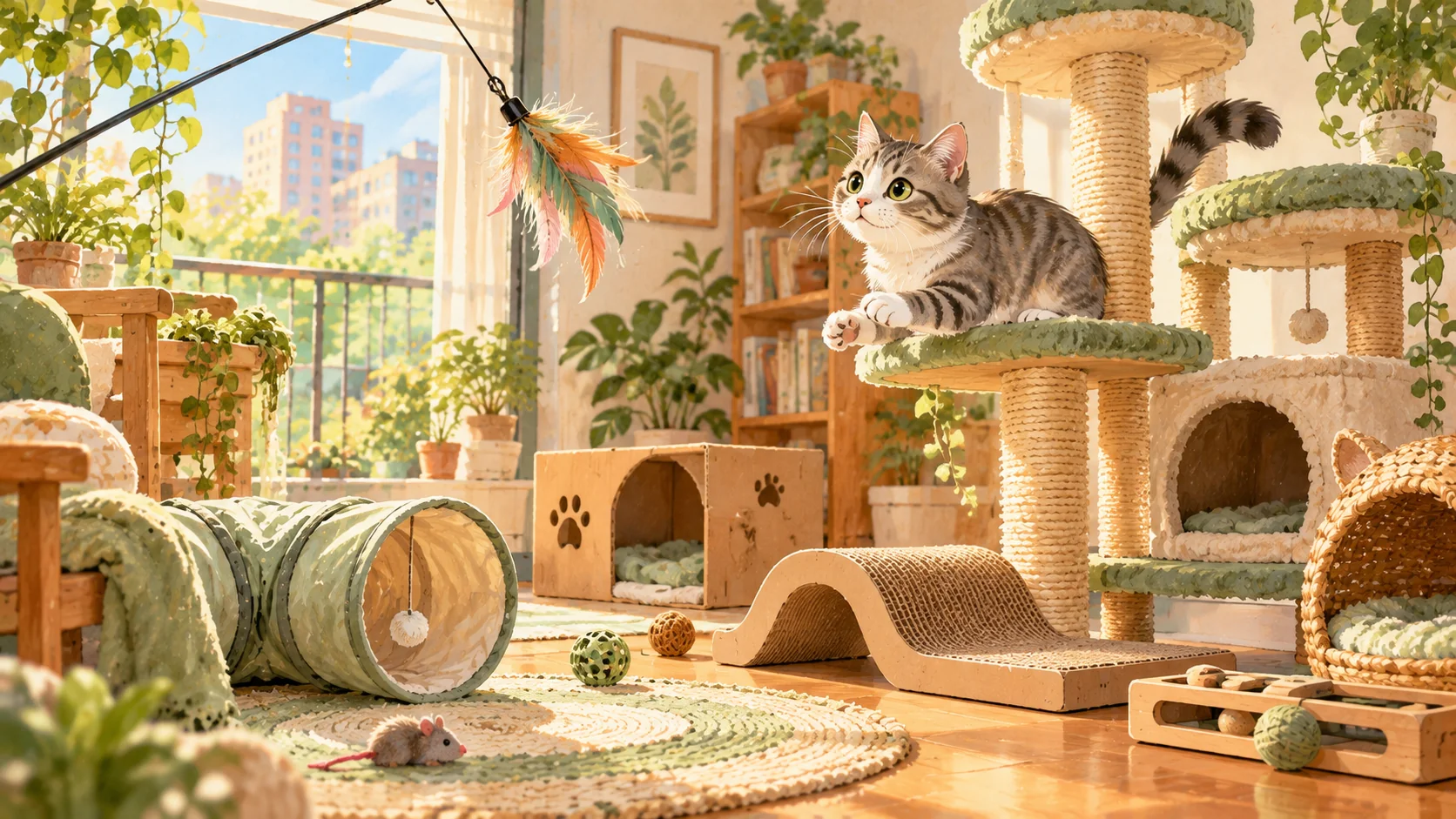
Create a more engaging indoor life with safe hiding and climbing, prey-like play, food puzzles, scratching choices and resources that respect each cat.
Read the Full Guide →
Learn to read a pet’s whole-body signals instead of judging by a wagging tail or a purr alone, and respond before discomfort escalates.
Read the Full Guide →
Learn humane teaching for both dogs and cats: reward timing, shaping, helpful management, training obstacles and why intimidation is not the answer.
Read the Full Guide →